The winds have changed directions, this time I travel East. I am not lost, nor am I in despair. I am just at the intersection, face to face with the vastness of the unknown. I don’t know why it is so clear that I must be in India, but I trust the calling and I trust the currents – as if a pure river has caught me swiftly and carried toward the light. There is no room for fear, only the courage to keep going and believe that the universe will be kind and help me find what I am searching for – it will respond to my prayer. Maybe it is the prayer itself that is carrying me, like a river. The endless, timeless river – the everlasting prayer that connects us all.
Sometimes, we need a myth to see the reality better. Sometimes, we go on a journey and the reality becomes an epic, fantastic story, akin to a myth. Such was my journey through Northern India – a journey of discovering and learning, receiving and sharing, relating and transforming, connecting and evolving. This experience was real in its rawness and yet mythical in its whimsical way of revealing hidden truths at every corner, in every conversation, in every interaction. Myth and visible reality are intimately interwoven. While we are seeking to gain wisdom by contemplating on a myth, the essence of a myth is eager to reveal itself through stories told and experiences lived. Myth, like a compass, helps the reality to advance purposefully, while reality helps the myth to express itself in a multitude of forms that are tied into the tapestry of life.
Looking back at my journey, it doesn’t feel like sixty days – it feels like one day, a cohesive story with an ensemble of characters that included everyone from omnipresent cows to rivers and temples to farmers and priests to housewives and taxi drivers – each played a vital role in a story that has become a cherished chapter of my life.

I arrived in Rishikesh in the evening and it was after sunset when I reached the shores of the Ganges – the sacred and mighty river, known as the mother of humanity among Hindus. I sat on stone steps and stared into the depth of a landscape that was simple yet strange. I had to remind myself where I was. I had to remind myself who I was. The unstoppable thought-producing machine inside my head attempted to shoot out questions: “Why are you here?”, “Why are you not in Bali?”, “Why not in Berlin?”, but I calmed my mind down. How simple was the scene of me engaging with the river and starting to look for a language that could help me connect with it better, to hear the river better. I was in no rush. For now, I simply let myself bask in the reality of the moment… The lively waters of an ancient river and a calm breath of a human whose heart is hungry for reciprocity, whose mind is full of questions, whose soul is guarding a prayer, carrying it through time, through space, into the eternity of the present moment.

That night, by the Ganga,I felt that I was in the right place. For the next two months I was to immerse myself in rigorous Yoga practices to facilitate my journey of self-discovery in the most auspicious environment that one may ask for, on a land long hallowed by feet of many masters. Every day was to bring a new lesson, a new challenge, a new joy, and a new realization. Each experience and every encounter was nothing but a mirror – a perfect reflector and a skillful revealer. While I was looking for the light, the light was ceaselessly striving to reach my consciousness.
The morning of my arrival at the yoga school which I was to call home for the next two months I paused by the large and stylishly executed sculpture that represented one of the highly revered local deities – the enchanting Elephant-headed Ganesha – the god of wisdom, luck, and new beginnings, the masterful remover of obstacles. Many Hindu ceremonies begin by worshiping Ganesha and a small sculpture of him is found nearly in every local home. Embellished by marigold flowers and lit up by the sunlight, he invited me to feel welcome in my temporary home.

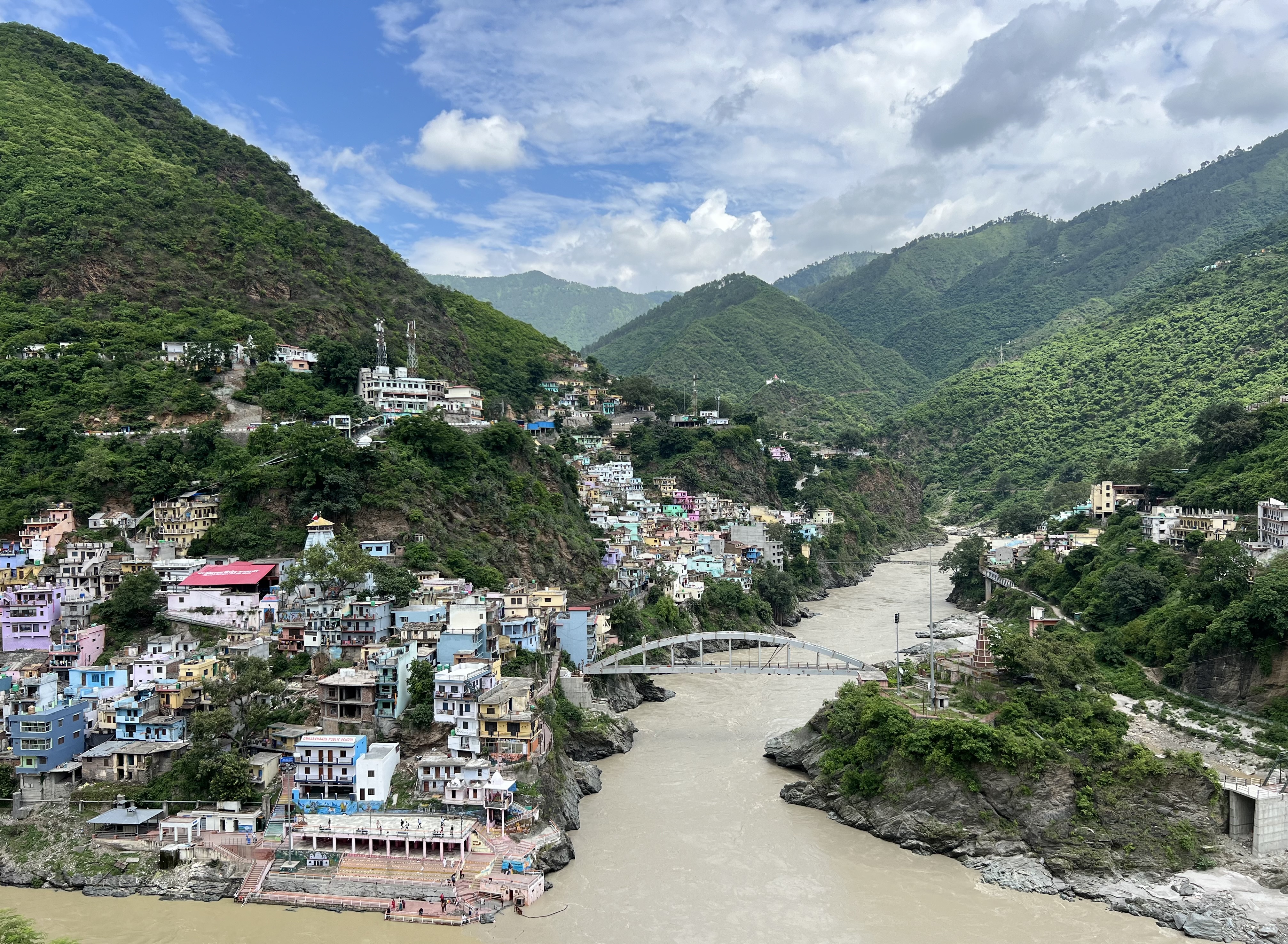
Not only the school but the entire vicinity felt like home from the very first day. The lively town of Rishikesh is commonly referred to as the “Gateway to the Garhwal Himalayas” and “Yoga Capital of the World”. Situated on the Ganges riverbank, it has long been a pilgrimage town for Hindus, with ancient sages and saints meditating there in search of higher knowledge. While there are numerous ashrams (monasteries) and temples in the area, the urban life is also thriving, which brings global tourists, yoga practitioners and locals together, creating a vibrant community dynamic.
I quickly got to know the fellow yoga practitioners – new friends with whom I shared many unforgettable escapades. Having come from all over the world, we were a group of incredibly diverse and unique individuals, but we also shared something noteworthy in common. It takes a good deal of self-inquiry, courage, and trust in the universe to make it all the way to Rishikesh and commit oneself to carrying out the experiences that were awaiting us throughout the immersive yoga program. Dedicated to our personal goals, we were all inspired about the journey ahead of us and bonded more and more while spending our free time connecting, celebrating achievements, sharing doubts, supporting one another, and, of course, adventuring. While we all showed up as courageous warriors, each one had a special sparkle in the eye, everyone’s smile beamed with gratitude and joy of being on this shared journey.
One of the adventures took place the very next day, when we set off to explore Parmarth Niketan – a large ashram that attracts thousands of pilgrims from across the world to partake in spiritual and yogic practices. On our way to the ashram we reached the riverfront park that led us towards the captivating view of a gigantic sculpture of a powerful deity – Lord Shiva – the vital force, the dancer, the destroyer, and the personification of pure consciousness. According to Hindu philosophy, the absolute Brahman is both static and dynamic. It embodies all-pervading and transcendental consciousness (Shiva) and dynamic energy (Shakti). The entire created universe is no more than the play of Shakti. The whole world is not really an illusion, but the expression of Shakti. I stared at the sculpture for a while – mesmerized by the harmonious look of a handsome face, gentle smile, and meditative posture.

Meditating Shiva. The deity holds Ganga (symbol of spiritual purity) on his head.
The experience of strolling along the streets of Rishikesh often felt like riding a carousel full of motion, color, and sound. Whenever you pause, you find that life is bustling everywhere, accompanied by the street music, traffic noises, and lively voices of locals. However, while the carousel is spinning, there is a strong sense of place and community.
In spite of the material poverty lasting over the last two centuries, India has always remained a wellspring of spiritual wealth. The intangible treasures may be discovered both in places of worship and in most ordinary spots and situations by any worldly person. Driven by ceaseless curiosity, I, too, was gradually collecting the precious jewels which became integrated in my perception and continue to illuminate my thoughts and actions, including the impulse to write this essay. My experience of explorative trips in India was akin to the experience of reading a book of tales with marvelous illustrations. Every chapter is rich with deep parables, awe-inspiring passages of heroic fits, and beautiful verses conveying stories of unending battles, reconciliations, and transformations of forces that are beyond any imagination. As it goes with any tale or myth, it is up to the reader what to believe in, what to take away, and how to apply it in life.


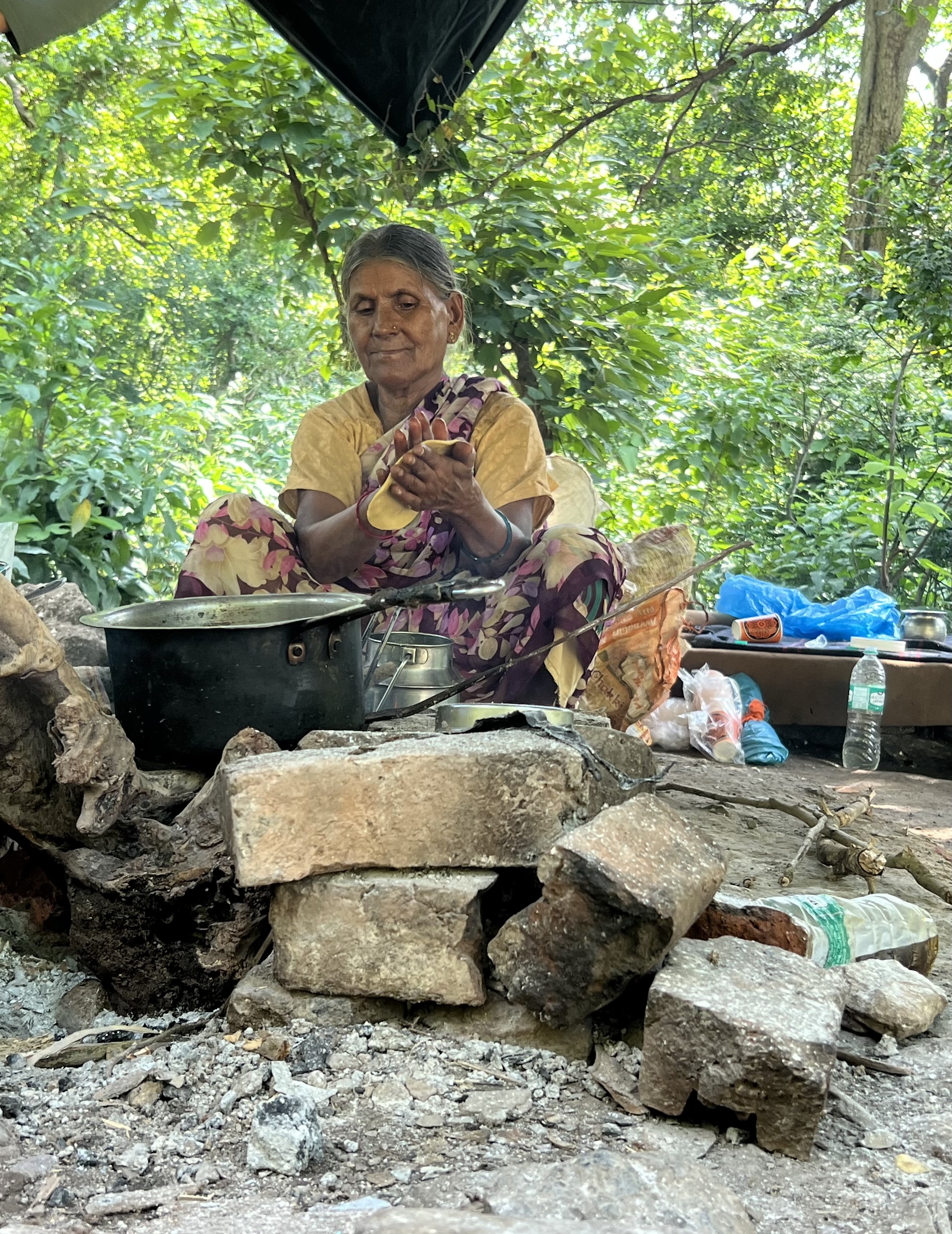

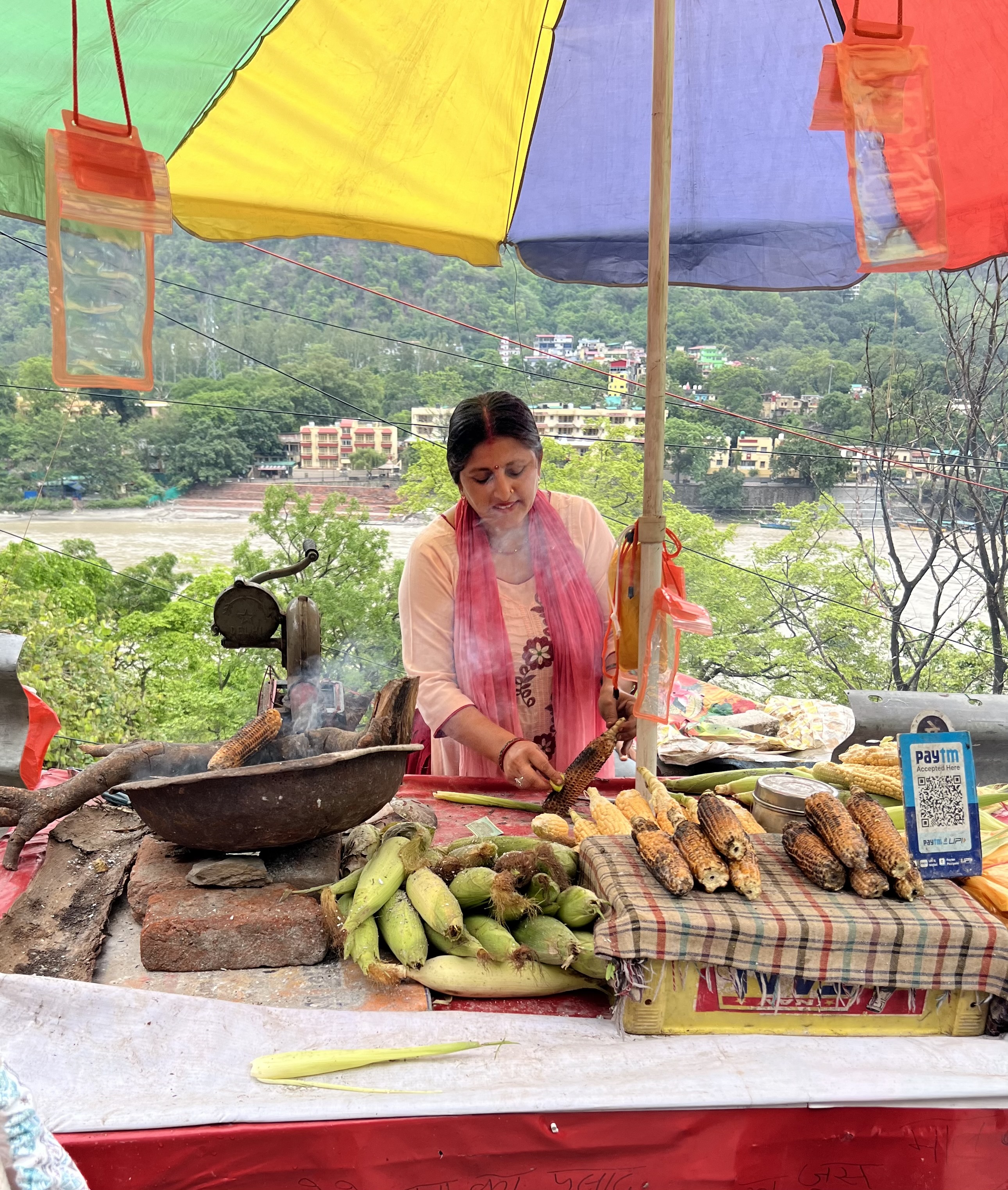


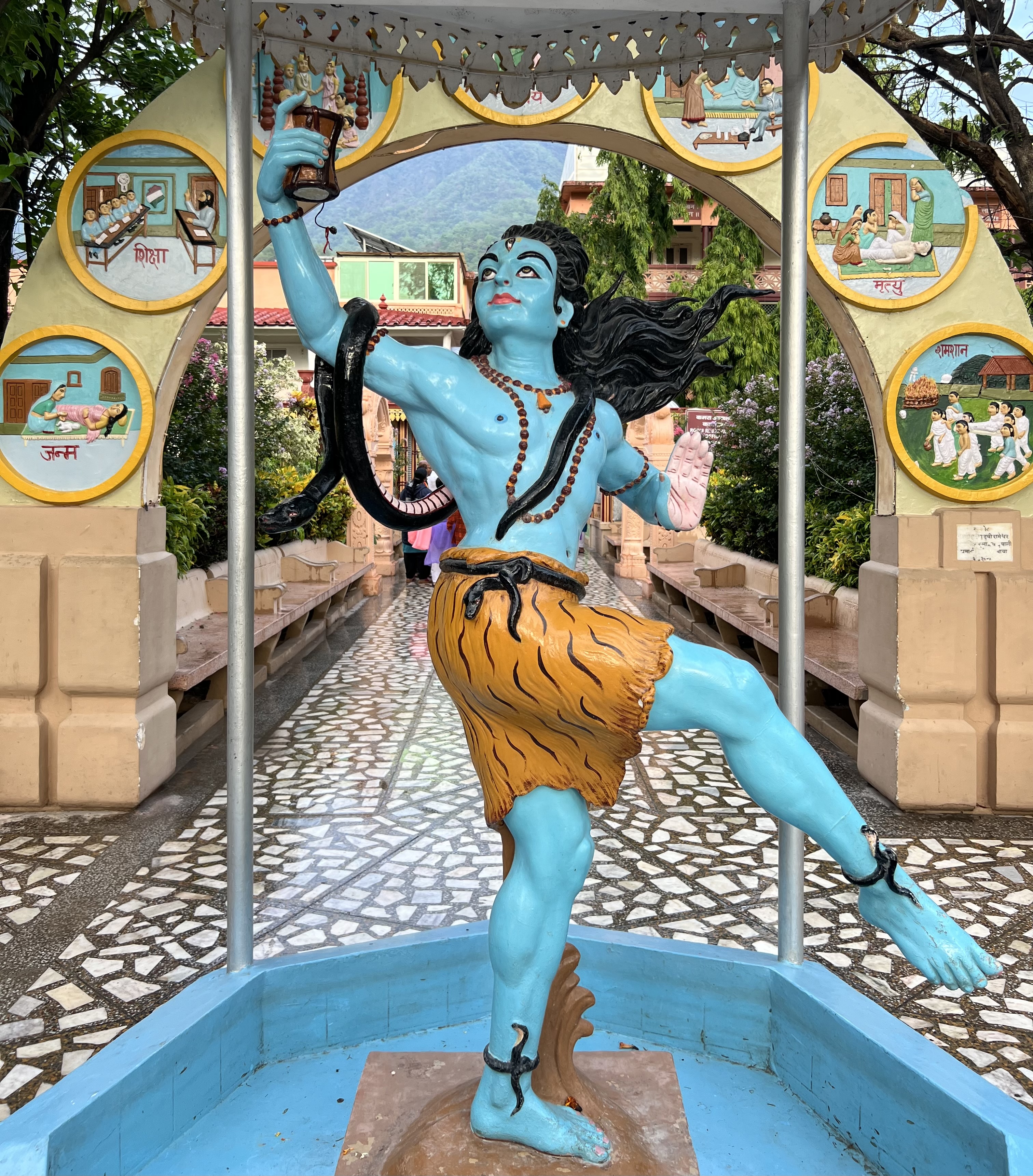


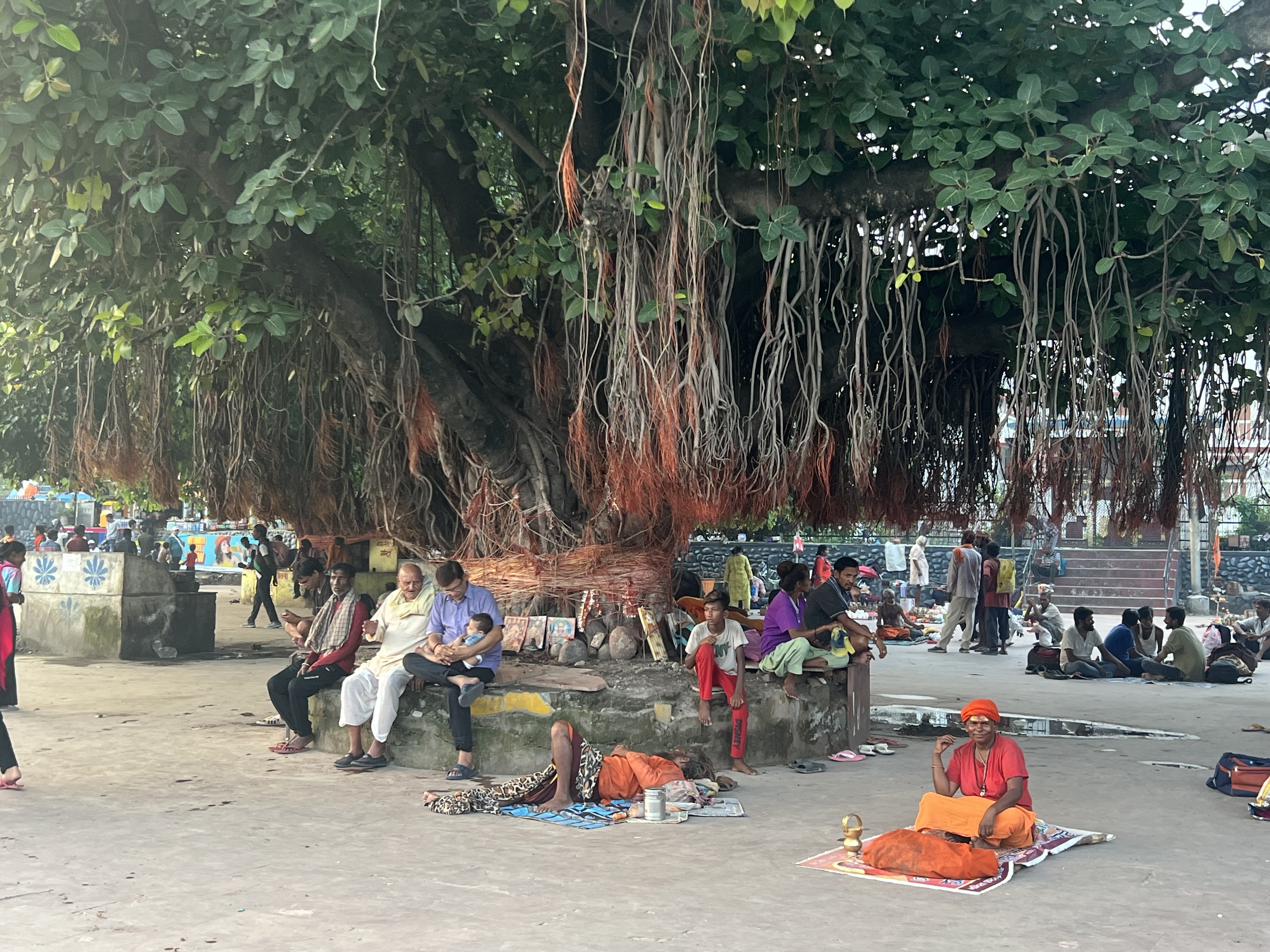
While most days were filled with yoga, my leisure time in India was rich with explorative walks, road trips, temple visits, and endless conversations. One of those days I joined a group of fellow young women on a day trip to the waterfalls – what an adventure it turned out to be! The four of us – Russian, Columbian, Mexican, and Indian trotted up the hill to reach a lush forested area concealing a beautiful multi-layered waterfall. Being free spirited and brave as we were, we easily climbed up a rocky cascade to the point where the rushing waters would embrace us with forceful streams of cooling, cleansing, and healing energy. That waterfall was the perfect place to celebrate all that is Shakti, all that is existence, all that is alive. It was the time and place to honor Mother Earth, femininity, and the divine energy that gives form to everything that has ever existed. Aliveness, connectedness, purification, and liberation – such were the sensations awakened by the rushing waters, leaving us inspired and filled with joy in the days ahead.

Remarkably, on our way home that evening we passed through an ashram and encountered a beautiful statue of Goddess Saraswati – the deity of knowledge, purification, language, and creative arts. Saraswati is commonly represented sitting in the waterfall, accompanied by a swan, and holding a musical instrument. Wasn’t that meeting with the goddess a playful echo of our experience just earlier today? We thought it was and we smiled at each other. Days and months would pass by, but such moments of shared wonder would be revived in memory with pristine clarity and tenderness. Such experiences are parts of a marvelous playground and remind us that forms are hints of intangible reality.

Similarly, a walk through the garden one day took me to a hidden yard, where I noticed a colorful work of art behind abundant foliage. I approached it and faced a beautiful scene: God Vishnu was reclining on a coiled serpent, cared for by his beloved partner, Goddess Lakshmi. The sculpture of the maintainer of balance was hidden from the eyes of passers by – the wanderer must be curious enough to discover the path towards this gem that invites one to reveal a myth – a symbolic piece of a shared reality.

According to Hindu cosmology, the entire universe is seen as being supported by Ananta Shesha, the serpent with a thousand heads, representing the infinite and eternal nature of time. Vishnu lies on this serpent, floating on the primordial waters of the cosmic ocean. His posture is one of tranquility and supreme calmness, with his eyes closed, signifying a state of deep meditation. Vishnu’s Yoganidra is a period of cosmic inactivity, where he withdraws his energy, allowing the universe to dissolve into the cosmic waters. This phase is essential for the cycle of creation and destruction, which are continuous processes in Hindu cosmology. When Vishnu is in Yoganidra, the universe enters a state of dissolution (Pralaya), where everything returns to its original state of undifferentiated potential. As Vishnu sleeps on Ananta Shesha, a lotus emerges from his navel, and from this lotus, Lord Brahma (the creator god) is born. Brahma, sitting on the lotus, begins the process of creation, shaping the universe from the primordial elements that have emerged from Vishnu’s being. The universe is born out of his divine energy, and the cycle of creation, preservation, and destruction continues.
There is a special sense of honor that arises when you get a chance to observe and, if lucky, participate in ancient rituals and ceremonies with deep spiritual meaning which transcends sociocultural differences and temporal barriers that take a modern human away from the roots, away from a shared heritage that dwells in collective unconscious. Such rituals bring us back in touch with ourselves, with each other, and with the whole universe. Among traditional practices that I experienced in India were Vedic and Hindu rituals such as Agni Ceremony, Ganga Artsi, Satsang, Kirtan, and innumerable mantra chantings. Many of the rituals bring community together and culminate in a sense of oneness and unity that is joyfully celebrated by praying, singing, and dancing.
For example, Agni Ceremony (Agni is Fire in Sanskrit) is one of the Vedic rituals, known as Puja (worship) that is still performed and considered highly sacred. Fire is one of the five basic elements of creation (ether, air, fire, water and earth) and in its highest expression, Agni is the source of self-discipline, purification and transformation. Practitioners sit around “kunda” (a square pit that faces all four directions and contains the fire) and offer into it gifts of grains, ghee, herbs and seeds while specific mantras are repeated. The sacred fire coupled with prayerful intention removes fear, spreads joy, burns karma, purifies the environment and creates conditions for peace and prosperity.


Agni Ceremony
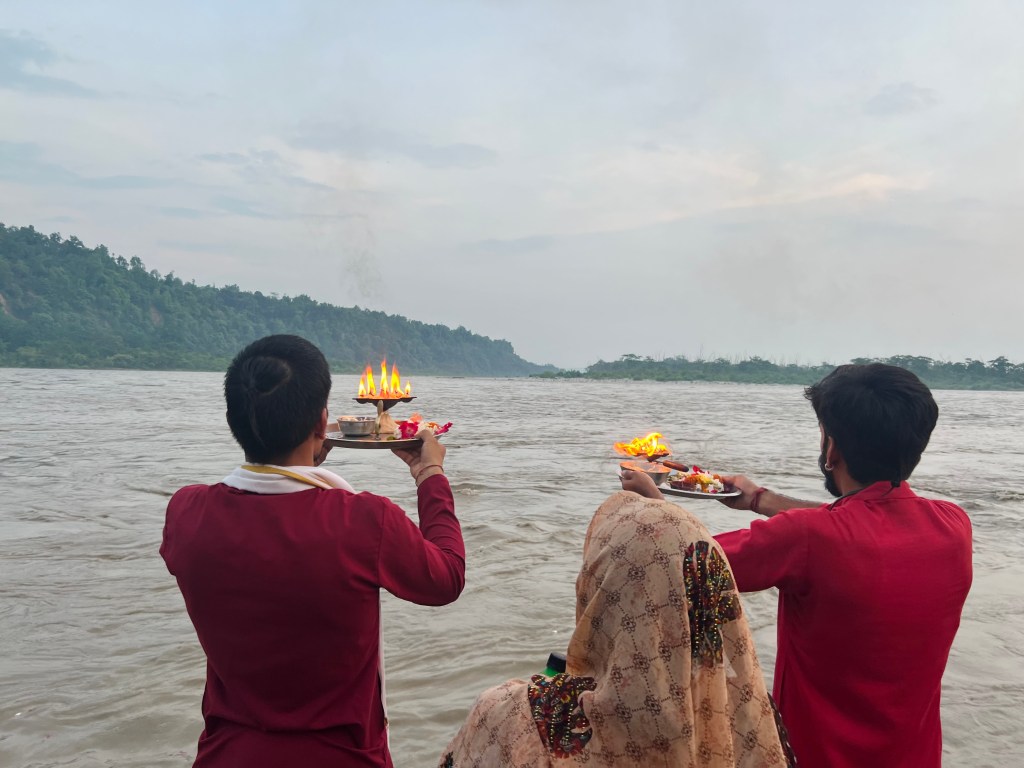
The Ganga Aarti is another ethereal ritual that takes place in Rishikesh along the banks of the sacred river. The celebratory ceremony of worshiping the Ganges symbolizes the gesture of gratitude and reverence to the divine river, that is believed among Hindus to be a source of purity and salvation. The ritual unfolds every evening during the golden hour of sunset and is led by ashram’s spiritual leaders. A unique atmosphere is created by devotional singing, countless glowing diyas (oil lamps), and the flowing scents of incense in the air. Everyone including locals, pilgrims, and tourists come together to participate in the aarti, while offering prayers and immersing themselves in the spiritual energy that permeates the surroundings.


Ganga is often depicted as a fair, beautiful woman, riding a divine crocodile-like creature called the makara.
Time in Rishikesh was passing by quickly. Yoga practice was helping me anchor and align my inner self, find peace within, and rediscover joy and intrinsic passions, while also leading me deeper and helping me to find a disguised sorrow under the layers of consciousness. Yoga allowed me to discover tools to embrace it all, to surrender, to regain courage, to be sincere with myself, to learn to trust again. I found hidden meanings and simple yet forgotten truths that lay unswervingly within me and within each human. I gained inspiration for new means of expressing self, new ways of being, creating, and sharing. Admittedly, I was taking small baby steps on the path of self-acceptance, self-love, and finding faith. Yet, I was thrilled that I was walking – grateful, open-hearted, aware, and unstoppable. I was then and I find myself now continually falling in love with life, with its mystery and simplicity, with its light and shadows, with its beauty and rawness.

Moonrise over the Lower Himalayan ranges
While most of my activities took place in Rishikesh, one special jewel of a memory needs to be singled out: an experience in Kanatal, a small picturesque village in the foothills of Lower Himalayas, in the region of Uttrakhand (also referred to as “Land of the Gods”). My heart sings even today as I revive the memory of a ten-day long journey shared with two people – Aleksandra and Gabriel – who became my dear friends. Kanatal attracted us because after a month of rigorous yoga practice we were craving an immersion into nature and felt eager to partake in experiencing an authentic rustic way of life.


Views of Lower Himalayas seen from the village of Kanatal
We settled at a home-stay resort amidst the alpine forested landscapes facing the views of mesmerizing himalayan mountains. Nature alone, with its woods, orchards, and sparkling waterfalls, turned for the three of us into a temple, where silence and breath were part of the ritual, a key to being able to receive and share. The tranquility of the place, the generosity, kindness, and calmness of the local people, the narrow serpentine roads, and the mysterious monasteries – all of it was part of the journey abundant in healing, connection, and joy. During those days, we became embraced and enriched by Uttrakhand while immersing ourselves fully in nature and becoming more intimately acquainted with the culture through genuine interactions and participation in day-to-day life.
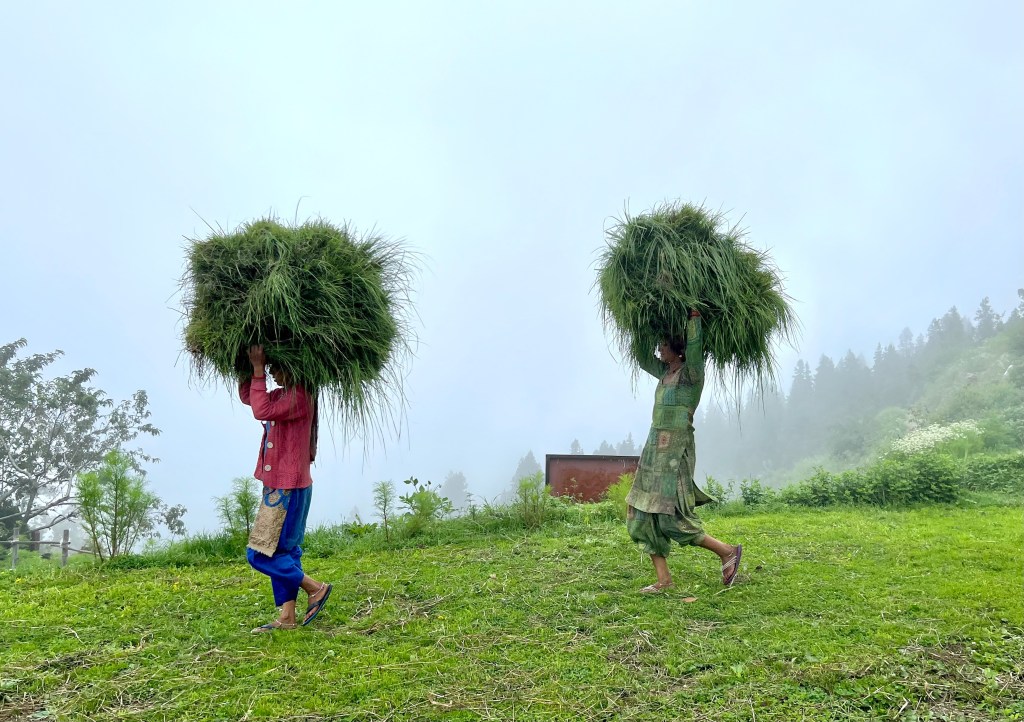


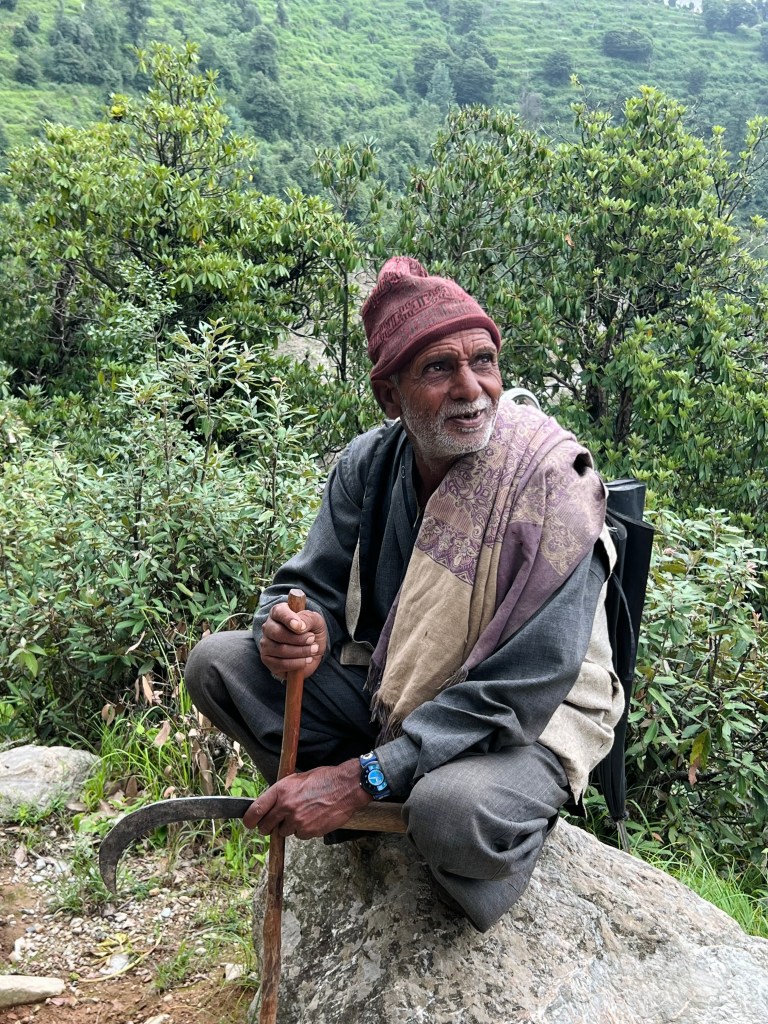
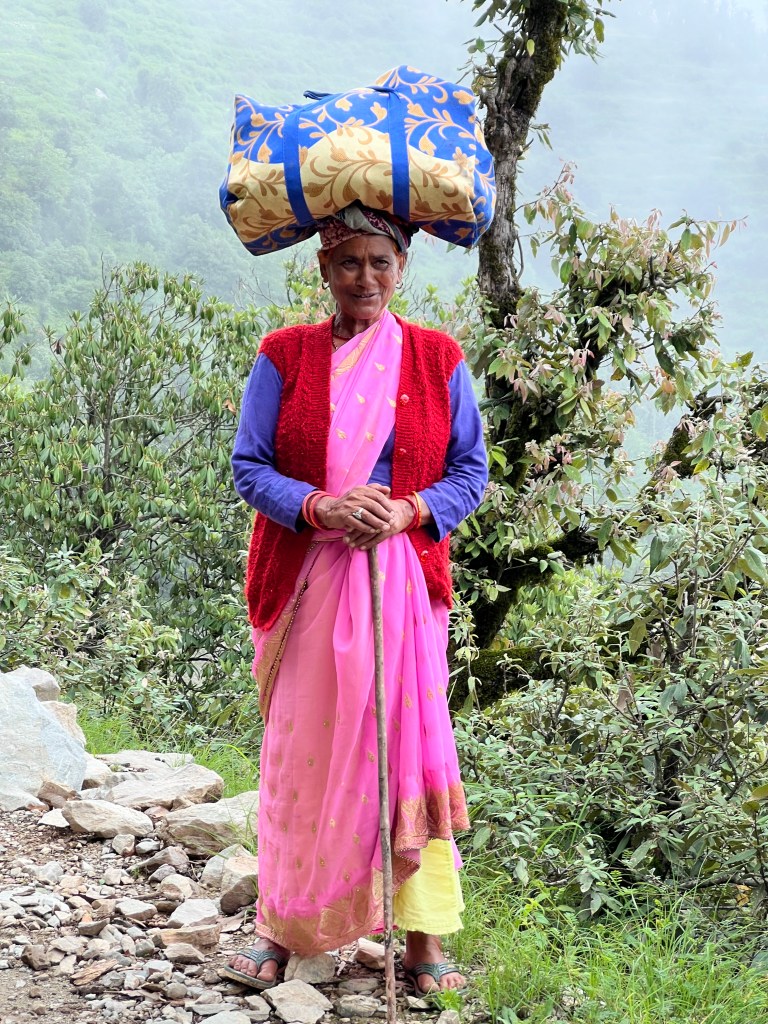


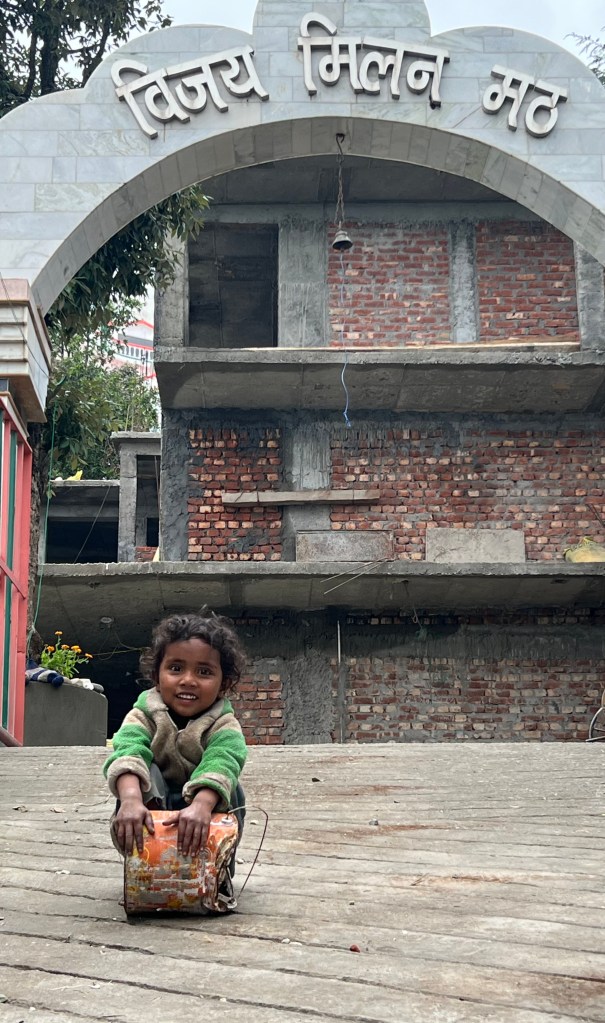
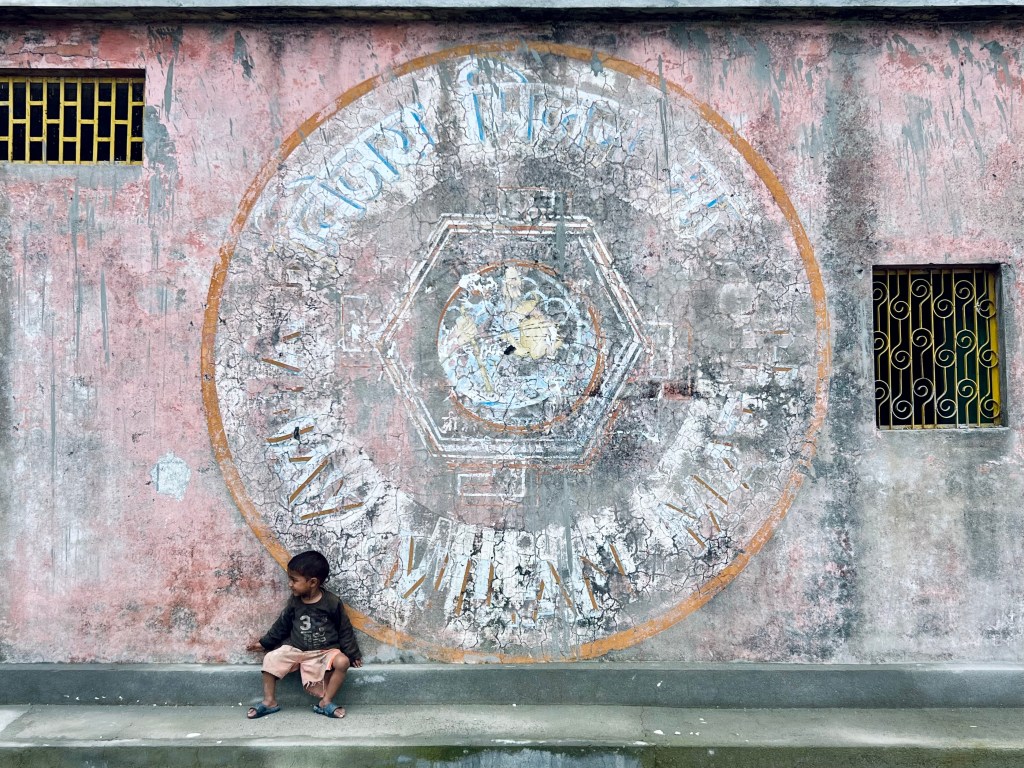


The dwellers of Kanatal speak with their eyes and they speak from their hearts. While we stayed in the village, I learnt of the open-heartedness of local people and of the powerful and vital role of tradition, spirituality, and community in their culture. Many stories we shared during our days in Kanatal while having chai at mountain lookouts, hiking in dense woods, singing mantras by the campfire, and on our trips to ancient temples – the kaleidoscope of shared experiences became etched in my memory and turned into a treasure that I brought home with me – such experiences and memories bring special light into the broadening perception of life, into the revelation of its meaning, and into the deeper acquaintance with oneself.

No words or pictures can describe the energy that one can sense at Surkanda Devi Temple. My friends and I visited this place three times during our time in Uttrakhand and each time it was a spellbinding experience. This Hindu temple is dedicated to Goddess Sati (Shakti incarnation) – a manifestation of the divine feminine. A simple sentence of four words was suddenly very alive and incessant in me while I visited the temple during the first time: “Дари любовь, принимай любовь” (“give love, receive love”). Whether it was an invention of my imaginative mind or a sacred gift of the place, I regard it as one of the intangible Indian treasures that now live and blossom in my heart.


Surkanda Devi is not just a place of spiritual significance, but also an ancient architectural masterpiece executed in the traditional Himachali style renowned for its intricate woodwork, sturdy stone construction, and practical design suited to the mountainous terrain. The temple has a pyramidal shape. Sturdy wooden pillars support the wooden porch that runs around the temple. Beautiful carvings and brass bells adorn the porch. Perched at an altitude 2700 meters and offering a 360 degree view of the surrounding region along with the Himalayan peaks, this splendid structure is a testament to the rich cultural heritage of Uttarakhand.
According to Hindu mythology, the site is associated with the legend of Sati, who was the wife of the ascetic god Shiva and daughter of the Puranic god-king Daksha, who was unhappy with his daughter’s choice of husband. When Sati’s father Daksha performed a grand Vedic sacrifice for all the deities, he made some derogatory remarks about her husband and she had flung herself in the Yajna fire (ritualistic fire). Meanwhile, Shiva was stricken with grief and angry at the loss of his wife. He put Sati’s body over his shoulder and began his tandava (dance of cosmic destruction) throughout heaven. In fear, the other Gods forced Vishnu to calm down Shiva. Thus, wherever Shiva wandered while dancing, Vishnu followed. He sent his Sudarshan wheel to destroy the corpse of Sati. Pieces of Sati’s body fell until Shiva was left without a body to carry. It is believed that Sati’s head fell down at the spot where the sacred temple of Surkhanda Devi now stands. There are 51 pieces of Sati’s body scattered across all over the Indian subcontinent. These places are called shakti peethas and dedicated to various powerful goddesses.

Another special encounter that can not be adequately relayed in words occurred during our visit of a secluded and peaceful hindu temple called Vijay Milan Math. We were so very fortunate to have a conversation with one of the monks named Mahataji. The aura of Mahataji, the look of his deep and wise blue eyes while he spoke of soul consciousness, the humble smile, the simplicity and profundity of his words will remain imprinted in my memory, while the magic of those moments resides in my heart.

Sometimes, we find ourselves puzzled because we do not know anymore why we do what we do. It can happen to anyone. A journey of searching and discovering higher purpose is a vital part of being human. We walk towards discovering inspiration and purpose and once discovered, we take action. We shape our shared reality. This journey is colored by every emotion from despair to bliss, but that is how we reconnect with every hidden corner of the soul. Yoga facilitates this process by returning you back to your truth, allows you to hear the inner voice and find courage to act upon it. You rediscover the joy of sharing, serving, and expressing yourself authentically. You find that this journey is not about you – it is about us all.
The last week of studies in yoga school culminated in expressing one of the creative yearnings of my own soul which had long been wanting to speak. Art is the language of the soul. The “Healing Circle” photo-project is a realization of a beautiful idea that took origins in my urge to convey deep gratitude to all sources of healing that are out in the world and especially the ones I have come in touch with. The project represents our unity, oneness, and healing power that is most expressed through the feminine aspect of the universe. The colors represent the seven chakras. Aside from embodying gratitude, this artwork is a vision of us as one human family, where energies of love, acceptance, and deep connection empower us to heal and continue cultivating a peaceful, conscious life on earth.


We are all cells of one big heart. As we hold each other’s hands by our hearts, the light radiates infinitely into the vastness of the universe. This energy brings healing…Healing brings transformation, harmony and union.
I was entirely by myself on my last day in India. I knew that I wanted to be in the wilderness, to take in every moment, and to relish every single breath. Although physically exhausted, I was feeling that my heart was blossoming and I wanted to simply witness it in silence, in the loving embrace of mother nature – so I chose to embark on a hiking adventure.


Life speaks with us every moment. Life’s cosmic pulsation is in every particle and so it is in us. Life and death are part of this pulsation and so are we. Love and hate, delight and sorrow, despair and hope are intricately intertwined. There is a nearly unbearable beauty in experiencing the richness and depths of what life is, while the mystery of it always remains. But isn’t it a pure vibration of unconditional, everlasting love that radiates through it all, that is behind it all? Mother nature reminds us of it. Millions of people come to India to gain wisdom and find peace. I, too, came to India to heal from betraying myself and to liberate myself from fears, doubts, ego traps, and everything that was not letting me feel and express the very essence of life. Yet, I am life. The healing I was searching for was bountiful in my heart, but the doors were locked, and the keys were guarded by my mind.
It was after the sunset when I wandered in an unfamiliar neighborhood that evening and looked for a path to reach the Ganga shore for the last time before my departure. As I became accustomed to hearing the sounds of the sacred river nearly every day, I wanted to reconnect with it and share my heartfelt insights by its side, as if it were my dearest friend. Soon, when I stumbled upon a local young man, I inquired: “Where is the river?”
The gentleman paused, looking straight into my eye. “You are the river!” – he exclaimed with a smile on his face, and continued on his way…
Thank you, my beloved India.

 Beloved Earth. Sketches from the Temple