Cottbus, Brandenburg, Germany. May 2025
In Spring of 2025 I discovered the vibrant cultural heritage of the Sorbs and the points of contact were fascinating: the people and their language, traditional dance and folklore, visual art and the landscapes of the Sorbian ancestral land.
When you discover the beauty of a place and its culture, sincere appreciation creates a precious bridge between you and the people who represent their cultural heritage. Drawn by curiosity, you may discover a wealth of wisdom and, perhaps, even a sense of relatedness as you immerse in the study of centuries-old traditions. As we keep walking with an open mind and get acquainted with cultural treasures of someone other than us, the journey always invites us to reach greater understanding of our shared reality.
Who are the Sorbs?
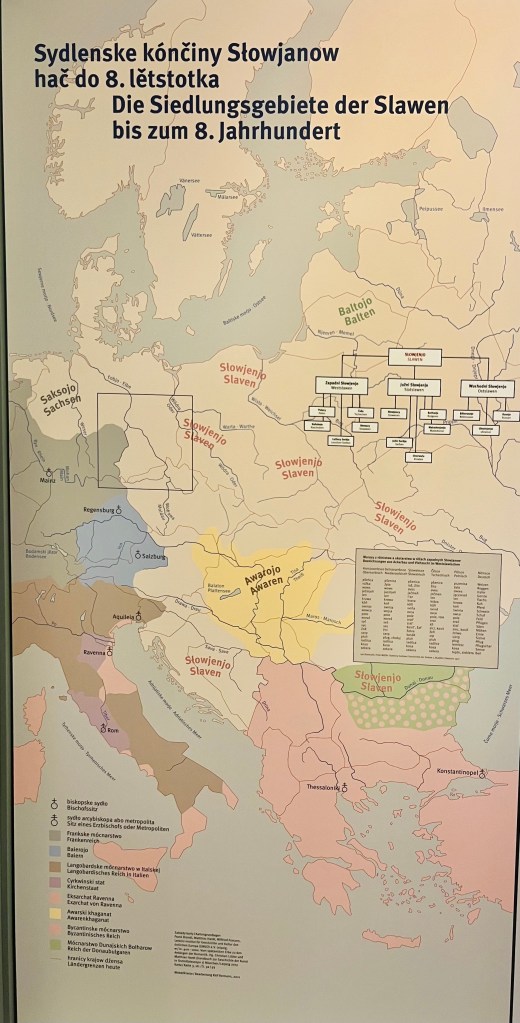
The Sorbs (also known as the Wends) are the smallest Slavic nation – they comprise around 60 000 people. Sorbs and Germans have been living together for a thousand years in a region historically known as Lusatia (part of South-Western Poland and two Eastern German states – Saxony and Brandenburg). The ancestors of Sorbian people were Slavic tribes, who originally lived north-east of the Carpathian mountains. In the course of the Great Migration of peoples, between AD 500 and 700 the West Slavs moved from the East over Moravia and Bohemia to the area east of river Elbe. The Sorbs thus became over time separated from the ancient homeland of the Slavs and settled in the region between the Baltic sea and the German low mount ranges (Erzgebirge) about 1500 years ago.
The settlement area of the Slavs until the 8th century:
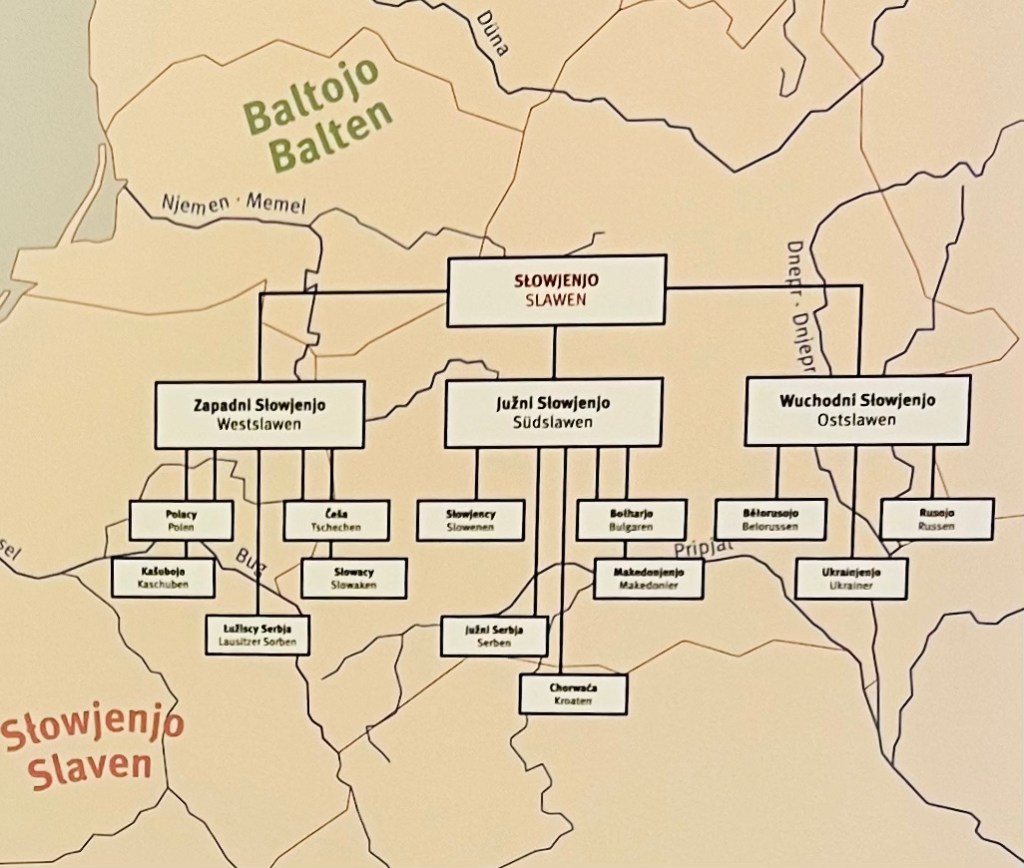
The Slavic tribes. Eastern, Southern, and Western Slavs:
The pagan Sorbian settlers lived from agriculture, livestock, and trade. Their tribal areas consisted of castle districts with a main castle around which their settlements grew. Castles were economic and political centers of power; they were governed by the upper class with the Prince at its head.
During the settlement of ethnic Germans into Eastern Europe in the middle ages, the Sorb tribes came into conflict with the East Frankish Empire in the 8th century and eventually lost their political independence between 10th-12th centuries. As a result of battles for the Sorbian land between German, Polish, and Bohemian feudal lords, Lusatia became part of the German Statehood and the Sorbs have since been living under the German rule . As the farmers from Flanders, Saxony, Turingia, and Frankonia were called out to cultivate the lands across Lusatia, it brought about mixng of the population.
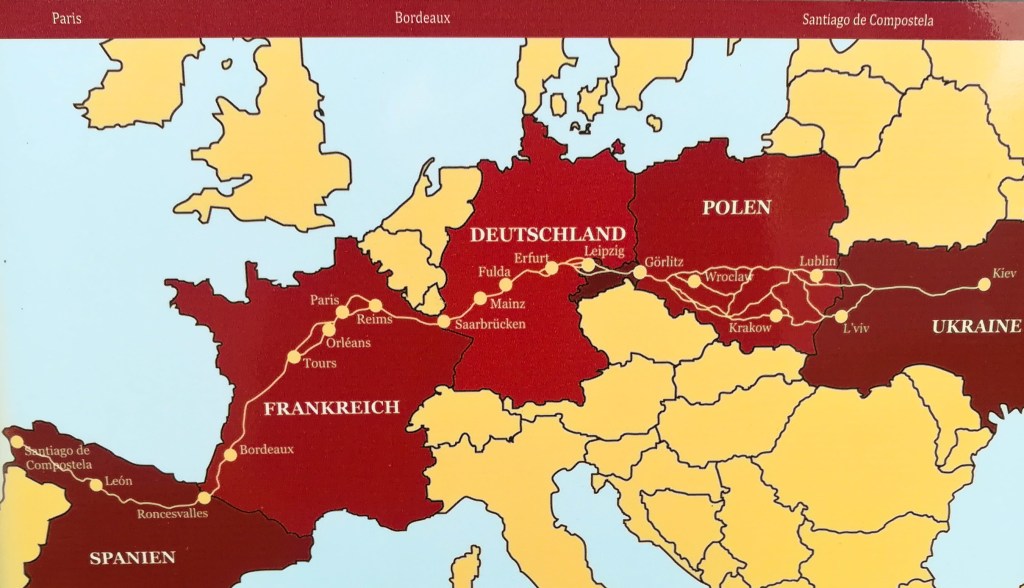
Aside from being involved in the agricultural activity, Sorbs became skilled craftsmen as trade was thriving in this region over the middle ages. This development was promoted because Lusatia was located on important medieval trade routes, such as Via Regia, which ran from Kiev to Spain via Krakov, Wroclaw, Gorlitz, Bautzen, Leipzig, Frankfurt, and Mainz.
The submission of the Sorbs to German rule brought along many changes, including Christianisation of the pagan people. Upon Reformation, most Sorbs became Protestants, while a small portion of those living around Kamenz and Bautzen remained Catholic.
In the 20th century, conflicts awaited the Sorbs: the national socialist banned Sorbian languages and associations, while the GDR eroded the Lusatian villages and small towns through open-cast mining and brought harmful impacts through collectivization of agriculture. The Sorbs were forced to abandon the suburbs and migrate inward. The Sorbs have been loosing their homes and entire villages have disappeared as a result of never ending hunger for energy and prosperity, which causes development on their lands. Nonetheless, the Sorbs still live in their traditional region and preserve their culture.Throughout the processes of assimilation and targeted Germanisation, observing traditional customs was a means of their survival. Remarkably, despite persistent prejudices, the Sorbs were guaranteed civil equality in the constitution of the GDR in 1949. Since then, their language and culture have been financially and institutionally supported by the State. However, despite promotion, the existence of the Serbian language is threatened. The Sorbs have achieved remarkable achievements in art, culture, and science, like hardly any other people of comparable size.
Today the Germans and the Sorbs peacefully coexist together – the Sorbs are the indigenous minority recognized by the Federal Republic of Germany. Only in Lusatia have the Sorbs been able to preserve their otherwise vanished Slavic language and develop it into two modern, written languages – Upper and Lower Sorbian – which are taught at schools and universities. Their language is a fundamental aspect of their cultural identity . As Sorbs still live in their traditional region, they retain their deep ethnological roots as well as connection to rural way of life and Slavic mentality. The preservation of traditional Sorbian customs is considered valuable because their variety mirrors the beauty of the culture and strengthens the sense of belonging of the smallest Slavonic nation. Their customs in the course of the year are an expression of national affiliation and have been part of the intangible cultural heritage list of UNESCO.
Sorbian Settlement area over the centuries
(yellow – 9th century; brown – 21st century)
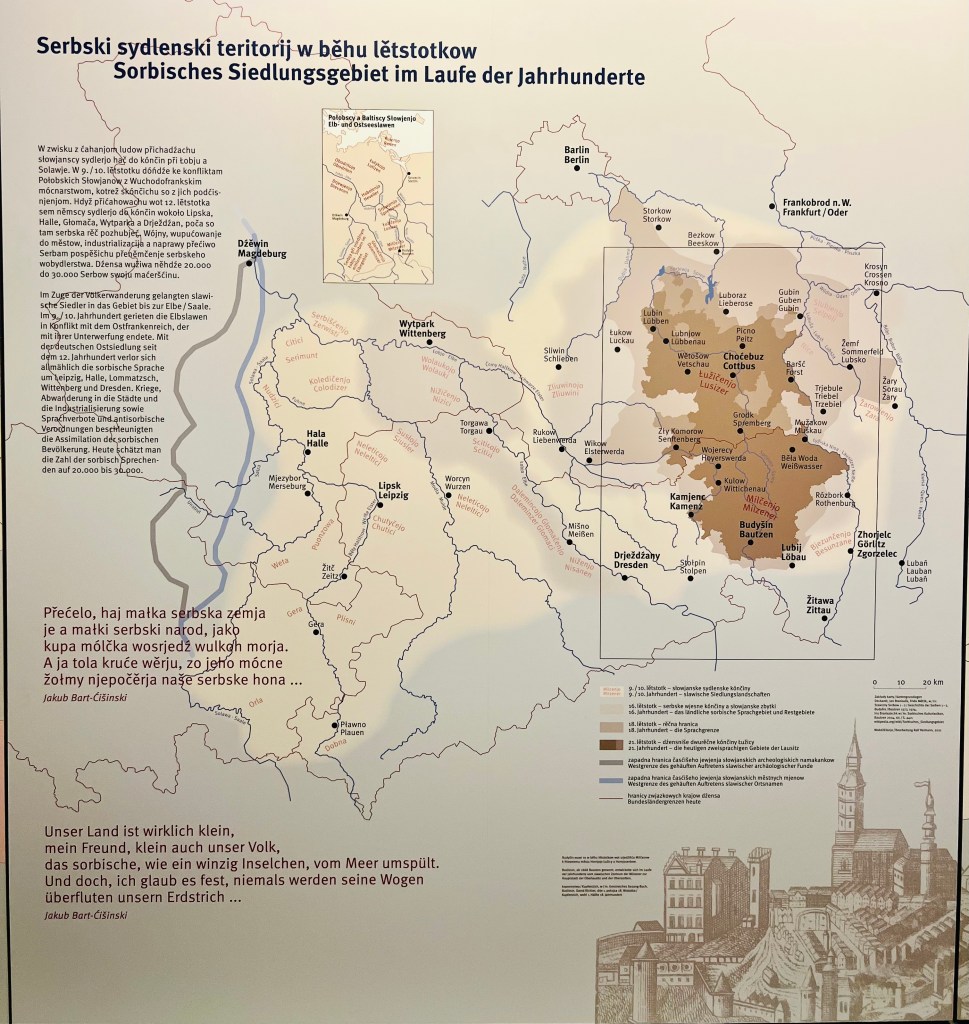
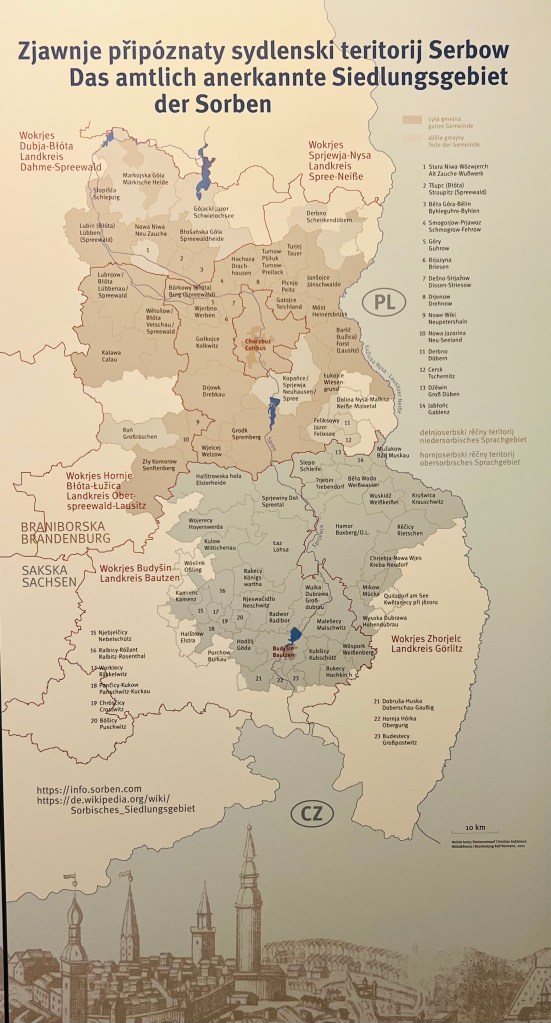
The officially recognized settlement area of the Sorbs
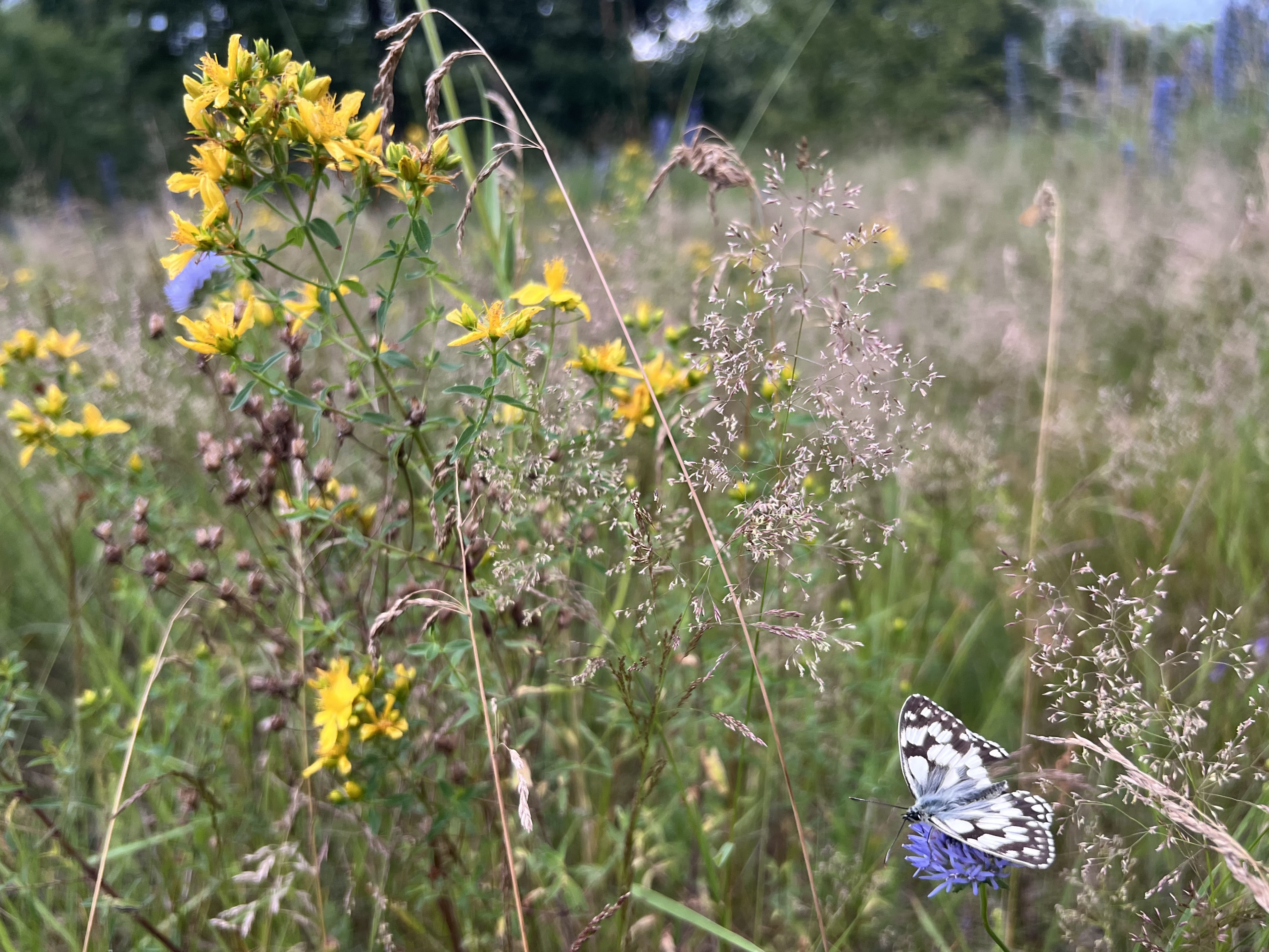
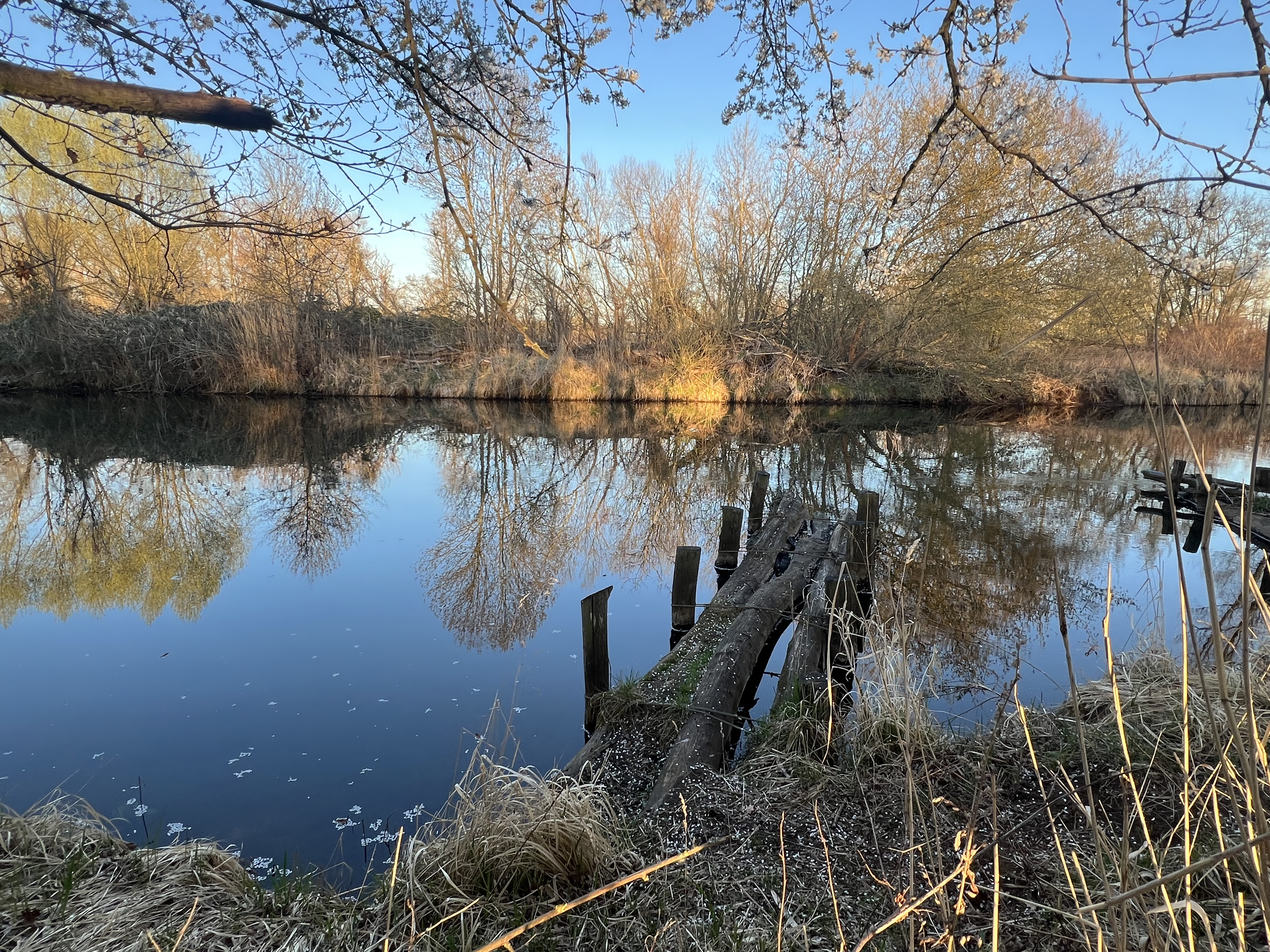
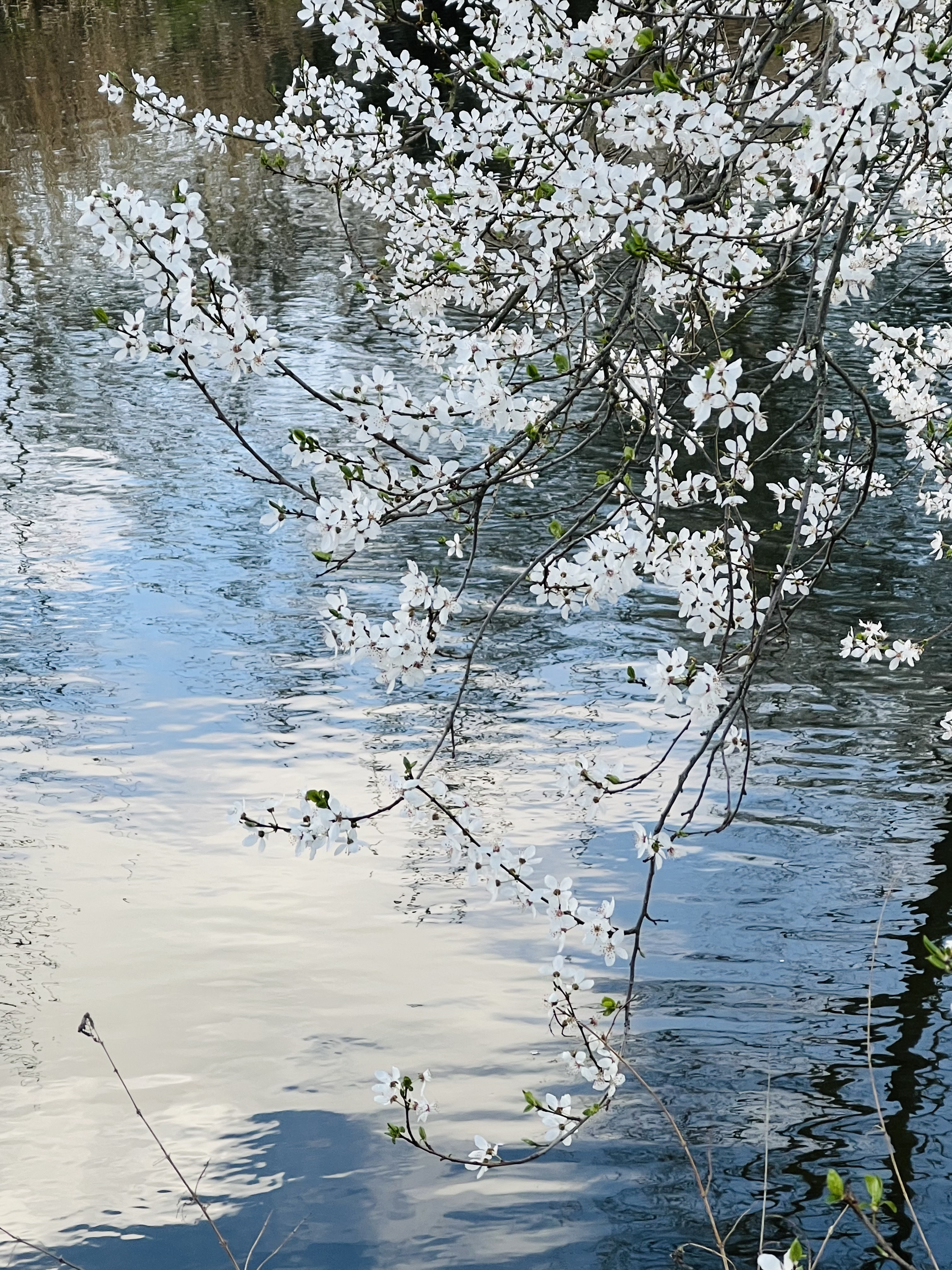
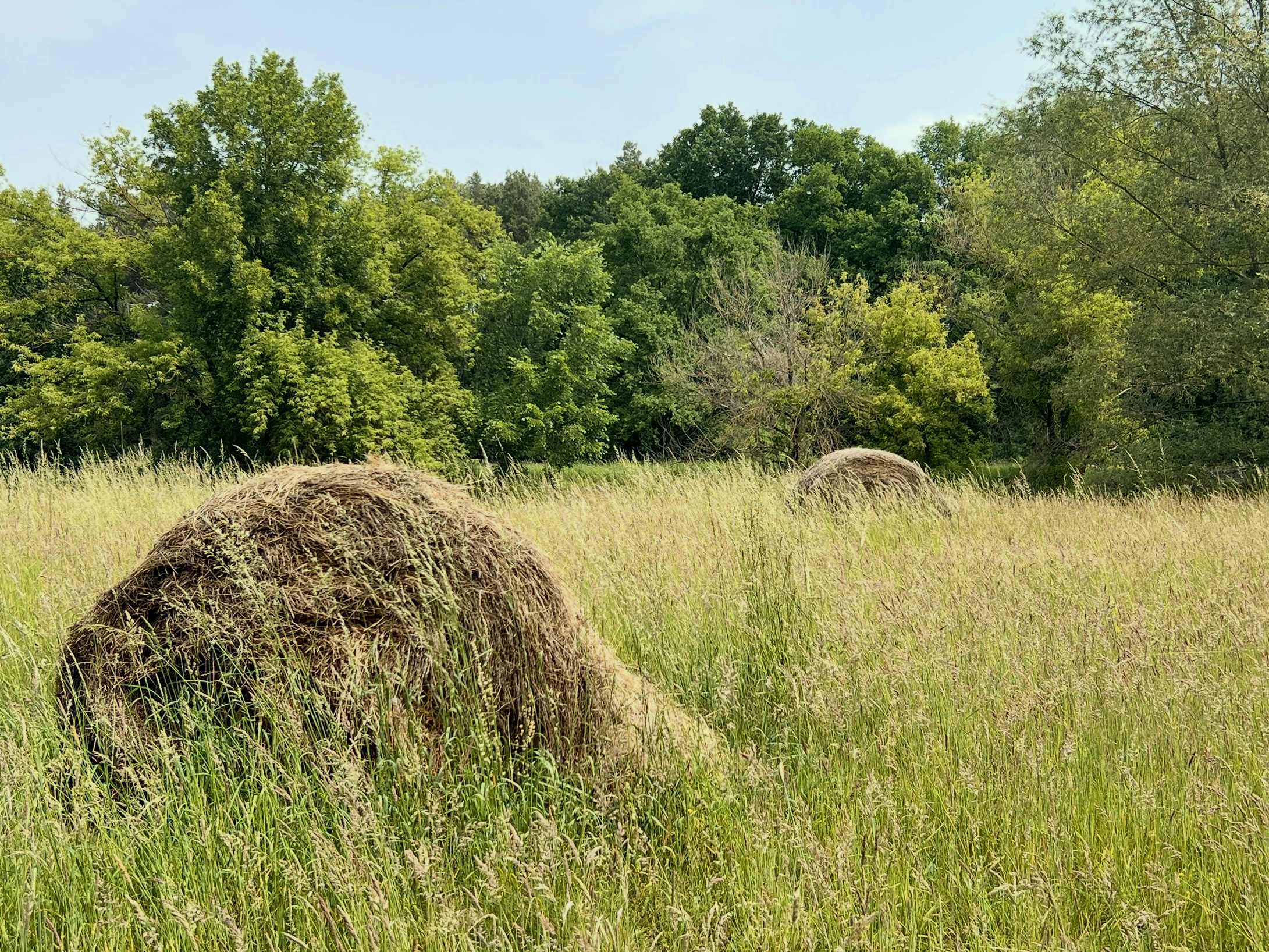
Elements of the Sorbian cultural landscape: Nature
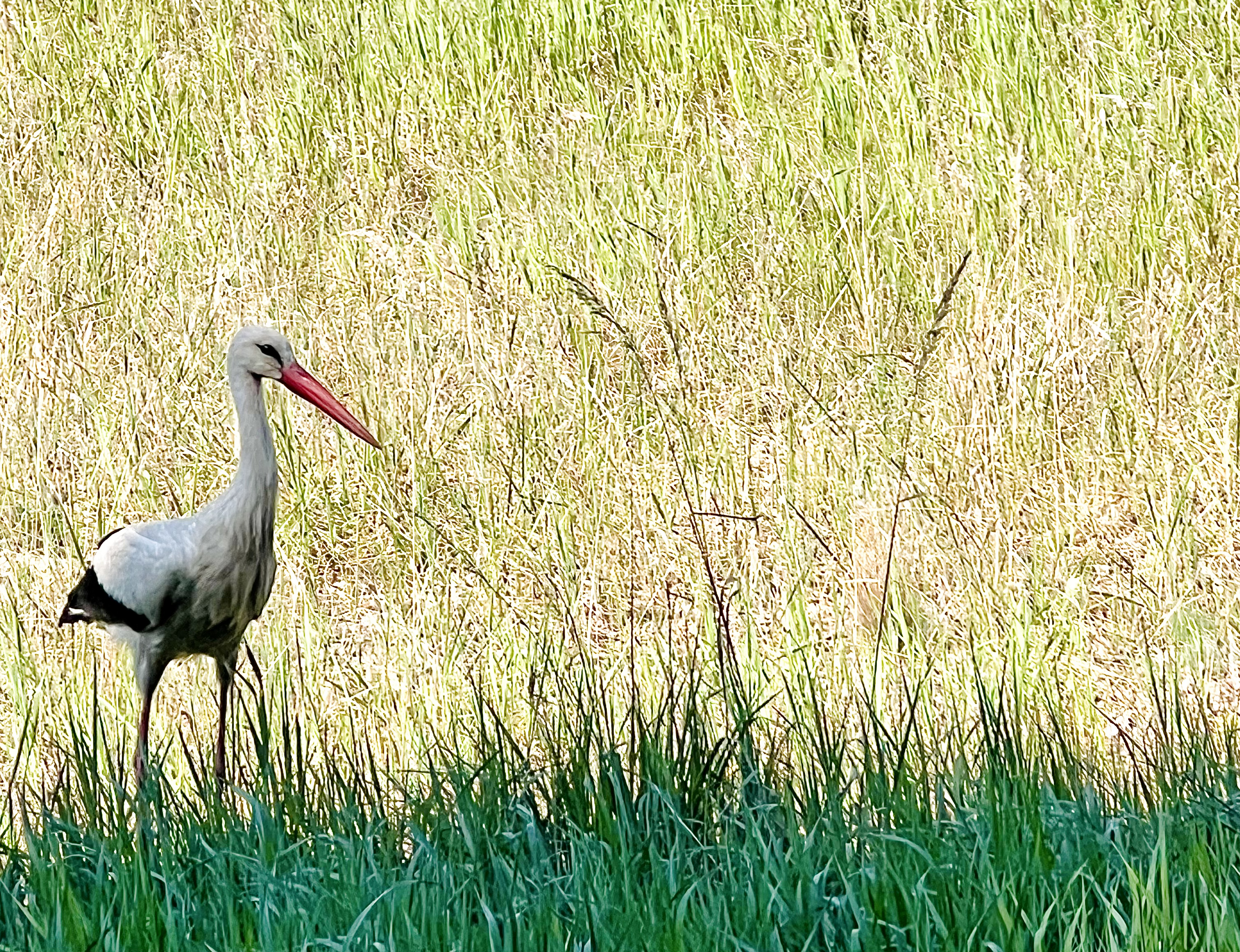
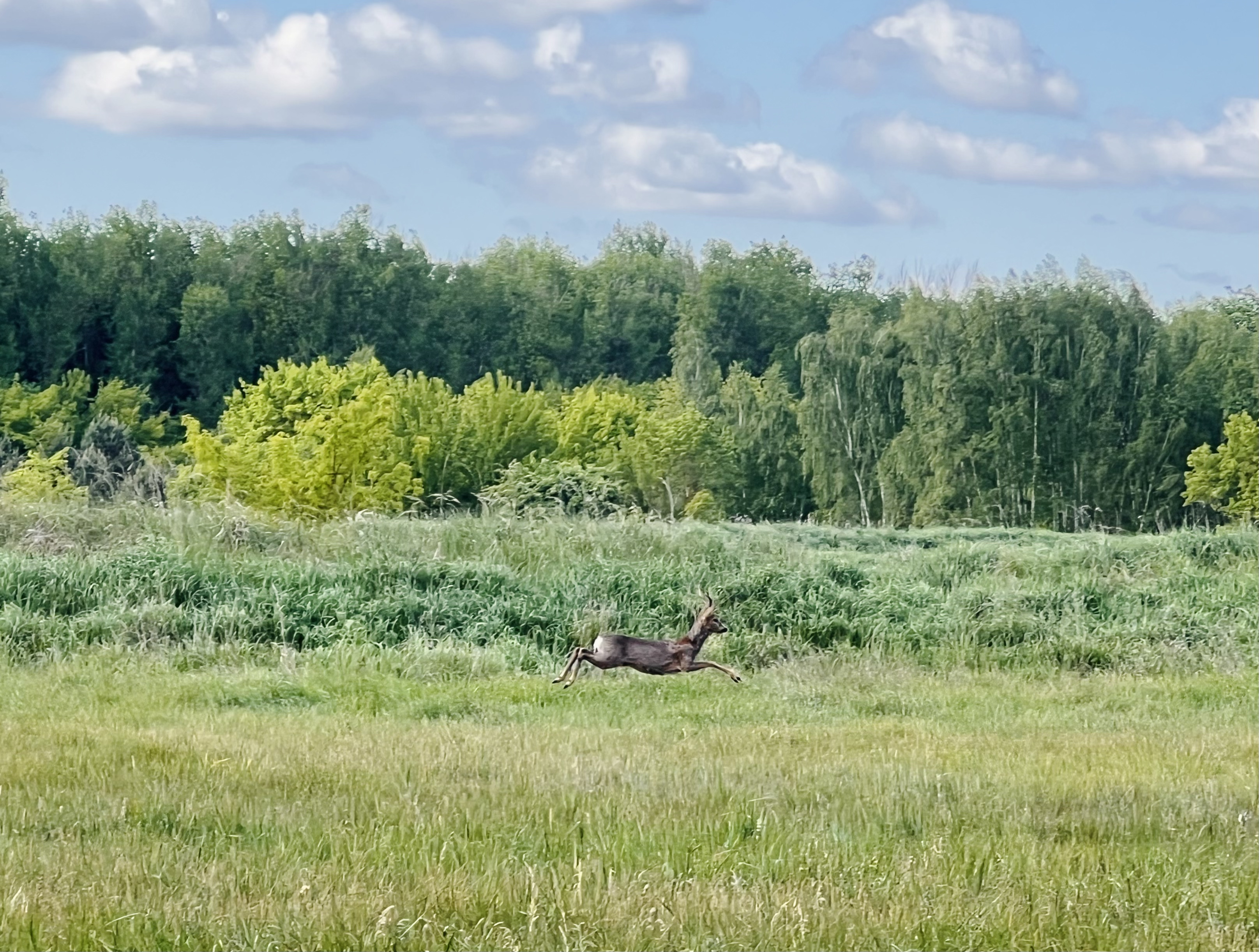
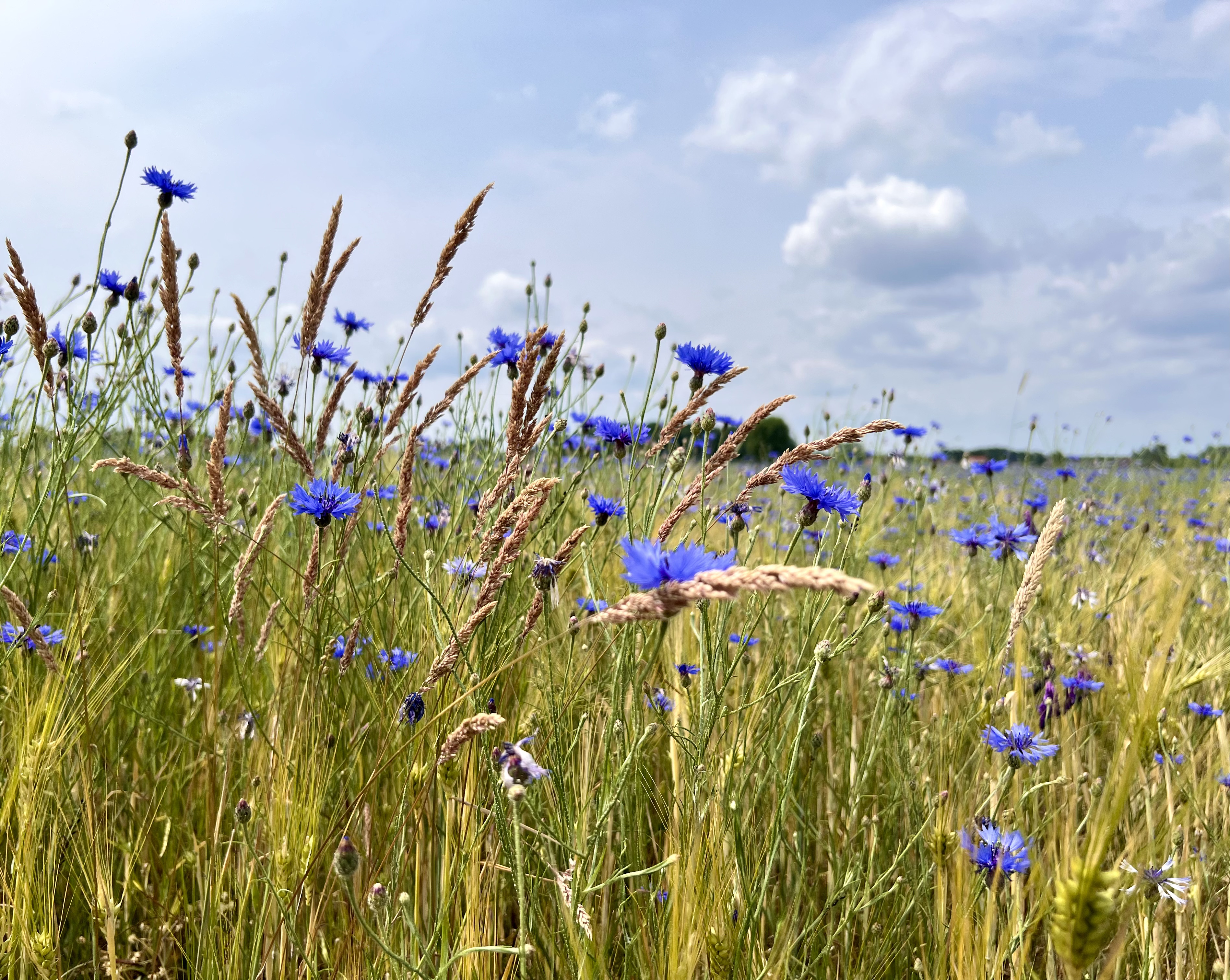
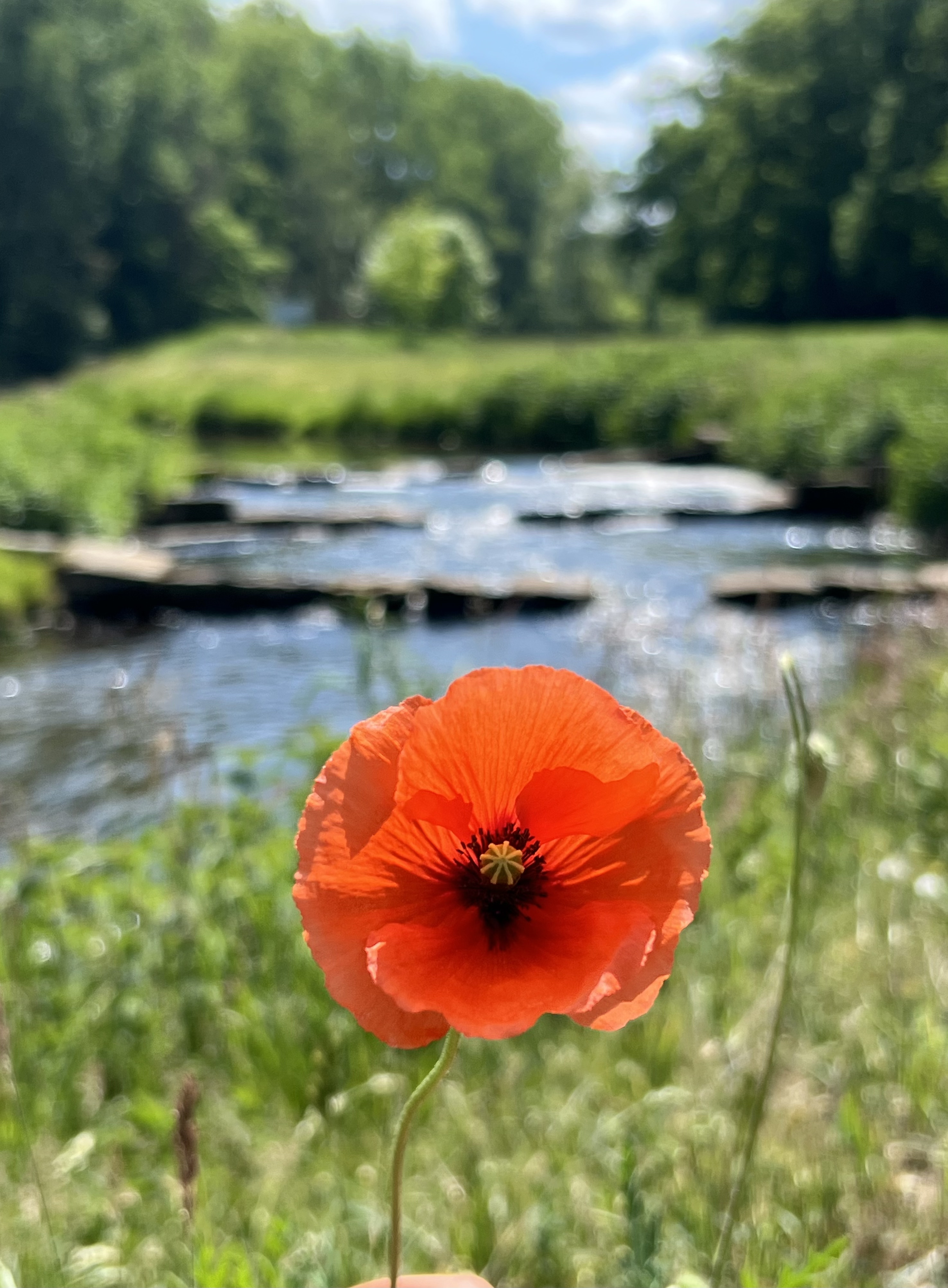
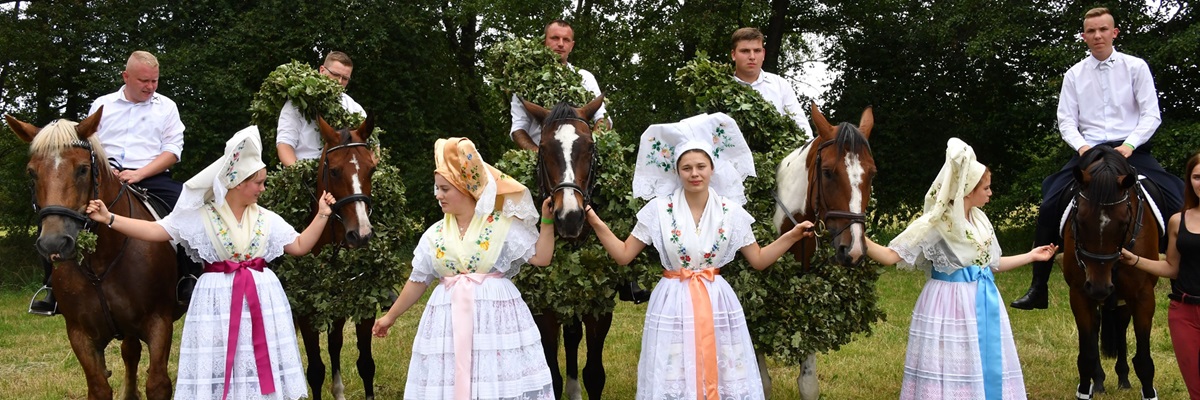
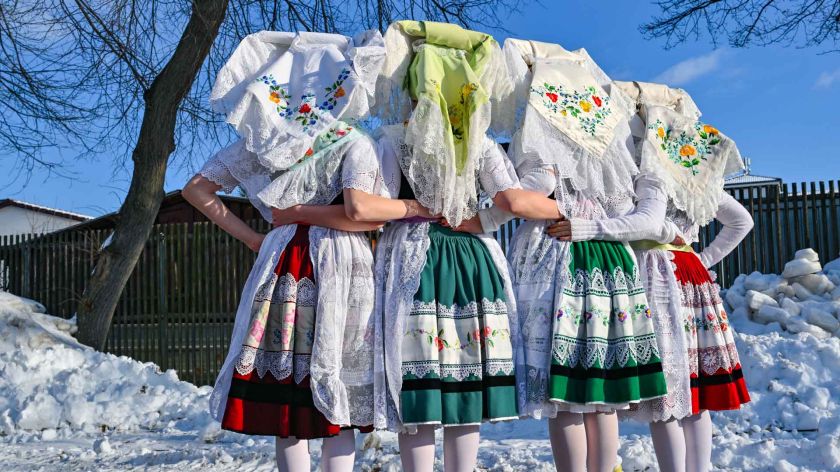
Some of the Sorbian traditional celebrations:
Birds’ Wedding
The origin and meaning of this custom has not been fully explained by experienced ethnographers yet. It derives from mystical rites of our forefathers in the pagan
times. They believed that sacrificing a dish ensures the favour of the gods of nature. People also noticed that many birds lay eggs in the winter season and concluded, therefore, that their »wedding« must have already taken place. At the turn of the 18th century, offerings to forefathers and gods became little gifts for children. This change also shows in today’s interpretation according to which children are guardians of the birds’ realm, and at their wedding birds repay the children for the service. On the morning of 25 January, children in Lusatia place a plate on the windowsill or in front of the door for the birds to fill with sweets. The processions of school children in Sorbian wedding folk costumes of the given region are particularly charming. After the bride and the groom walk two godmothers, then the bride’s maid and finally the wedding guests dressed as birds. Merrily they go through the village stopping at everyone who contributed to the preparation of this feast.
Shrovetide Festivities in Lower Lusatia
No other custom is celebrated in Lower Lusatia with such intensity as Sorbian Shrovetide, closely linked with the working life of the village. In wintertime girls and young women gathered at spinning evening parties, sat at spinning wheels, sang folk songs or hymns and exchanged local gossip. Before the spring sowing, young men could then take them to the Shrovetide merry-making. The spinning evenings served also as community centres where young
people could socialise. Today’s form of the Shrovetide festivities came into existence as late as at the end of the 20 century and consists of the carnival (camprowanje) and a festive procession
Historically the oldest part of the Shrovetide festivities is the parade of young people going round the village. Its roots go back to pre-Christian religious rituals. By means of noise, masks, beating with birch rods and dance, demons were to be kept away from farmhouses. A rider on a white horse, a stork symbolizing the coming spring, bear as the symbol of the departing winter, a chimney sweeper sweeping the spirits of winter out, and a double person representing a dead man carrying a living one. At present, these characters lost their original meanings.
The village youth put on masks and funny costumes and to the music accompaniment and in group they go from house to house collecting bacon, eggs and money. To repay the gifts, they ask the farmer’s wife to a dance and the farmer is offered palenc (hard liquor). The gathered food and drink are then, mostly about a week later, eaten and drunk at the egg feast
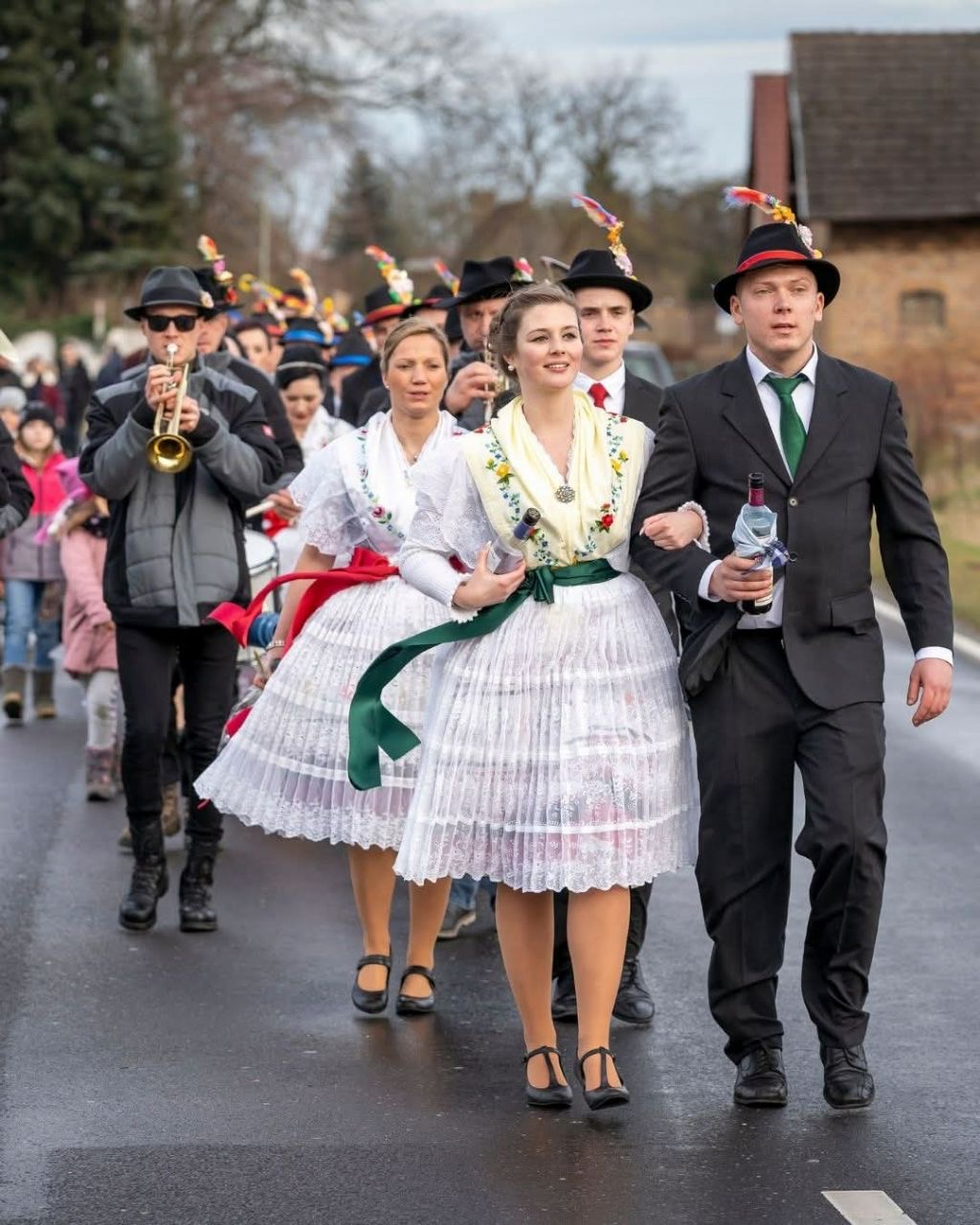
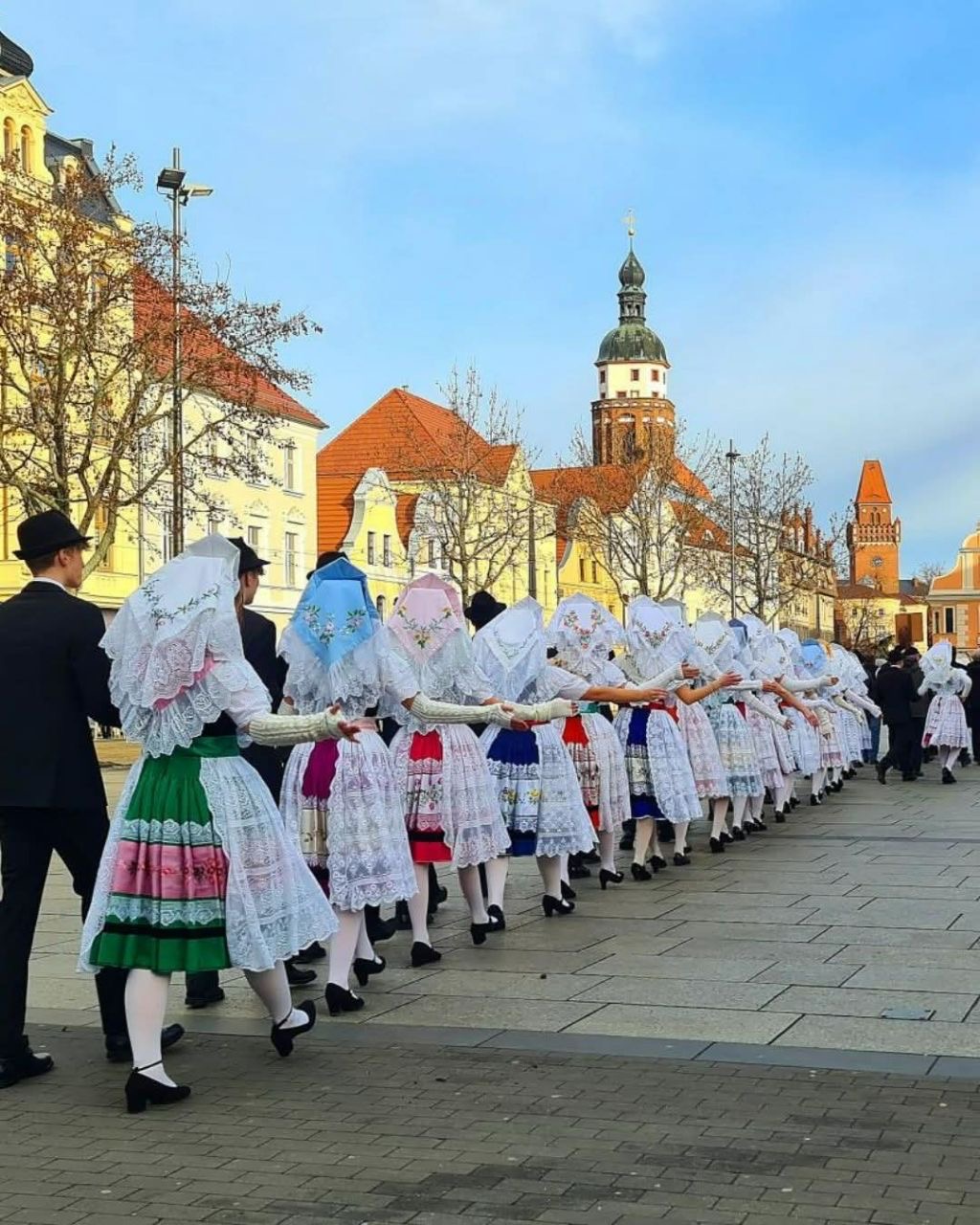
Shrovetide in Lower Lusatia culminates with the procession of young couples, held on Saturday or Sunday. All participating women and girls wear the festive Lower Lusatian costume with an elaborately tied headdress called lapa. Each young man gets a bouquet made of artificial flowers from his female partner. Then the procession sets out, with musicians in the front. The procession makes honorary stops at the houses of distinguished inhabitants of the village who, in turn, repay with contributing to the Shrovetide moneybox. In the evening all go to the pub to dance. In Lower Lusatian Shrovetide festivities, held from mid-January to early March, nearly a thousand inhabitants from almost all villages and Cottbus take part.
Easter Egg Decoration
In many nations we can find specific ways of egg decorating passed from generation to generation. The joy of playing with colours and patterns led to the creation of real small masterpieces among the Sorbs. Since time immemorial eggs have been the symbol of growth and fertility. For centuries the egg has been given as a present, with the vitality contained in it supposed to be passed on to the recipient. In the woodland area around Bad Muskau and in the whole Central Lusatia, children used to be given plentiful gifts by their godmothers and godfathers at Easter. Even today children still collect their presents, and decorated eggs are part of them.
Wax decorating is not only the oldest but also the best-known egg decorating technique. With a specially cut goose feather and a pin head molten wax is applied on the egg – little triangles, dashes and dots are used in order to create ornamental patterns. To make multi-coloured eggs, wax marks are applied again and again while the egg is every time immersed in another dye. This procedure can be repeated up to six times. In the end, with a piece of soft cloth, wax is removed from the surface of the egg warmed above the candle flame.
The technique of scratching coloured eggs with a sharp instrument requires skill and the painter’s talent. Attention
must be paid to scratching the pattern clearly.
Who is fond of blurred outlines, uses etching. This technique means that various motifs are etched in the eggshell by using a caustic – salt acid or aqua regia – and a goose feather. Another wax technique of embossing has come back and is in fashion now. It involves decorating eggs with coloured wax applied and left on the eggshell.Easter-egg markets where you can watch folk artists decorating eggs are an unforgettable experience. They are held before Easter in the towns of Bautzen, Hoyerswerda,Weißwasser and the villages of Schleife and Halbendorf. All the techniques are shown with diligence, skillfulness and artistic perfection there. Many visitors are surprised at how many operations must be done before a colored egg is placed on the table.
Erecting the Maypole
On May Day Eve maypoles are erected at villages in Lusatia. They are about 30 metres tall tree trunks with garlands wrapped around. A small birch tree decorated with ribbons is usually placed at the top. Its lush green symbolizes happiness and fertility for people, livestock and fields. In pre-Christian times the maypole embodied the spirit of growth bringing health to the village and its people. Guarding the maypole from young men from neighbouring villages who want to cut it or steal it is of great importance. If this happens, the maypole may not be erected in the village for the following seven years. In contrast to Upper Lusatia, erecting the maypole
in Lower Lusatia begins with a festival of all the villagers. The maypole remains erect mostly till St. John’s Day, and then it is felled and sold at auction. Traditionally, in this area the custom culminates on the occasion of lowering the maypole.
Saint John’s Day Rides
Not only among the Sorbs did people in the past believe that on St. John’s Day, on 24 June, all medicinal herbs and roots acquire healing powers. St. John’s Day Rides, held as festivals until the mid-19 century in many villages of Lower Lusatia, are as old. At present this custom is observed only in the town quarter of Casel (Kozle) near the town of Drebkau (Drjowk). An association founded specifically for this purpose is the organiser of the festival. Local girls sew garlands of cornflowers onto one of the lads called Jan (after John the Baptist). On the head of Jan a crown of water lilies, roses and clove pinks is placed. Flowers picked up before dawn are said to have healing powers and bring happiness and joy into life and blessing to the fields.
Accompanied by other young men, Jan reaches the village green on horseback. His companions shield him from onlookers. Many try to stop the horse and steal from Jan his flower attire. The seized flowers are believed to bring happiness; therefore they are taken to the households. The festive day ends in merry dancing in the pub.
Zabijanje kokota / Killing of the Prophet Rooster
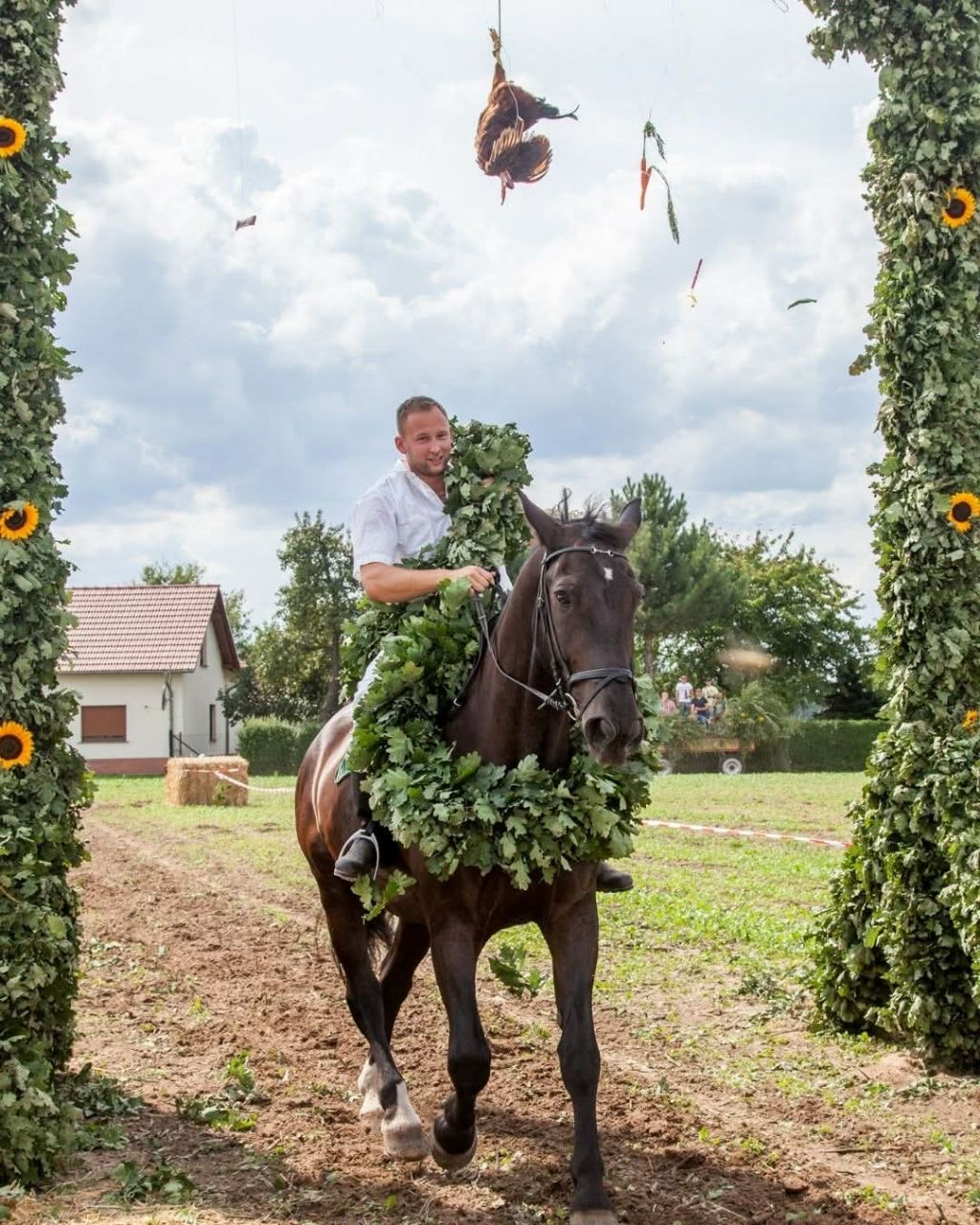
It is the oldest summer harvest custom in Lower Lusatia. After corn had been harvested and the vegetation time was
drawing to its end, the rooster had done his duty. The harvesters let a cock loose onto a field, and then repeatedly caught him and threshed him to death with flails. In this way the spirit of the old vegetation cycle was killed so that its old age weakness could not be transferred to the nature. Today, the killing of the cock is only symbolic. Alive cock is put into a pit covered with wooden boards. On them is placed a pot which young men try to hit with a flail; they are blindfolded. Everybody can try three times; who manages to hit the pot first, becomes the king and, still blindfolded, chooses his queen. Afterwards the cock is let free, but then caught again and sold at auction. This custom is observed only in several villages in Lower Lusatia, for instance in Schmogrow (Smogorjow) not far from the village Burg (Bórkowy) in the swampy area called Spreewald.
Janojski bog / Janojcy God – Gift Giving in Jänschwalde
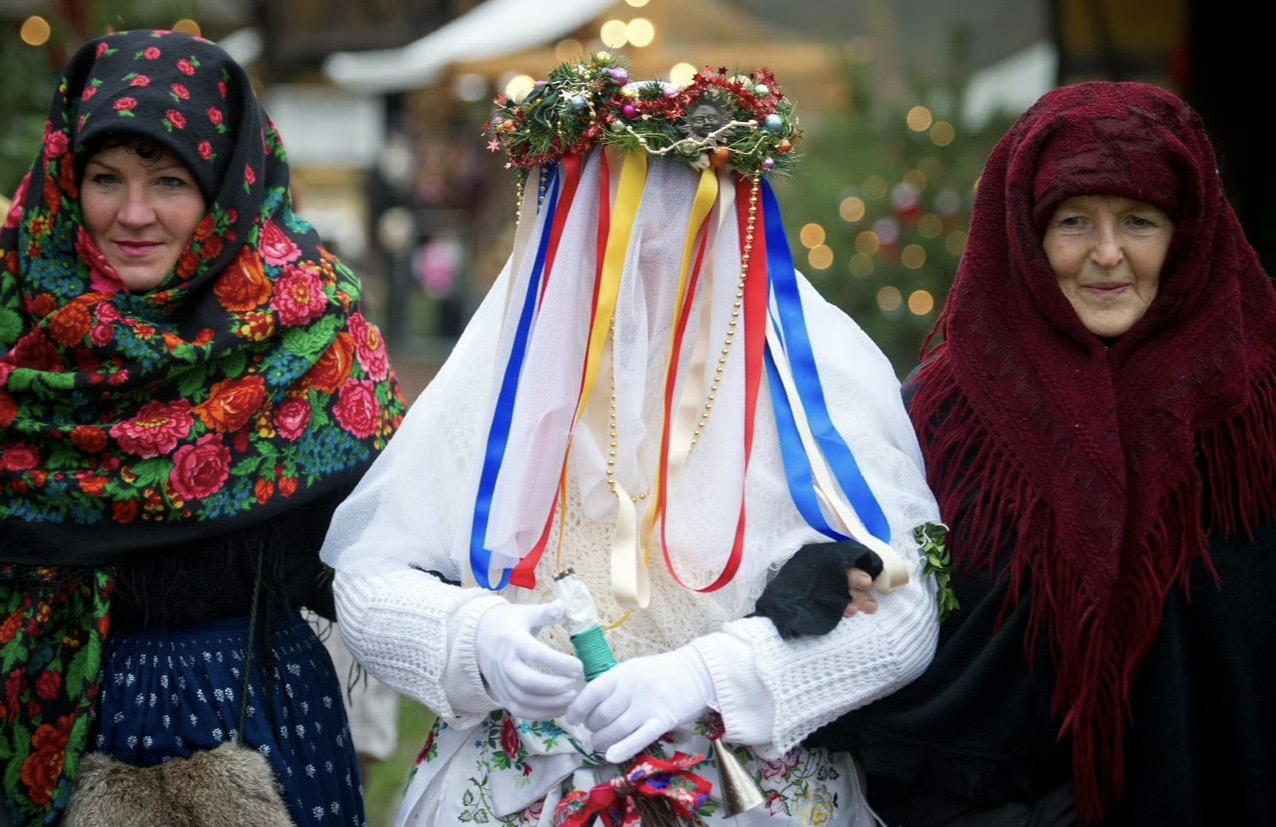
The figure called bog (god) going round and giving gifts is a pre-Christmas custom confined to the region of Lower Lusatia and dating back to the times of spinning evenings. It has survived to these days only in the village of Jänschwalde. Records about the Lower Lusatian spinning parties come from 14 century. From mid-October to Ash Wednesday, girls from one village met at such parties in one farmstead to spin together. On Wednesday before Christmas, other girls dressed the oldest girl in Jan[ojcy as Janojski Bog. The clothes of this figure consist of the most beautiful parts of the Lower Lusatian national costume: especially its rich headdress. In its middle three little wreaths of the bridesmaid’s costume are fixed. The face is covered with a tulle scarf adorned with pearl strings and appliqués of little coloured metal pieces. The red skirt is covered with two white aprons. Janojski bog. carries a little bell and a birch rod with intertwined coloured ribbons, too. While it is giving gifts to children, its female companions wait outside. The children’s parents are touched with the birch so that they may be healthy and happy in the New Year.
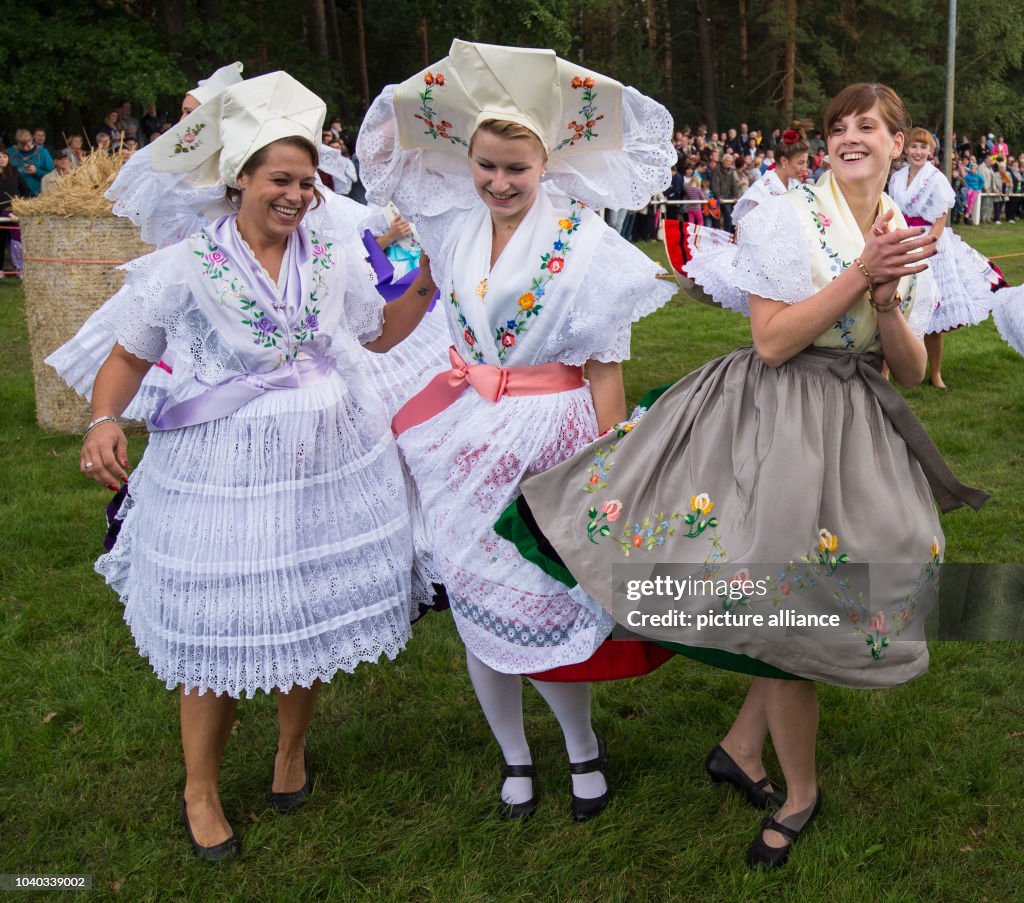
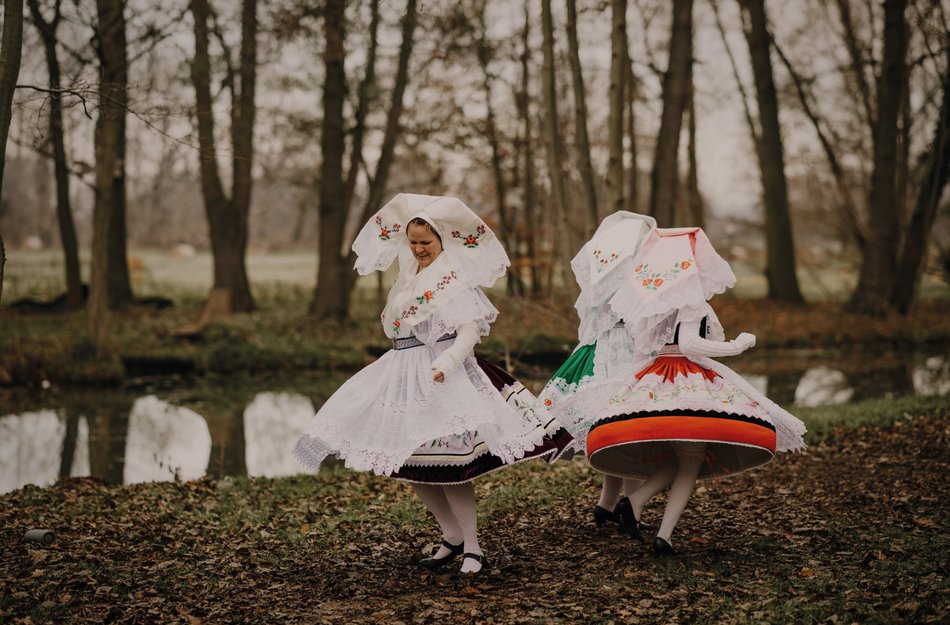
Intangible cultural heritage of the Sorbs: traditional festivities
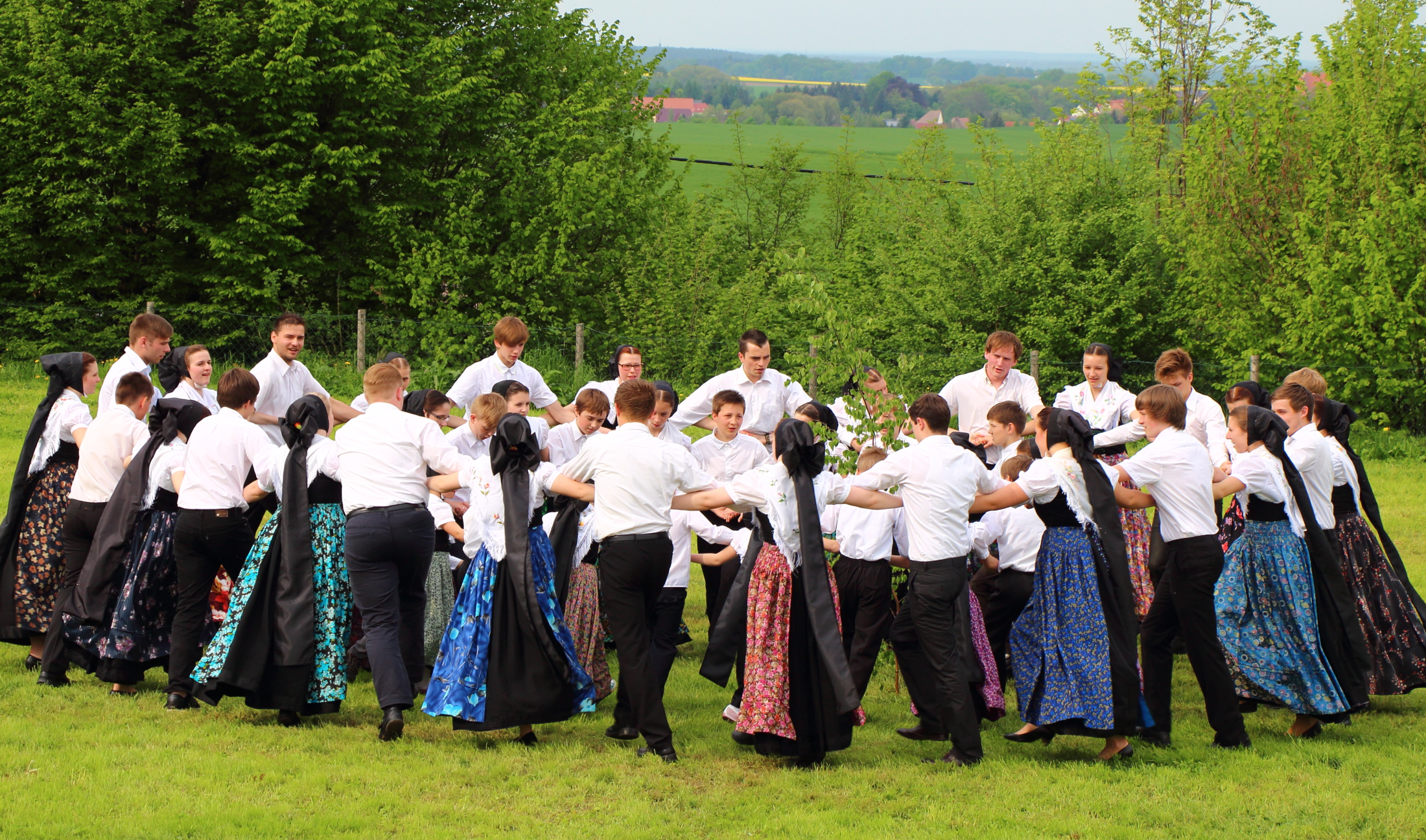
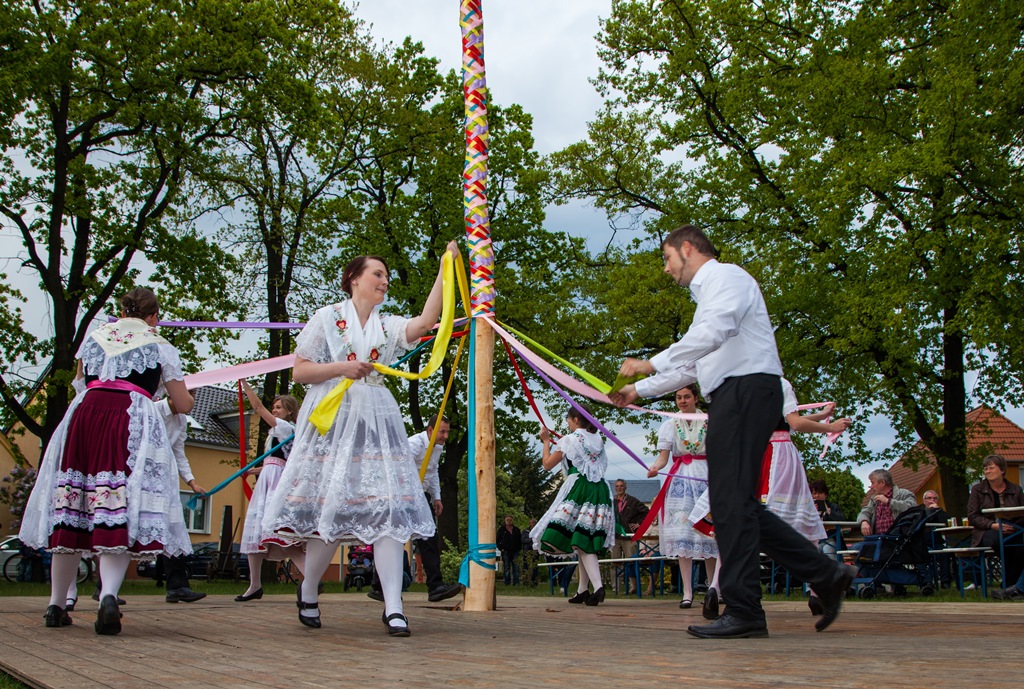
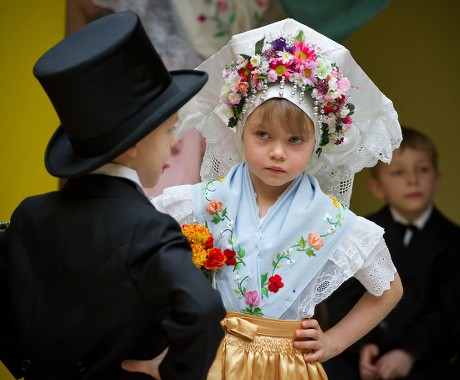
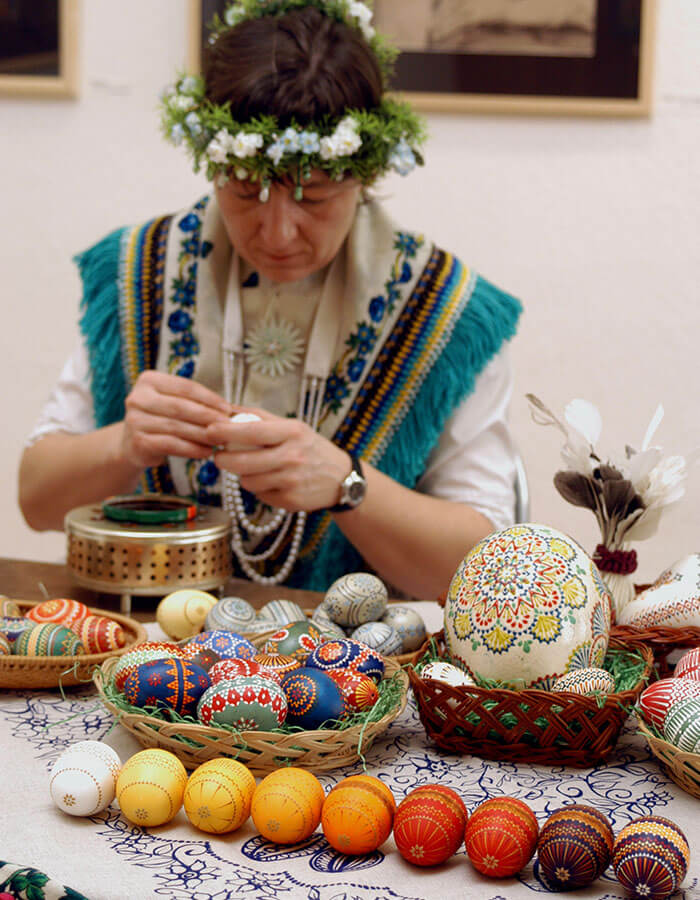
Representation of Sorbian cultural heritage in Urban Art of Cottbus
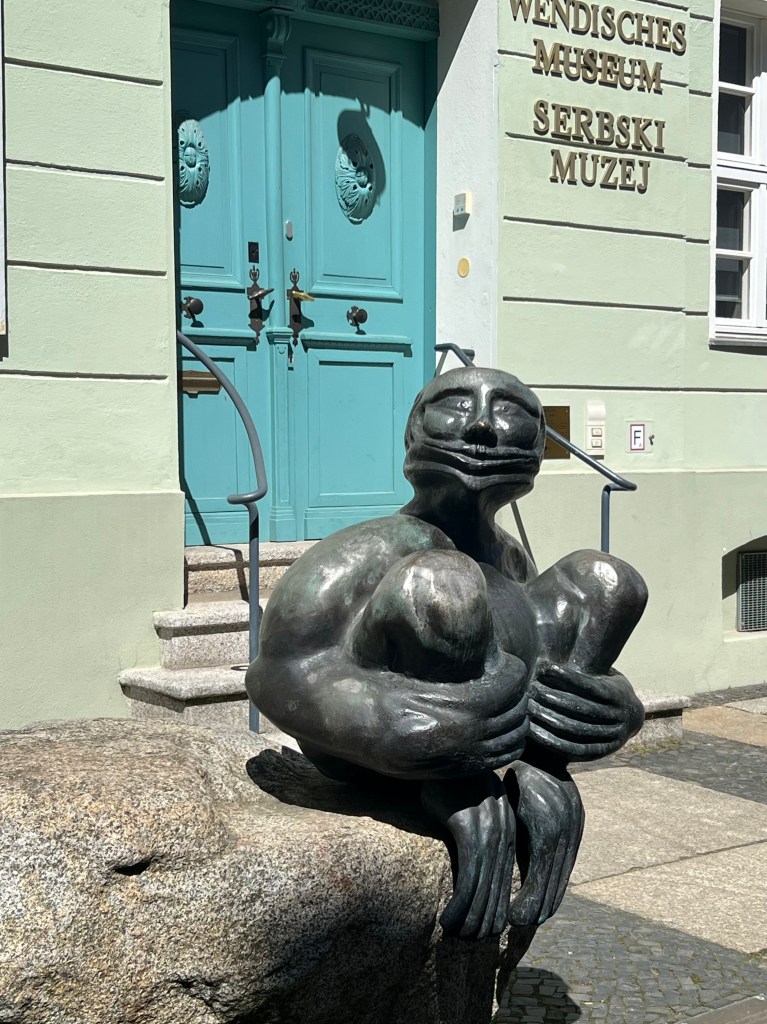
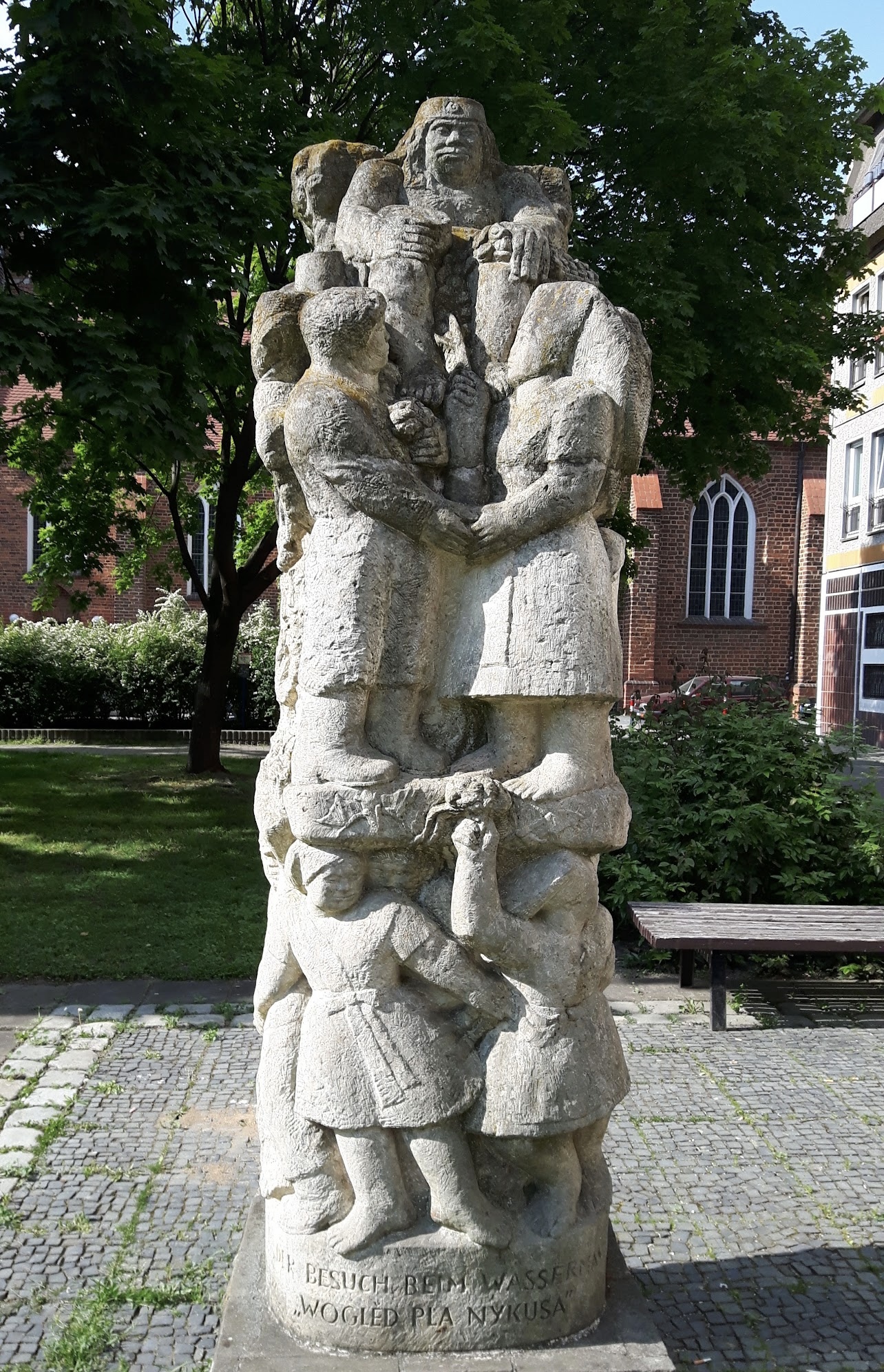
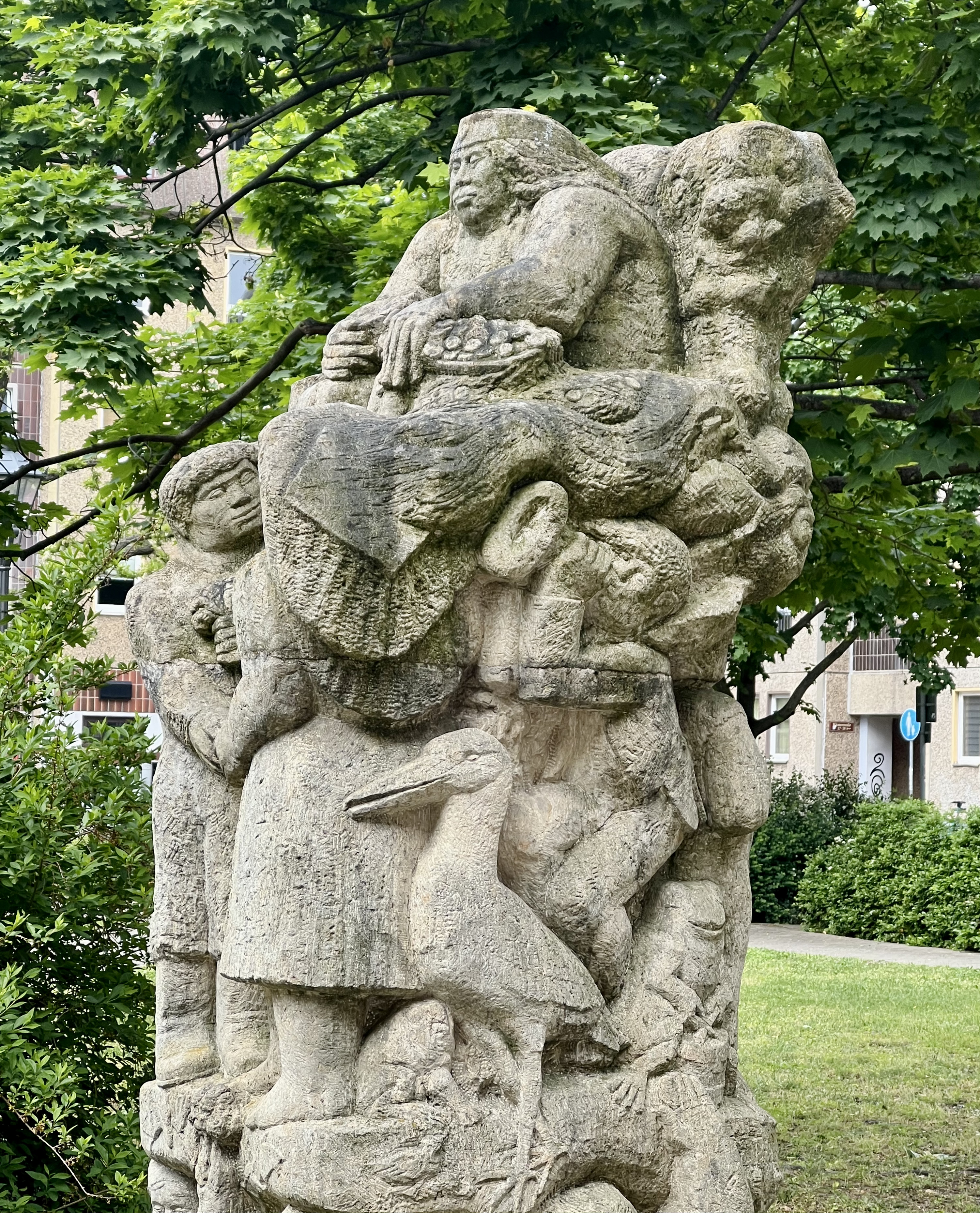
Sculpture on the left: Nykus / Water Spirit. Artist: Peter Buth. 2005.
This friendly little fellow is called Nykus or Wódny muž – the Water Spirit – a mystical figure from the legends of Lusatia, plays his pranks in the waters, especially of the local Spreewald river. Today, he adorns the forecourt of the Wendish Museum and invites visitors to discover the fascinating Sorbian/Wendish history and culture.
Sculpture on the right: Visit to the Water Spirit. Artist: Johannes Peschel/ 1985.
According to legend, the water sprite possesses powers related to water. He is often said to sit on the bank underwater or on the surface to scare away children from the water. However, he tries to pull curious people who reach for his water lilies down into his realm. Thus, he is portrayed ambivalently as both an evil and a benevolent figure in legend.
The special feature of this sculpture is the bilingual inscription: “The Visit to the Water Spirit – “Woglěd pla nykusa”. The sculptural composition features girls wearing traditional costumes with bonnets and boys wearing smart suits. The children are holding onto each other, thus surrounding the lower part of the sculpture. On the right side of the sculpture, a stork can be seen. In folklore, this symbolizes the beginning of new life. On the front, a couple in traditional outfits stands facing each other and holding hands. Above the couple sits the Water Spirit, observing the activity.
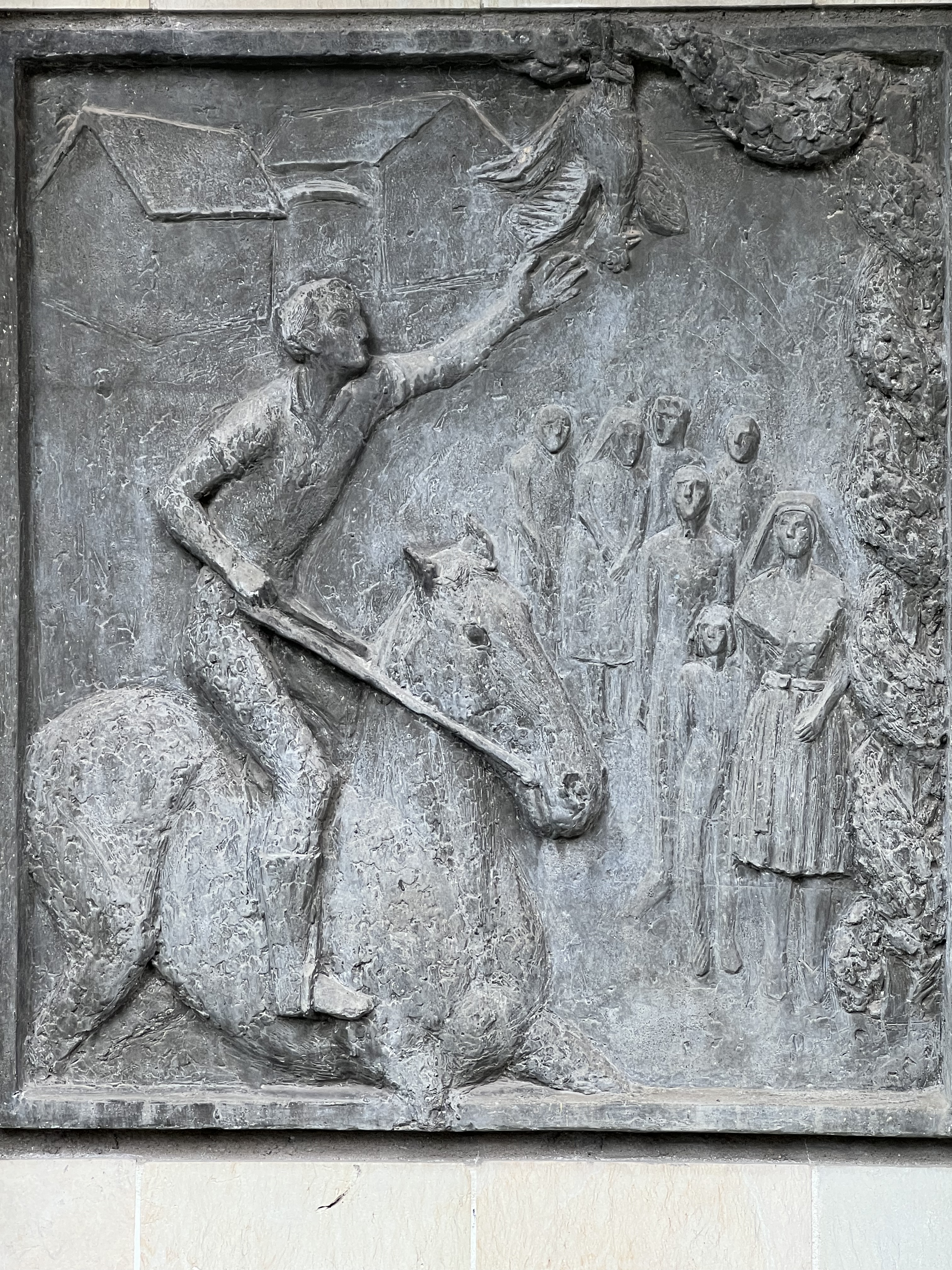
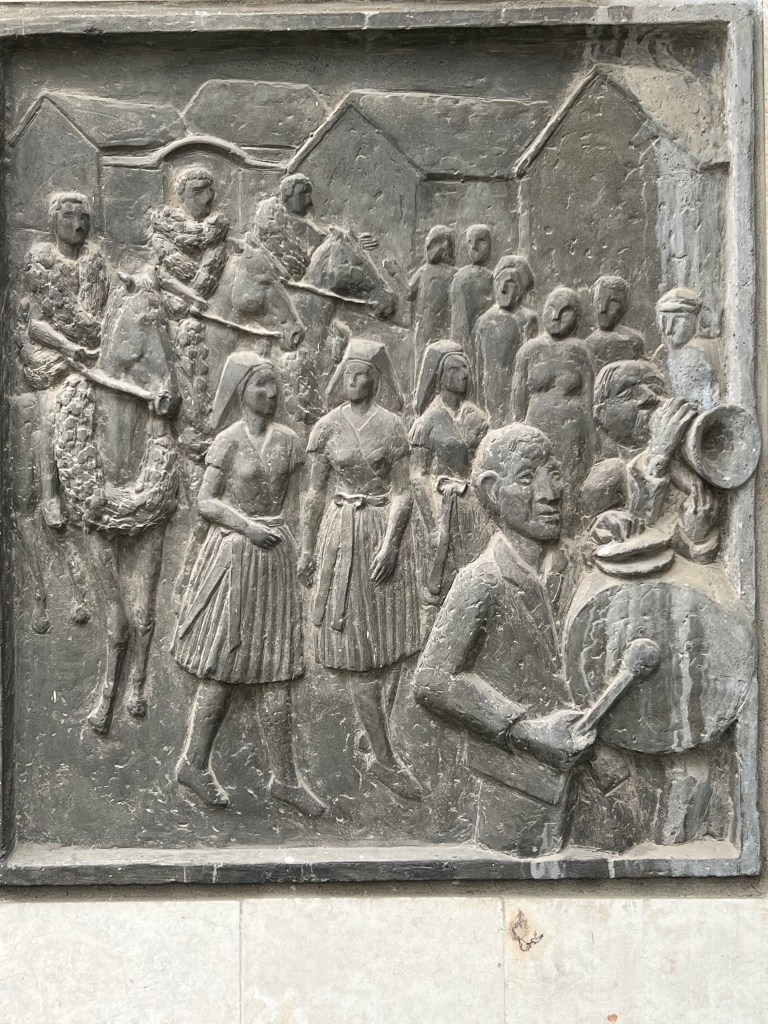
Facade Reliefs. Left: Lapanje kokota festivity (Killing of the rooster); Right: Zapust parade (Carnival). Artist: Lutz Kammerlein. 1985
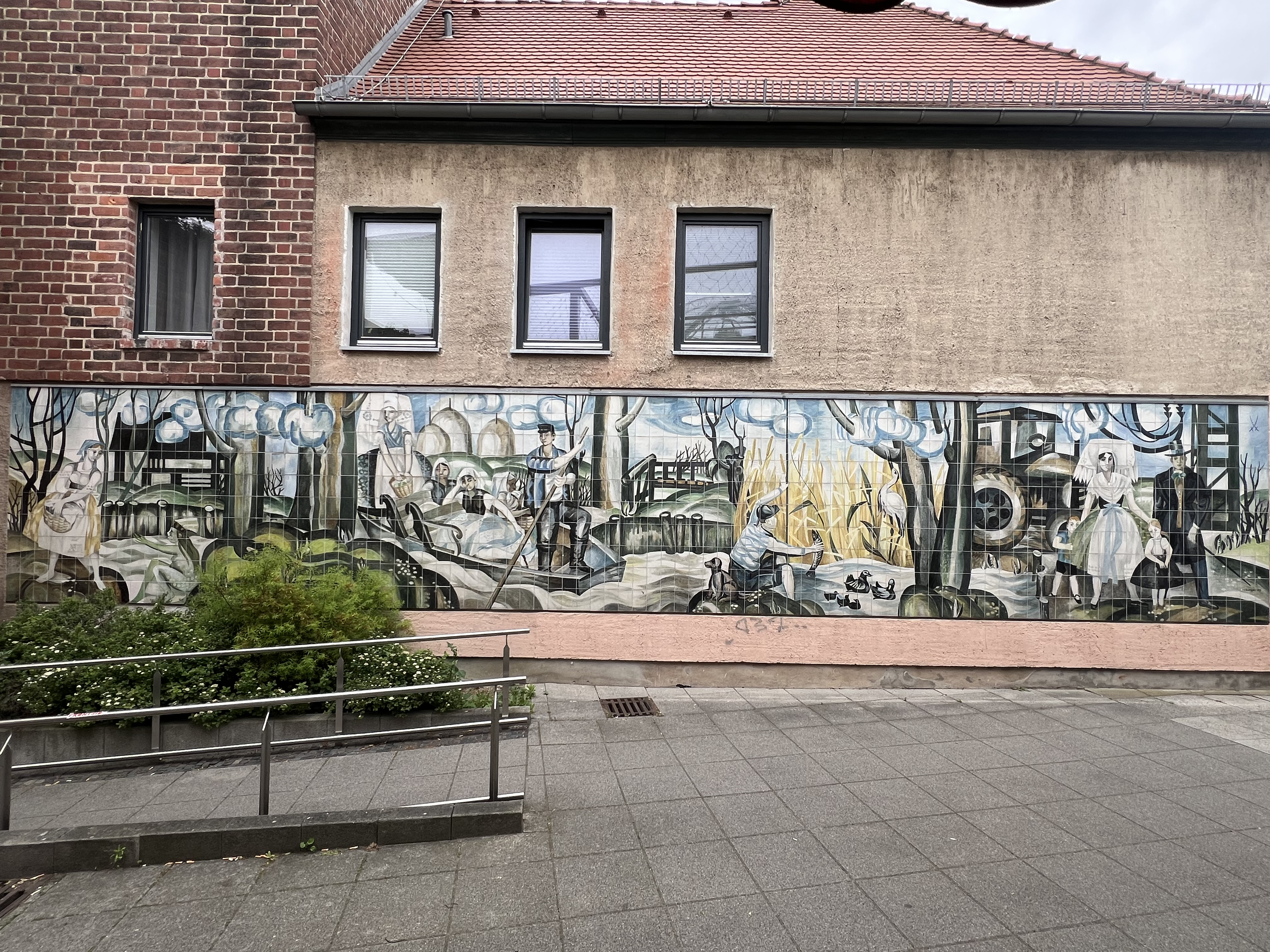
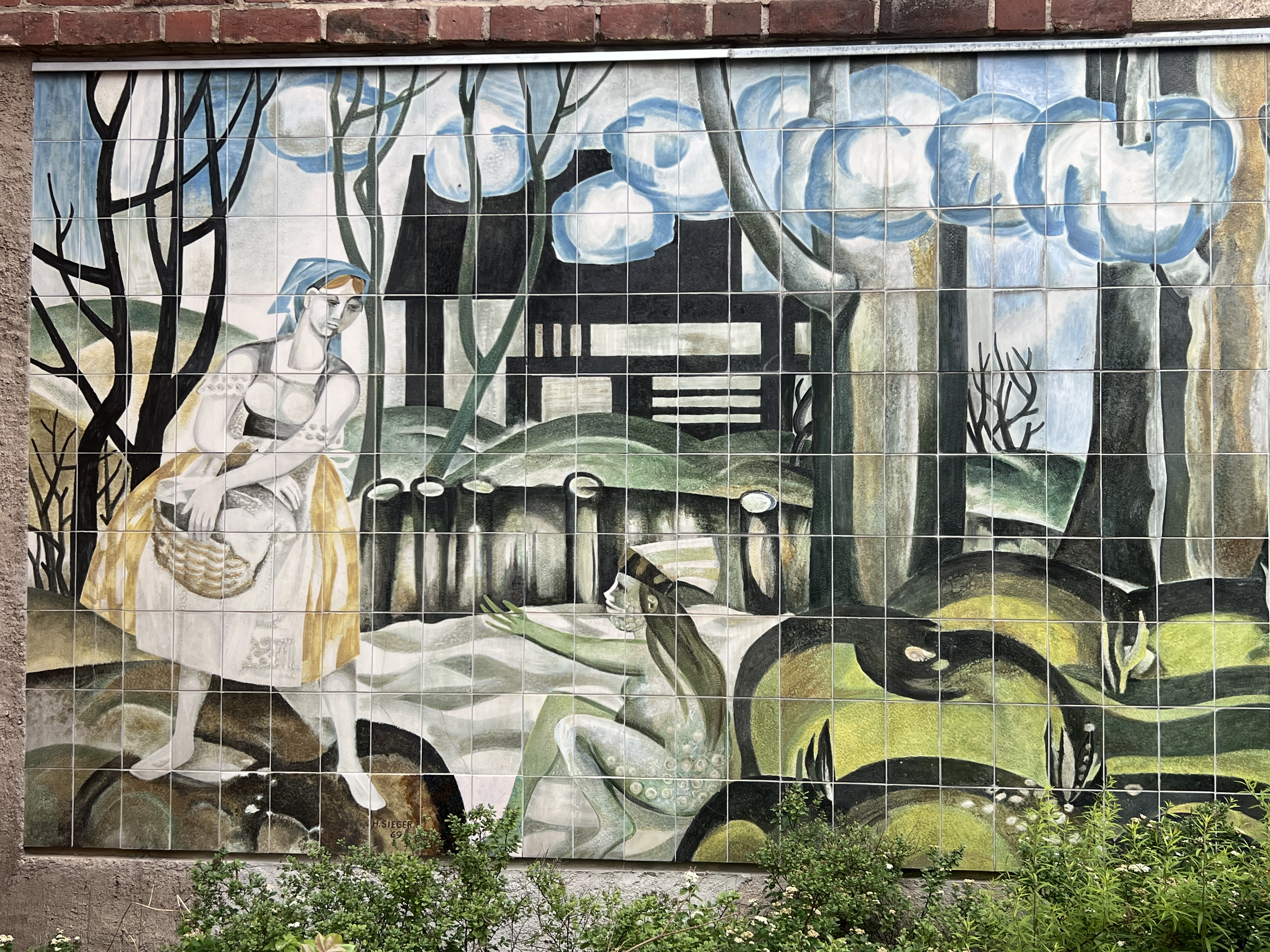
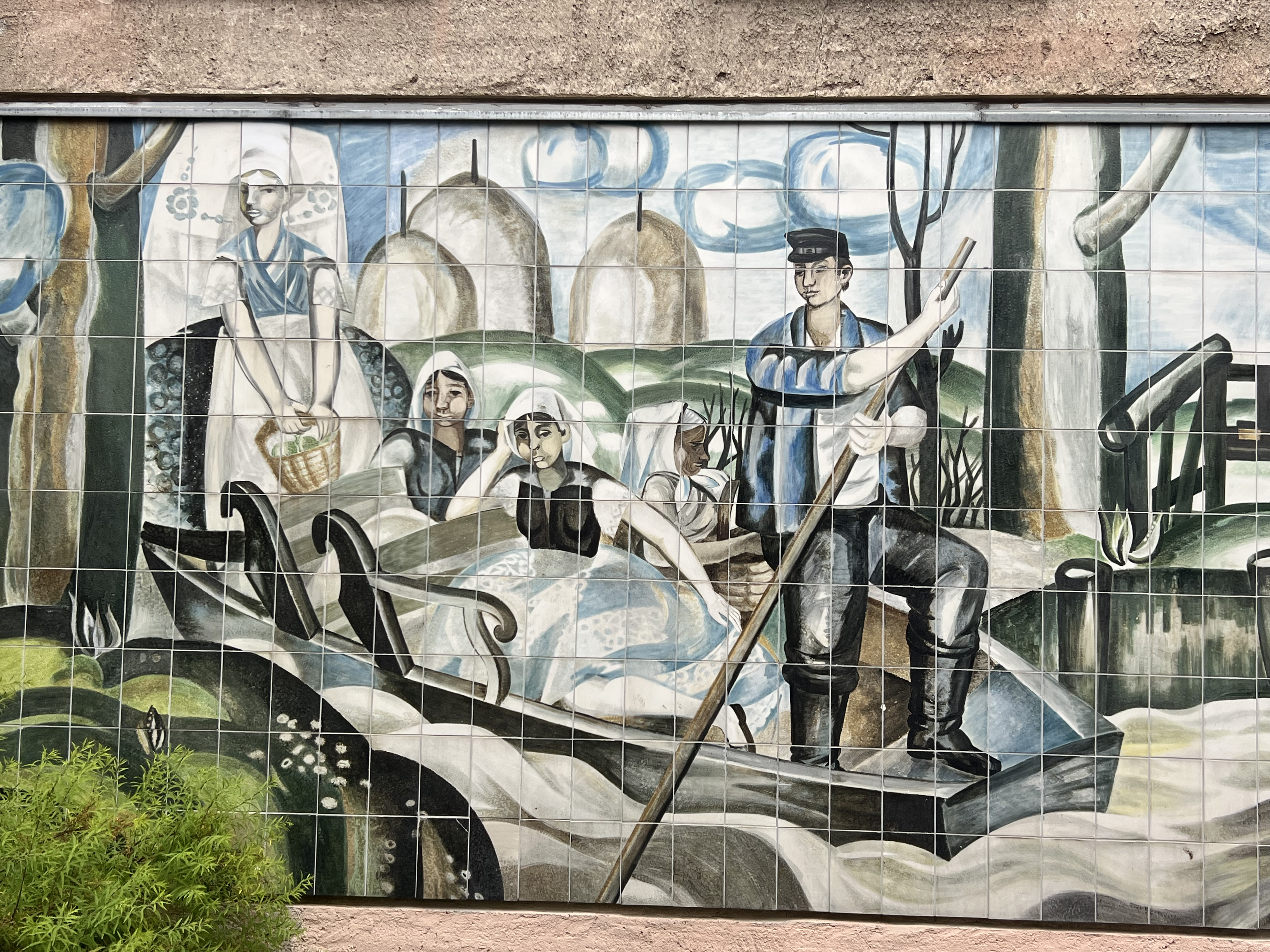
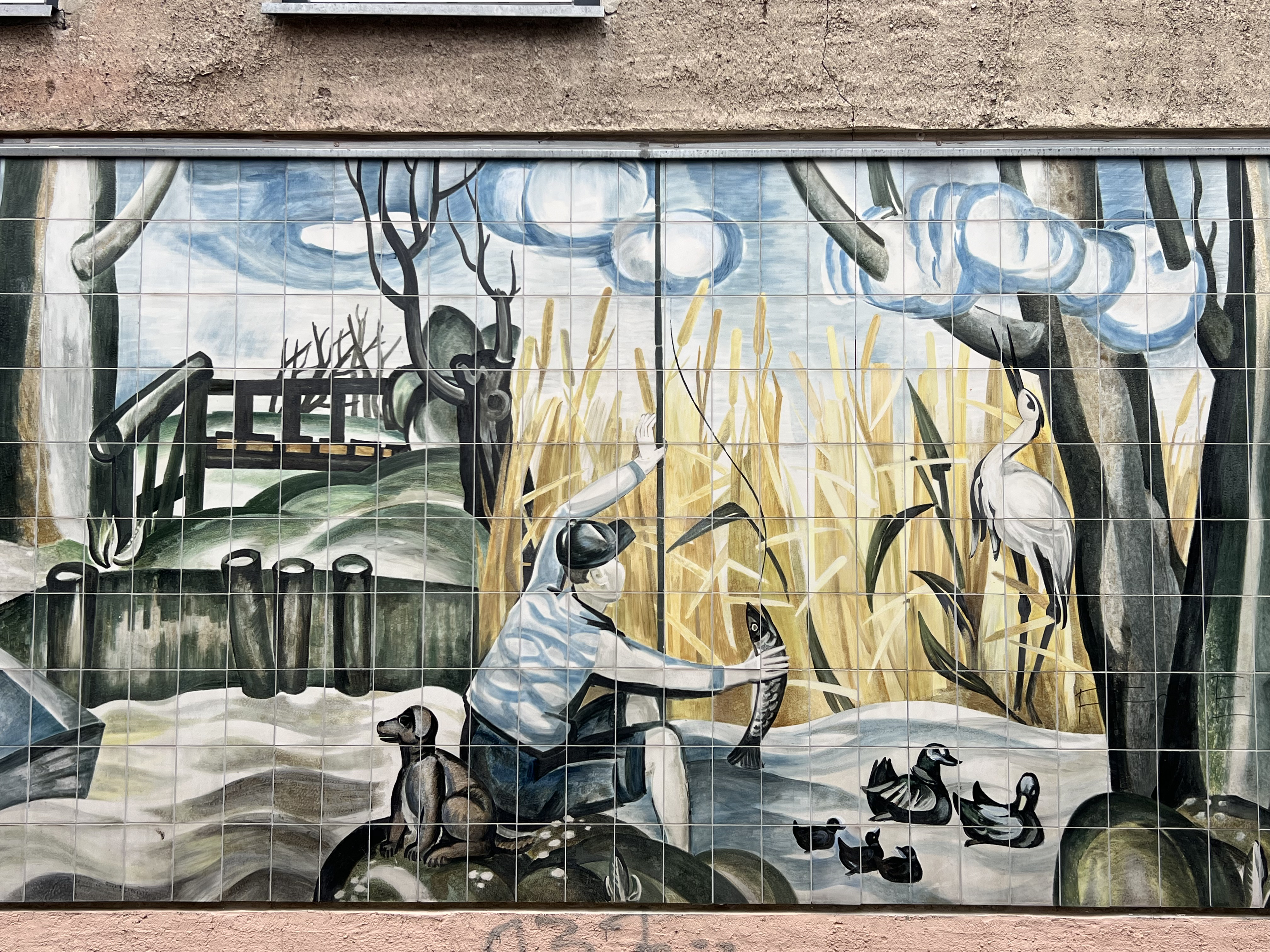
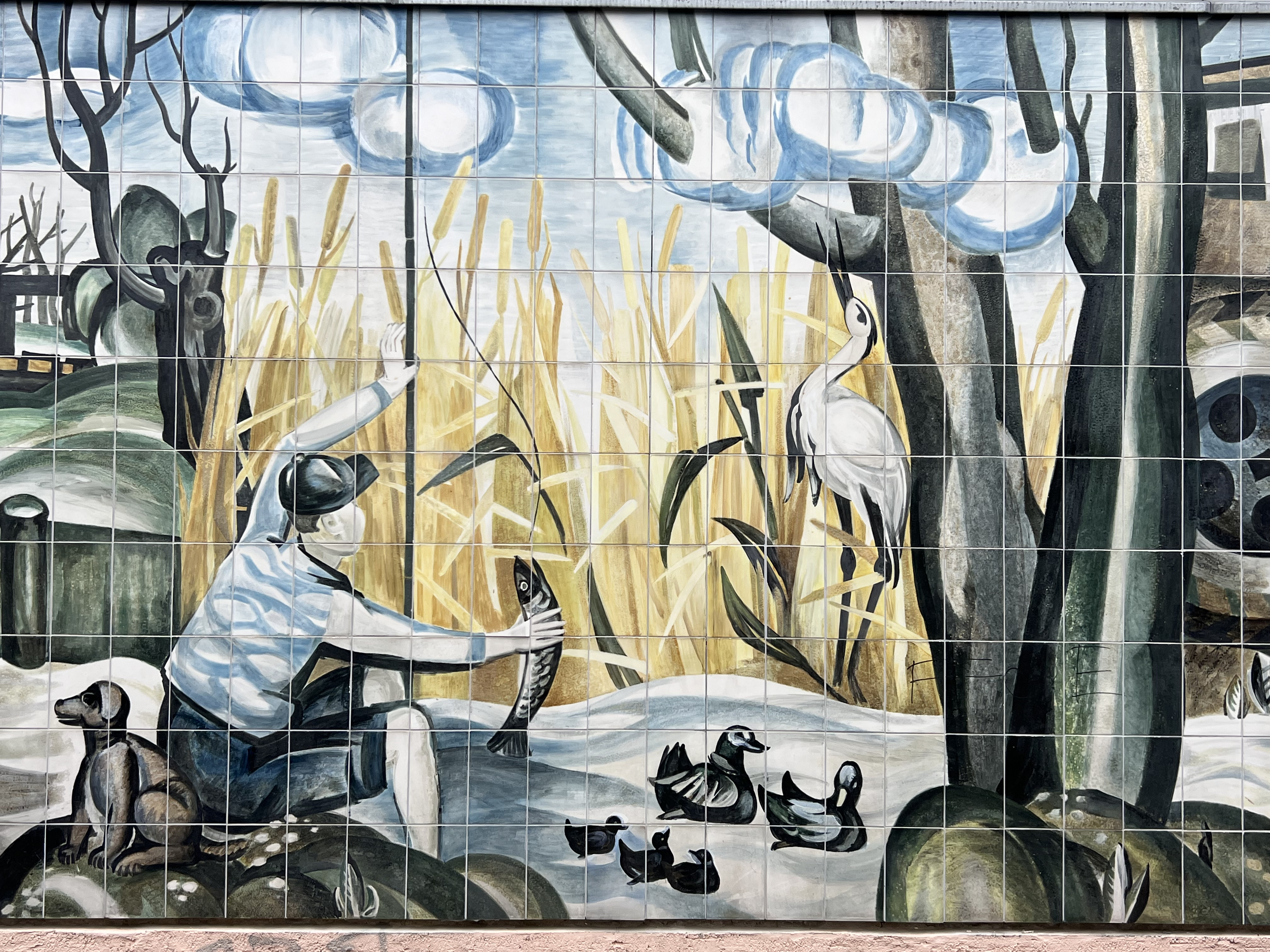
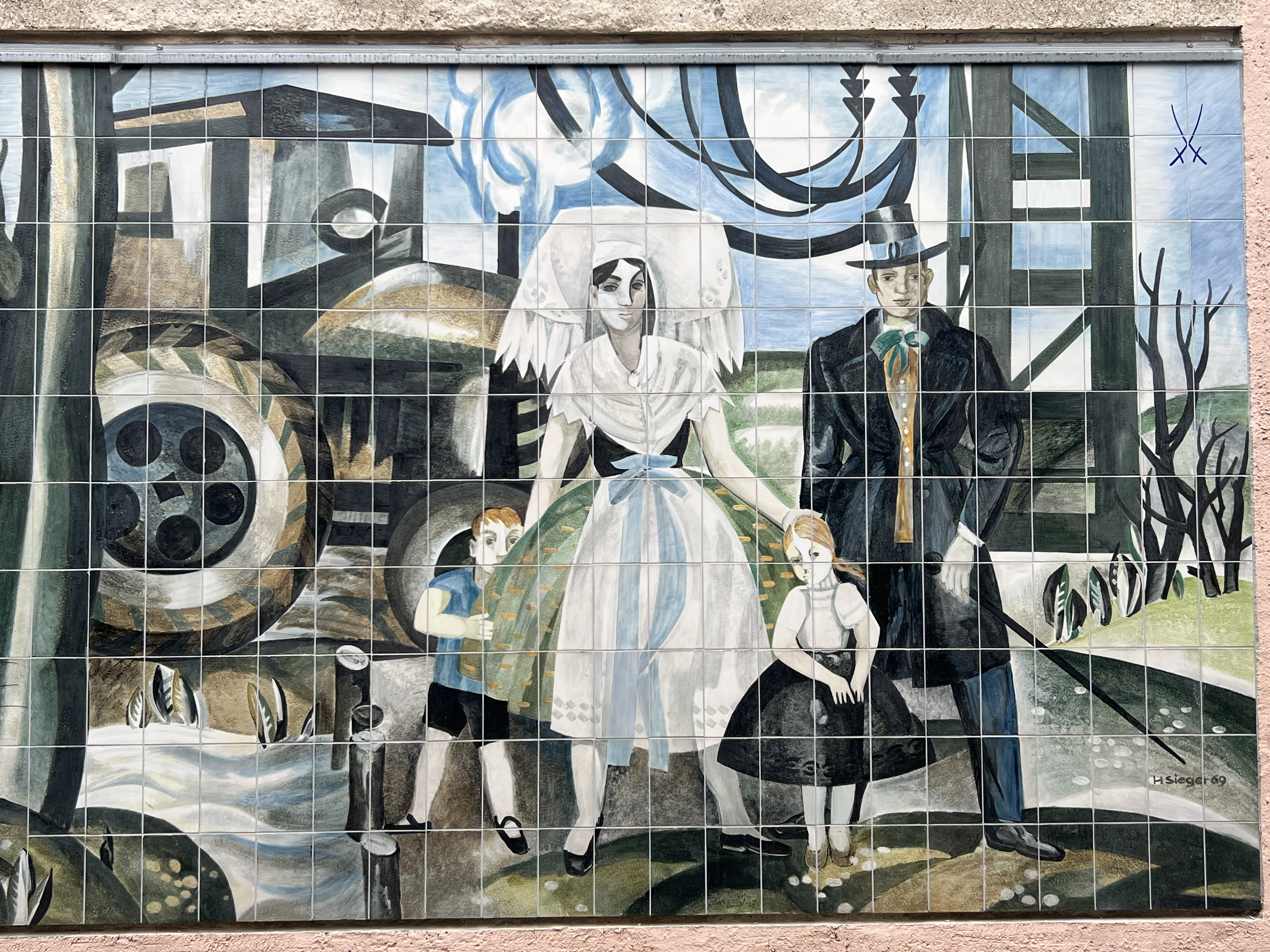
Mosaics on the city wall: “Spreewald”/ Artist: Kurt Heinz Sieger. 1969
The impressive mural “Spreewald” by renowned artist Kurt Heinz Sieger was pre-produced at the Meissen Porcelain Manufactory. In the upper right corner, the internationally recognized logo of the Meissen Porcelain Manufactory, the crossed swords, adorns the artwork. The mosaic depicts typical features of the Spreewald region, such as legendary figure of Water Spirit, traditional costumes, and a boat trip. At the same time, elements are included that allude to the modernization of the region, such as tractors and power lines.
Discovering and illuminating inter-relatedness between indigenous artistic traditions across the world. Parallels between the traditional Easter egg decoration and Australian indigenous art
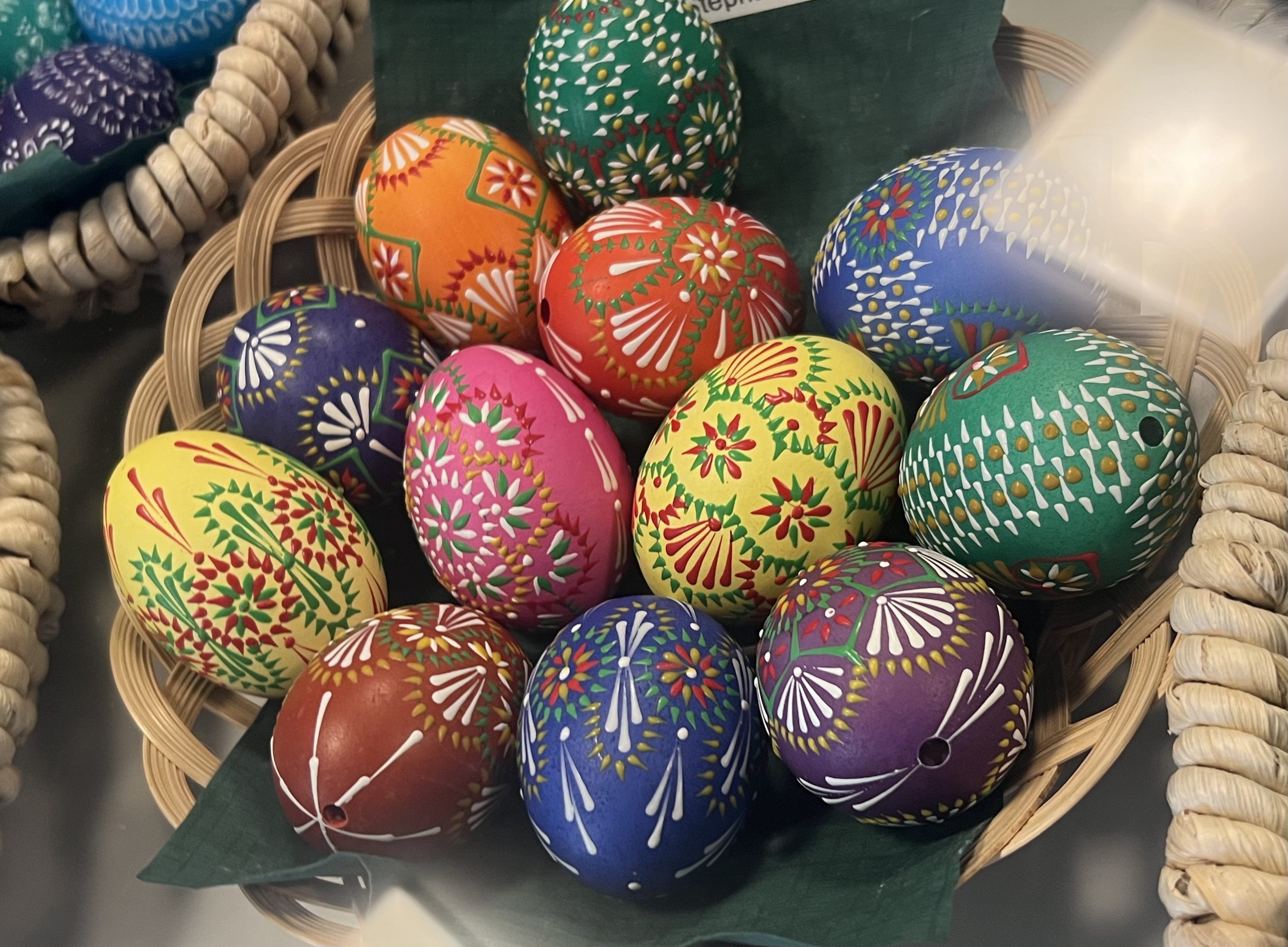
Traditional Sorbian Easter egg
The paintings of a contemporary Sorbian artist Christina Gratz are a remarkable testament to the continuity of the Sorbian tradition passed down through generations and reflected in modern art. Thea visual language of Christina’s paintings expresses cultural identity and exemplifies profound connection to land, nature, and community.
While Christina has long been known as a folk artist who specializes in decorating Easter eggs according to the Sorbian ancestral tradition, she experienced an artistic breakthrough upon discovering Australian decorative techniques such as Dot painting, which was in turn inspired by the indigenous art.
When we draw parallels between indigenous art traditions across the world, we often discover connections. As indigenous people are the guardians and caretakers of their lands, the symbology of their art connects us to the ancestral wisdom and helps us realize deep-rooted relatedness in tradition and culture. It is not surprising that the floral patterns in folk art expressions among indigenous cultures worldwide are often reminiscent of one another. Moreover, the study of interactions between different folk art traditions helps decipher symbolic meanings that have been lost over time. As such, the decor of corded pottery vessels from 5000 years ago may aid in decoding the symbology of traditional folk art designs, which sometimes remain obscure as the meaning gets lost or forgotten over the centuries.
On the other hand, the study of interactions between cultural traditions allows for infinite possibilities which enrich contemporary expressive art techniques profoundly. As such, Christina blends her knowledge of ancestral Easter egg painting technique with Australian traditional dot painting and creates mesmerizing works of art which take us on a journey across conventions, into the space of discovery and relatedness. Such is one of her masterpieces: “the Rainbow Serpent” – a painting that is inspired by one of the Australian Dreamtime creation stories and executed by fusing both the Sorbian and Australian folk painting techniques.
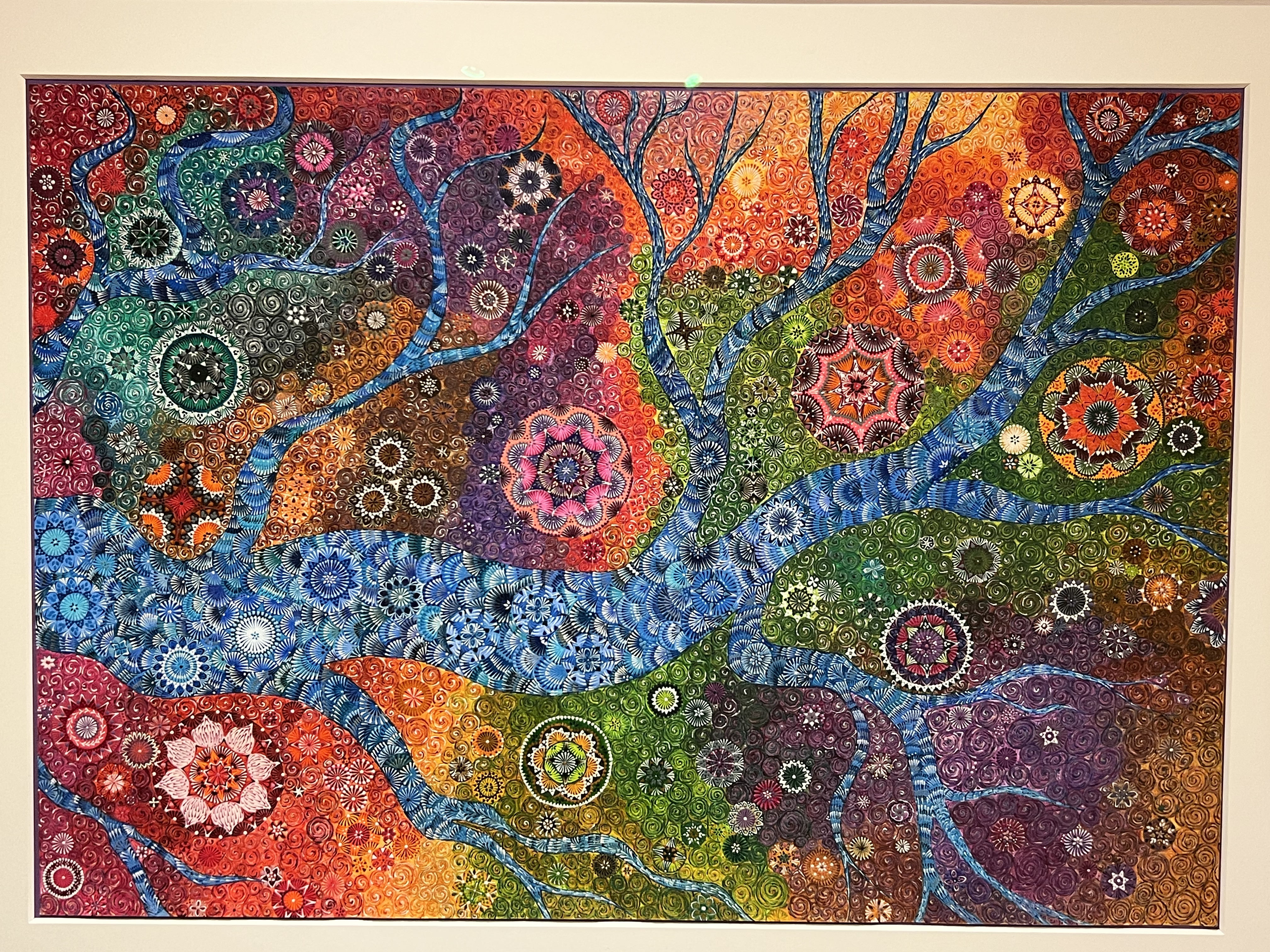
“the Rainbow Serpent” by Christina Gratz. 2025
The artwork „Dance of the Rainbow Serpent” depicts a vividly colored river with numerous branches and tributaries, originating within the painting itself. The river structures are adorned with Sorbian sun rays, symbolizing light and energy. The surrounding land glows in intense colors, filled with circles and structures featuring Sorbian patterns. This piece was inspired by the Georgina River near Camooweal, Australia, and the „Story of the Rainbow Serpent”. According to legend, this great creator shaped the land before settling in the riverbed. Christina felt its power and presence, which come to life in this vibrant and energetic painting.
Technique: Watercolor and colored beeswax on watercolor cardboard
Thank you:
Katharina Kliem, Museumspädagogin des Wendischen Museums
Hanna Wellpott, Christina Kliem, (In)visible heritage. Sorbian art in the cityscape of Cottbus/Chóśebuz
Trudla Kuringowa, Sorbian Customs and Traditions in the Course of the Year
Sorbisches Museum Bautzen
Wendish Museum Cottbus
 Beloved Earth. Sketches from the Temple