The arts of India and its immediate neighbors reflect three of the world’s great religions-Hinduism, Buddhism, and Jainism. Together with Islam, a later arrival, these religions have profoundly shaped the visual culture of the peoples of the subcontinent. This artistic expression appears in monumental temples, wayside shrines, monasteries, and mosques as well as in portable images and ritual objects used in worship, paraded in festivals, and venerated in household shrines. A parallel tradition of court arts survives from the later centuries, celebrated in metalwork, gold, ivory, and especially painting, including that associated with arts of the book.
Although Buddhism had been largely abandoned in India by the thirteenth century, it left a spectacular artistic legacy. The religion remains central to the cultures of the Himalayas and Sri Lanka, and significant within East and Southeast Asia. Jainism has continued to prosper as a minority religion in India into modern times, leaving a deep imprint on Indian culture. Hinduism (Brahmanism) is rooted in the Vedas, the oldest religious texts in continuous use in human history. It has long dominated Indian society, profoundly shaping its social structures, literary traditions, and artistic output.
Explore the arts of this vast region that spans the subcontinent, from the Himalayas in the north to Sri Lanka in the south, and from Afghanistan and Pakistan in the west to Bangladesh in the east.
GREATER GANDHARA
The Greater Gandharan culture thrived between the second century B.C. and the eighth century A.D. in what is today northwestern Pakistan in the Peshawar basin (ancient Gandhara), the Swat Valley (ancient Udayana), and eastern Afghanistan.
Active trade with the Greek and Roman empires, South Asia, and China flowed through key passes bordering Gandhara, making this entrepôt multiethnic, wealthy, and culturally sophisticated. Contact with the Western world was initiated as a result of Alexander the Great’s conquest of the area in 330 B.C., but it was the greater volume of Indian Ocean trade with the Romans, which started about 50 A.D., that truly established Gandhara’s economic foundation.
Greco-Roman artistic canons appealed to the international tastes of Gandharan patrons; in the second and first centuries B.C. it is reflected in the production of both luxury and ritual objects. By the first century A.D., however, the Western artistic vocabulary was giving form to North Indian Buddhist ideology.
During the second century many narrative reliefs recounting the Buddha’s life were created—narratives that emphasize his childhood, enlightenment, conversions, and miracles. This biography stresses the Buddha’s corporal entrance into our world, as that is the source for his relics, which were central to Buddhist Gandharan religious practice. It is during this period that the figure of the Buddha is first presented sculpturally.
By the third century devotional icons of Buddhas and bodhisattvas make their appearance, and over the following centuries they begin to take on monumental proportions. Initially, Nikaya, or Hinayana, Buddhism was dominant, but gradually Mahayana Buddhist ideology took hold in the region, which is reflected in art by an increase in the complexity of the iconography, the appearance of monumental images, and an emphasis on bodhisattvas. Schist and, later, stucco and clay were the primary media for images, though images in bronze and brass were also fabricated. By the late fifth century the trade routes shifted to pass through Afghanistan, providing the economic base for a period of flourishing artistic production. With the coming of Islam, Buddhism faded, but sculpture continued to be commissioned into the eighth century A.D.
Medieval Kingdoms of the Northwest: Kashmir Region, the Swat Valley, Afghanistan, Ladakh, and Western Tibet 7th-14th Century
The artistic traditions of the northwest kingdoms grew out of the Greco-Buddhist art of Gandhara, fertilized by the styles of North India, Persia (present-day Iran), and Central Asia. Artists continued to be influenced by the classically inspired, naturalistic representation of the human body that had been favored in Kushan Gandhara. It was tempered, however, by the more generalized and abstracted ideal envisioned by Indian sculptors.
Central Asian and Persian designs appeared in textile patterns, modes of dress, and decorative elements. The northwest kingdoms became intertwined through marriage, trade, and territorial expansions and contractions; their artistic traditions were similarly interrelated.
The kingdom of Kashmir was an important center of painting, stone sculpting, metal casting, and ivory carving from the sixth to the twelfth century. Situated at the hub of major trade routes, Kashmir assimilated many of the artistic currents of the day. Furthermore, its artists and their wares were brought into the nearby regions of Ladakh, Western Tibet, and the Himachal Pradesh, where works in the style of Kashmir still survive in their original locations. This was important because, beginning in the eleventh century, most of the art in Kashmir was destroyed by a series of Muslim invasions and natural disasters.
The Swat Valley, in the northern part of the Gandharan region (in present-day Northwest Frontier Province of Pakistan, was the site of an extremely important Buddhist community. In the early part of the first century, it produced some of the first images of the Buddha. The medieval period gave rise to a style that is just beginning to be identified and understood. The region became a major center of bronze casting.
EASTERN INDIA, PALA AND SENA DYNASTIES 8th-13th century
The Pala-Sena dynasties of northeastern India ruled over the area of present-day Bihar, West Bengal, and Bangladesh from about the second half of the eighth to the early thirteenth century. The Pala kingdom included the most important Buddhist pilgrimage sites. As in most parts of India, there was great religious tolerance. Hinduism and Buddhism flourished side by side, and both used the same style in their art. In Hinduism, the cult of Vishnu became popular. In Buddhism, a new form of the religion, with secret rites and a greatly expanded pantheon, became dominant. This Esoteric Buddhism required a more elaborate system of representation. Pala sculptures and paintings gave concrete form to these new images, which were imbued with the authority emanating from the Buddhist homeland. Pala art is, therefore, significant not only as one of the great flowerings of medieval India but also as a powerful influence on the Buddhist arts of much of the rest of Asia, including Nepal, Tibet, Burma, Indonesia, and China.
Like Kashmir, the lands controlled by the Palas and Senas were overrun by Muslim raiders, beginning in the eleventh century. They destroyed most of the great monasteries in the Buddhist heartland and dealt a death blow to Buddhism in India.
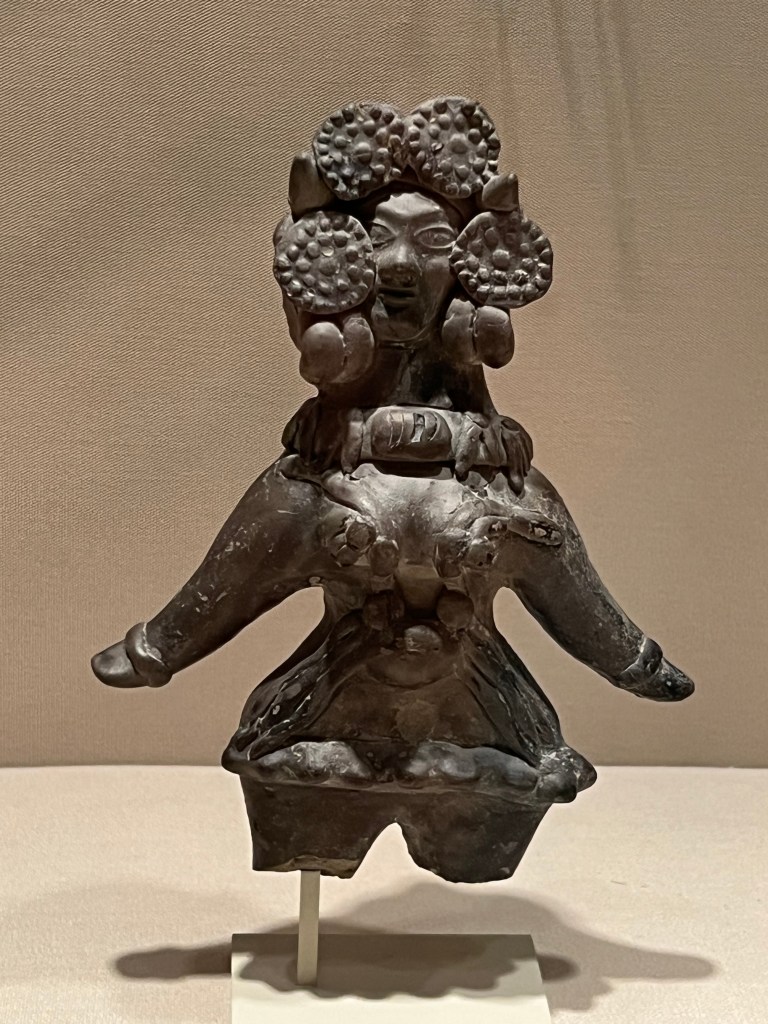
Northern India
Mauryan period, 3rd-2nd century B.C.
Terracotta,
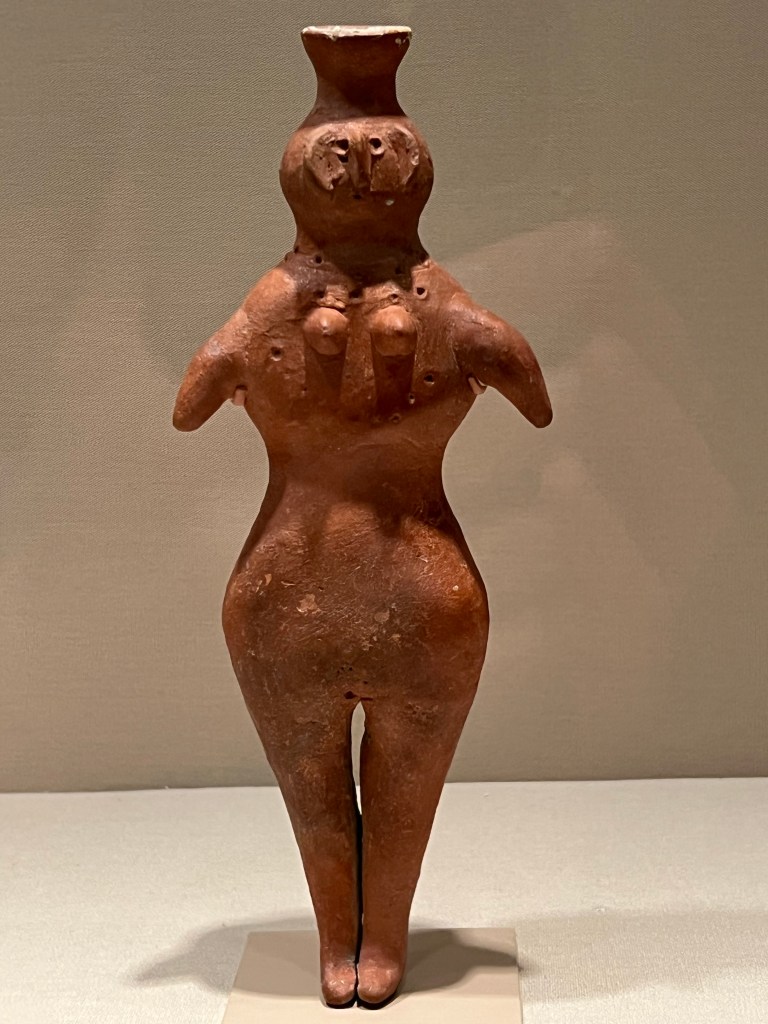
Pakistan (Northwest Frontier Province, probably Swat Valley), 1st millennium B.C.
Terracotta
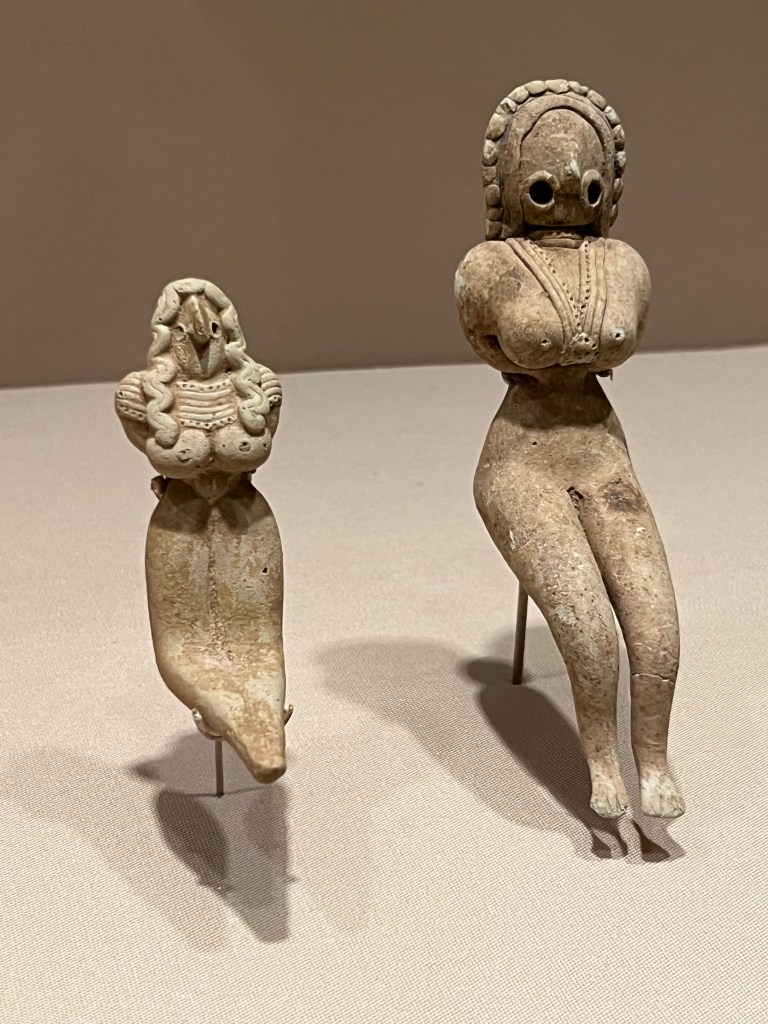
Pakistan (Baluchistan), Indus civilization, Mehrgarh style, ca. 3000-2500 .c.
Terracotta
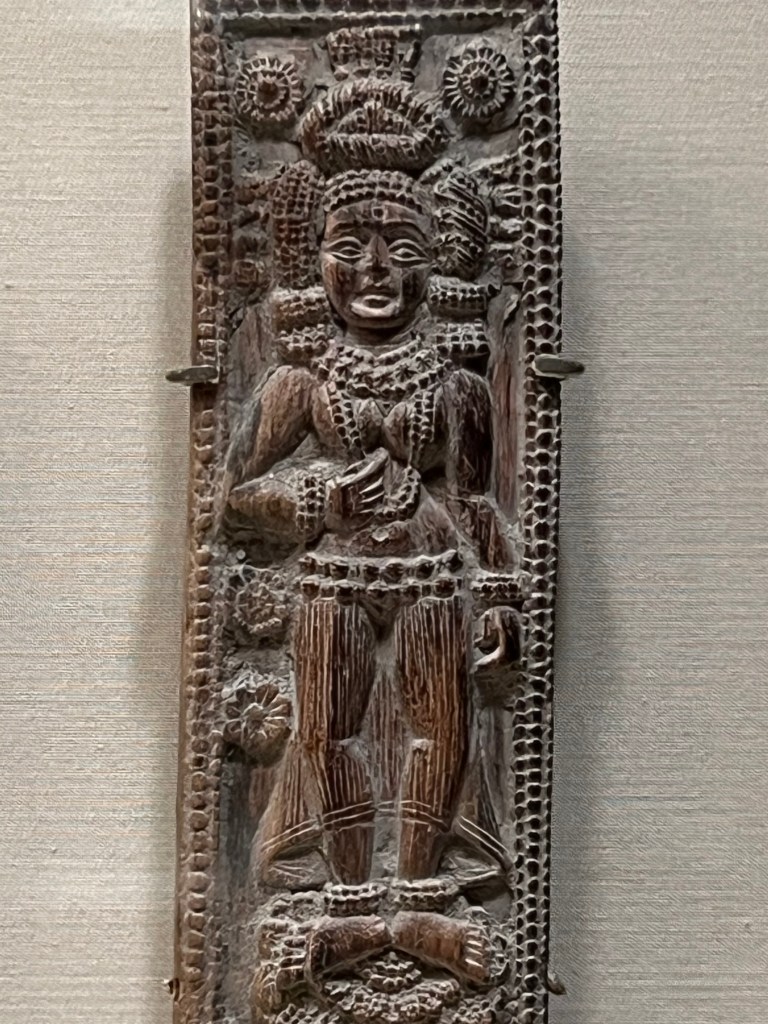
India (West Bengal), Shunga period,
1st century B.C.
Wood
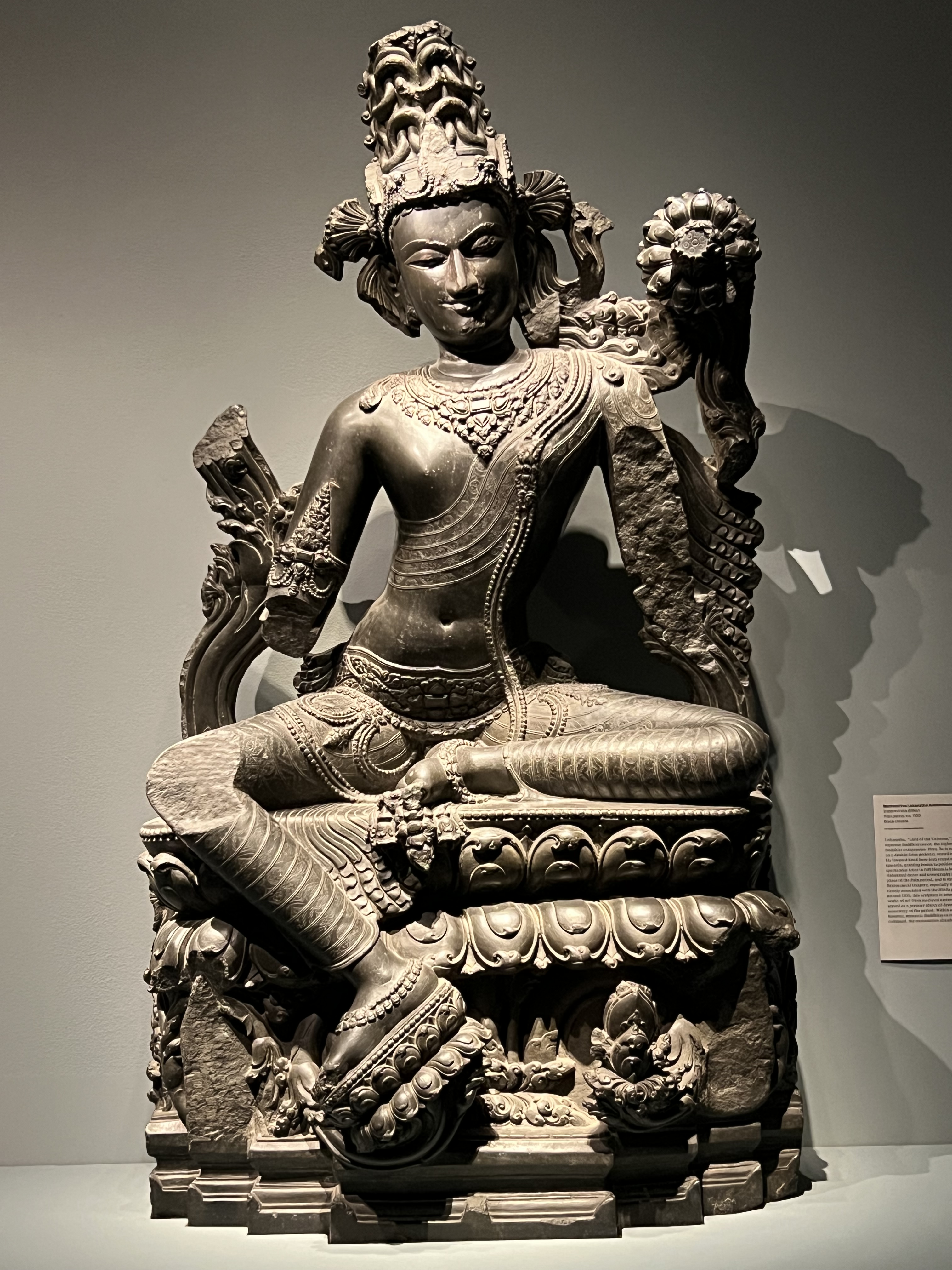
Eastern India (Bihar)
Pala period, ca. 1100
Lokanatha, “Lord of the Universe,” is venerated as the supreme Buddhist savior, the highest embodiment of Buddhist compassion. Here, he is majestically enthroned on a double-lotus pedestal, seated in royal ease. Originally his lowered hand (now lost) rested on his knee, palm upwards, granting boons to petitioners. The stem of a spectacular lotus in full bloom is held in the other. The elaborated decor and iconography belongs to the mature phase of the Pala period, and is strongly influenced by Brahmanical imagery, especially the braided hair, most closely associated with the Hindu god Shiva. Produced around 1100, this sculpture is among the largest surviving works of art from medieval eastern India. It would have served as a premier object of devotion at a major Buddhist monastery of the period. Within a century of its creation, however, monastic Buddhism in eastern India had collapsed, the monasteries abandoned.
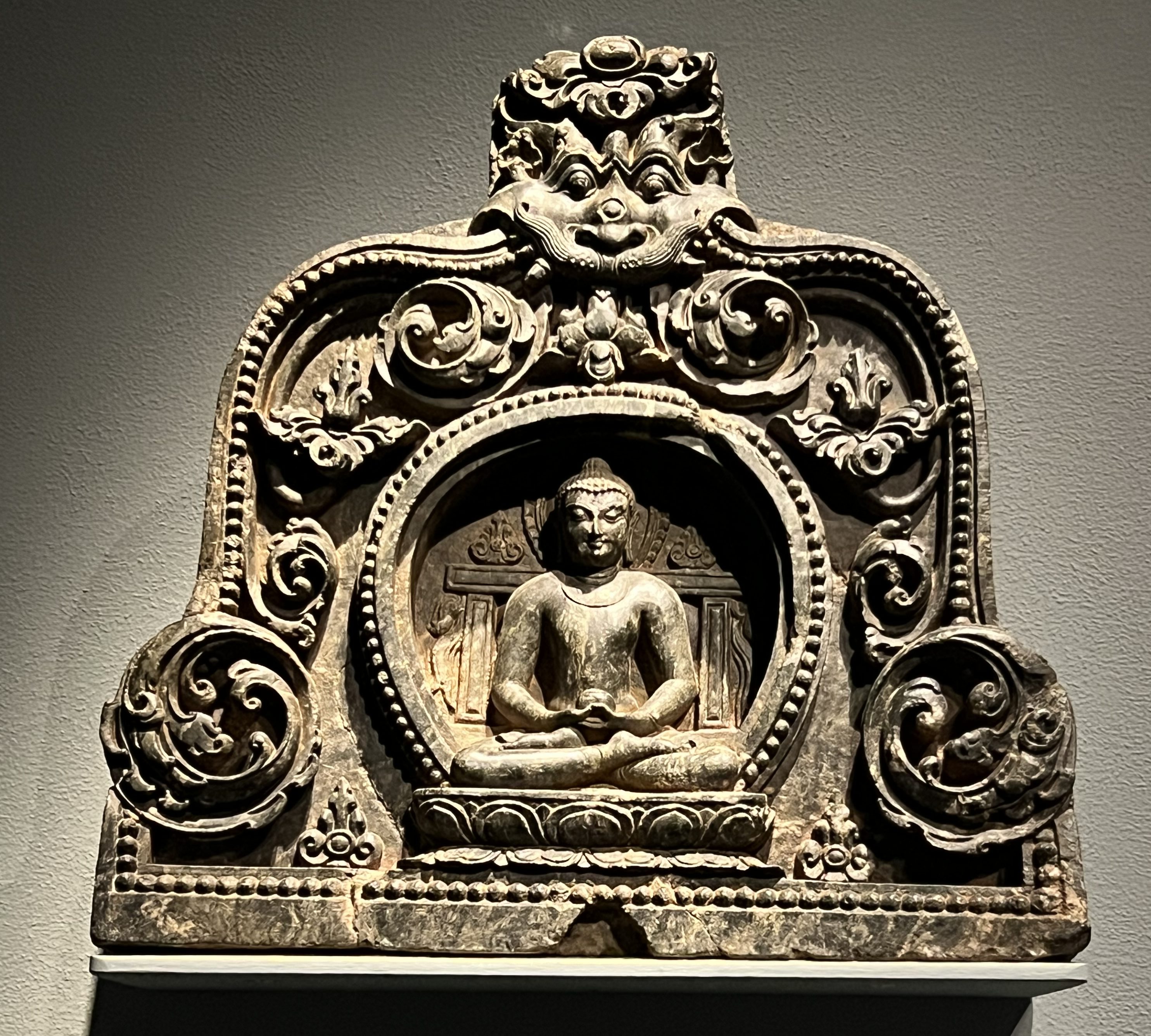
India (Bihar), Pala period ca. late 10th-early 11th century
This meditating Buddha with an alms bowl is likely the Amitabha Buddha in the form of one of the medicine Buddhas, such as Bhaisajyaguru. A horned monster face (kirtimukha) with a string of pearls issuing from his jaws provides a protective presence over the meditating Buddha, who is framed by a pearl-bordered nimbus. Foliage and two lotus flowers fill the arch. This architectural relief is a false window antefix from a Pala-period Buddhist monument.
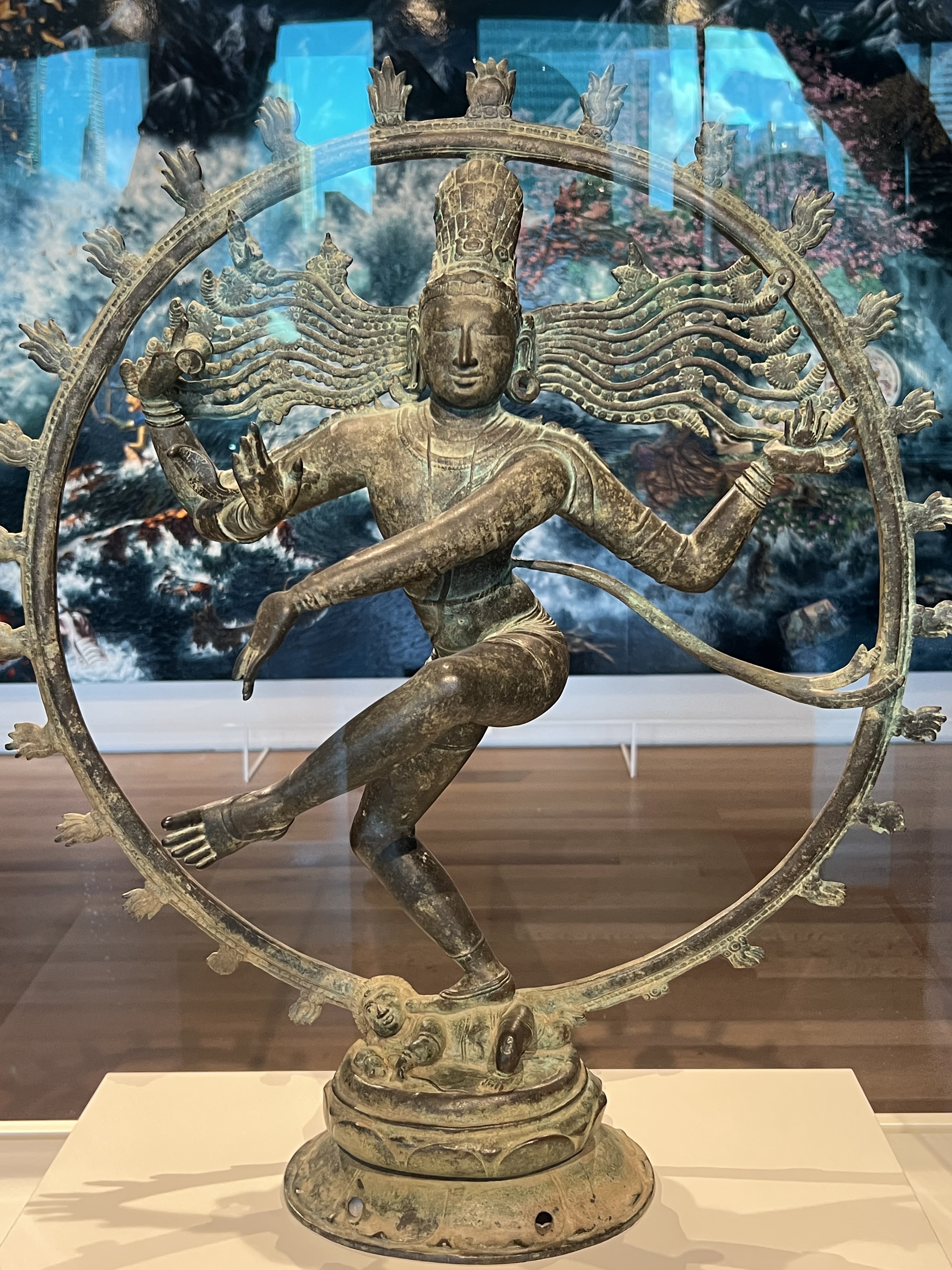
Chola period, about 10th century
Tamil Nadu, India
In this iconic image, Shiva’s cosmic dance pervades the entire universe-symbolized by a ring of fire-and sets in motion the rhythm of life and death. The figure is balanced with his right leg planted on the demon of darkness (apasmara), stamping out ignorance. Opposite arms balance the flame of destruction and the hand drum (damaru) that beats the rhythm of life. The tiny figure of the river goddess, Ganga, peeks out from his matted flowing locks. Shiva breaks the fall of the Ganges as she descends from the Himalayas.
As a symbol, Shiva Nataraja is a brilliant invention. It combines in a single image Shiva’s roles as creator, preserver, and destroyer of the universe and conveys the Indian conception of the never-ending cycle of time. Although it appeared in sculpture as early as the fifth century, its present, world-famous form evolved under the rule of the Cholas. Shiva’s dance is set within a flaming halo. The god holds in his upper right hand the damaru (hand drum that made the first sounds untreation). His upper left hand holds agni (the fire that will destroy the universe). With his lower right hand, he makes abhayamudra (the gesture that allays fear). The dwarflike figure being trampled by his right foot represents apasmara purusha (illusion, which leads mankind astray). Shiva’s front left hand, pointing to his raised left foot, signifies refuge for the troubled soul. The energy of his dance makes his hair fly to the sides. The symbols imply that, through belief in Shiva, his devotees can achieve salvation.
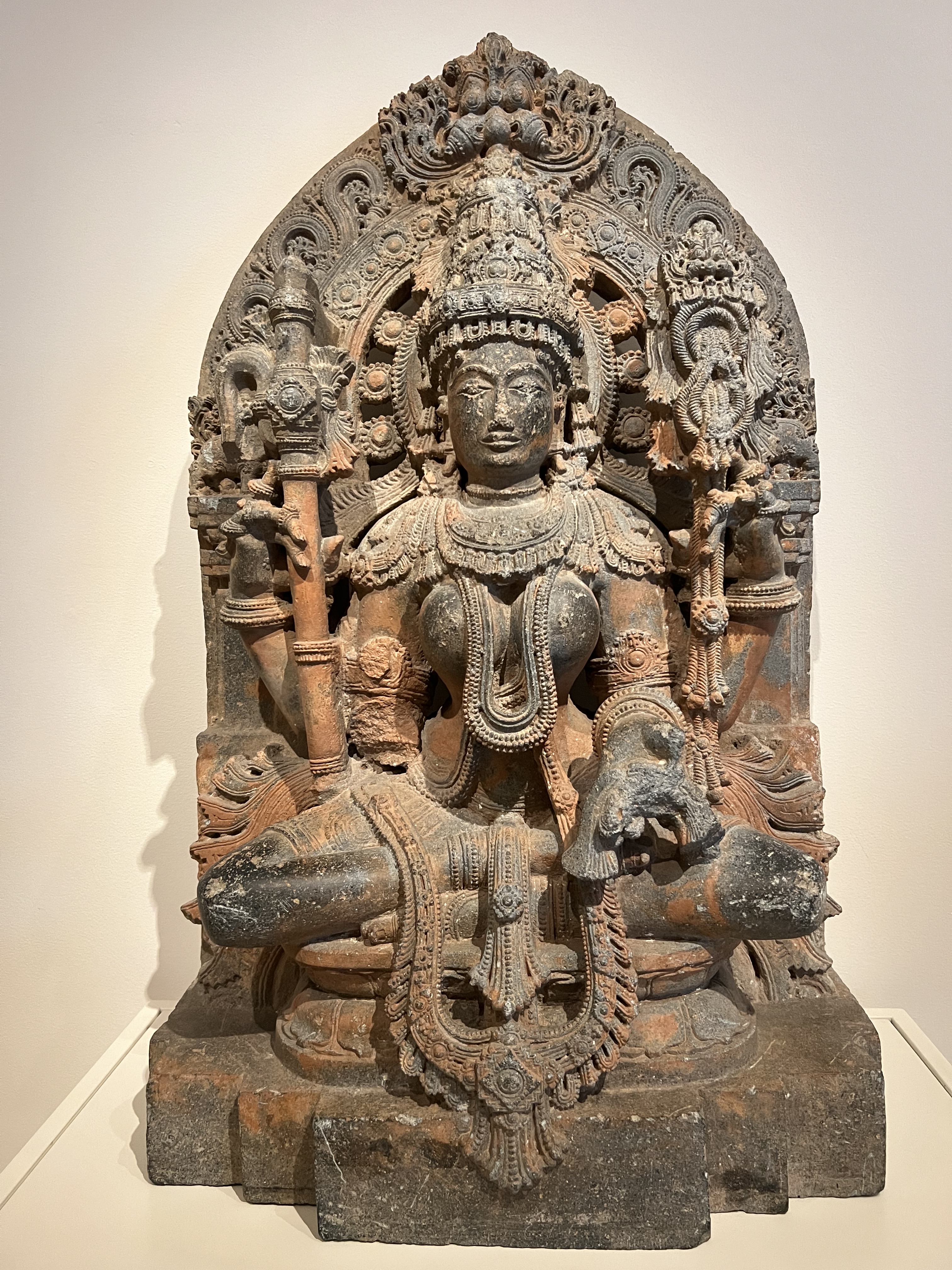
Hoysala period, 12th century
Karnataka, India
India (southern Rajasthan), 11th century

