These photos are from my trip to Nepal in the summer of 2026. The living heritage of this beautiful country is so remarkably rich in cultural and spiritual treasures of universal significance, that I wholeheartedly wish you experience it yourself one day, if you haven’t yet. I share these photos to honor the people of Nepal who were recently struck by the natural disaster which took countless lives, leaving local communities bereft and grieving their losses. I bow my head in respect to shared grief of this nation and yet I sing an ode to the timeless cultural legacy which they continue preserving and sharing with the world.
The photos by no means encompass my whole experience of Nepal, but they express my sheer admiration for the age-old traditions, the artistic genius of the people, and the region’s natural beauty.
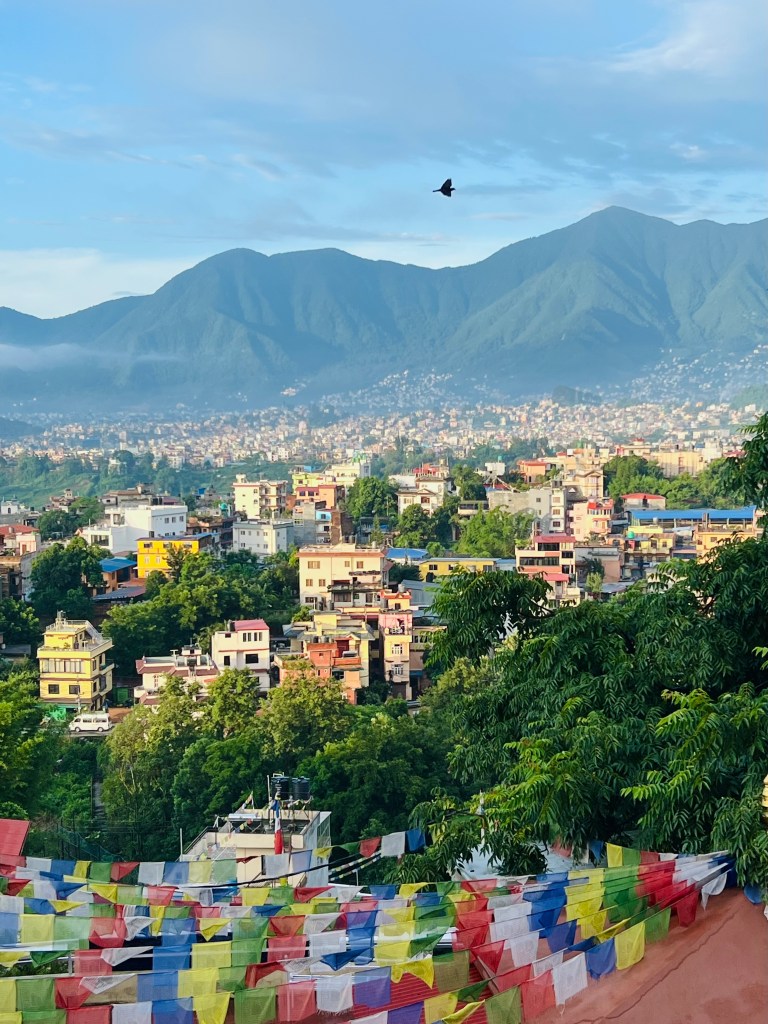
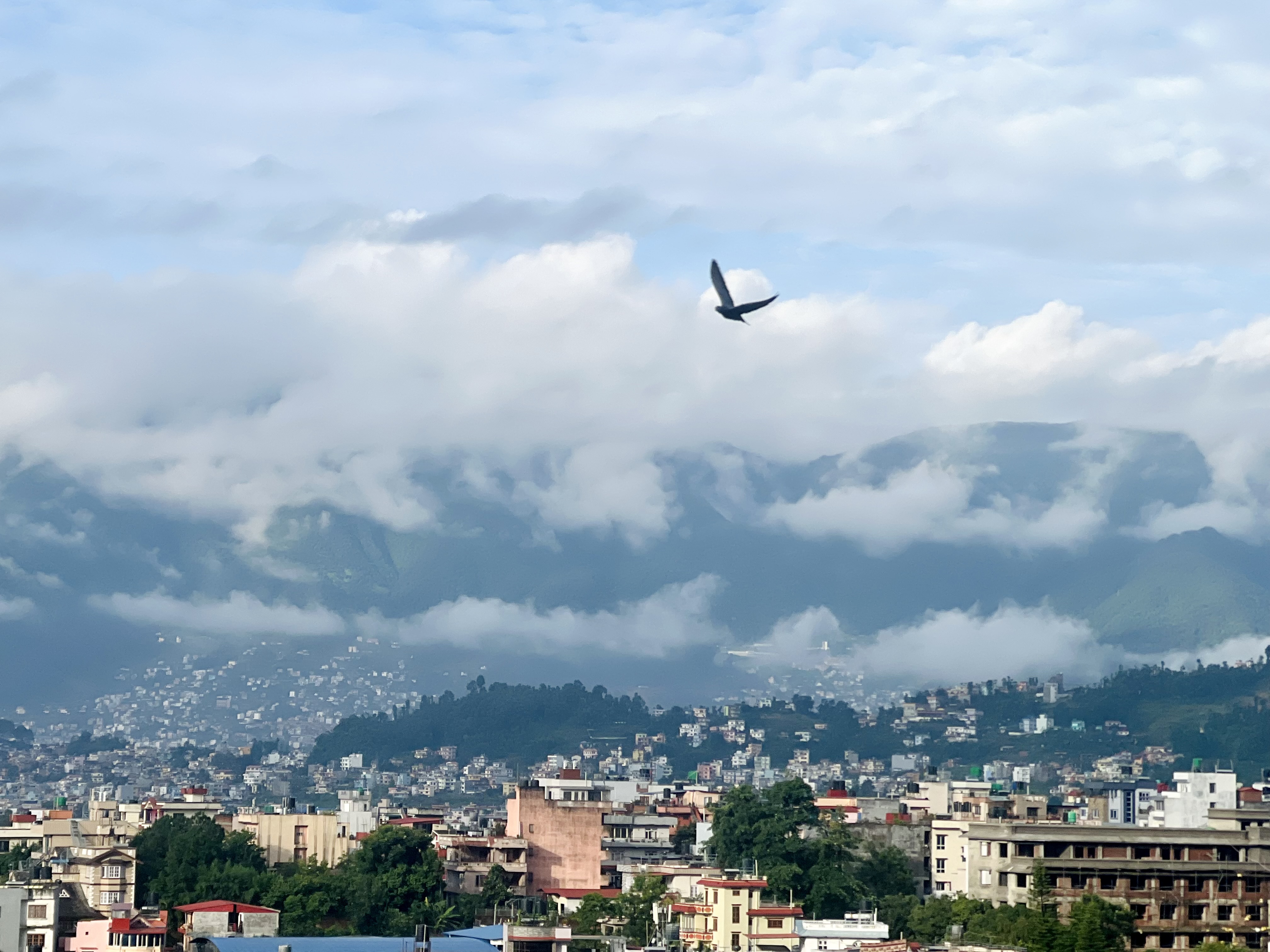
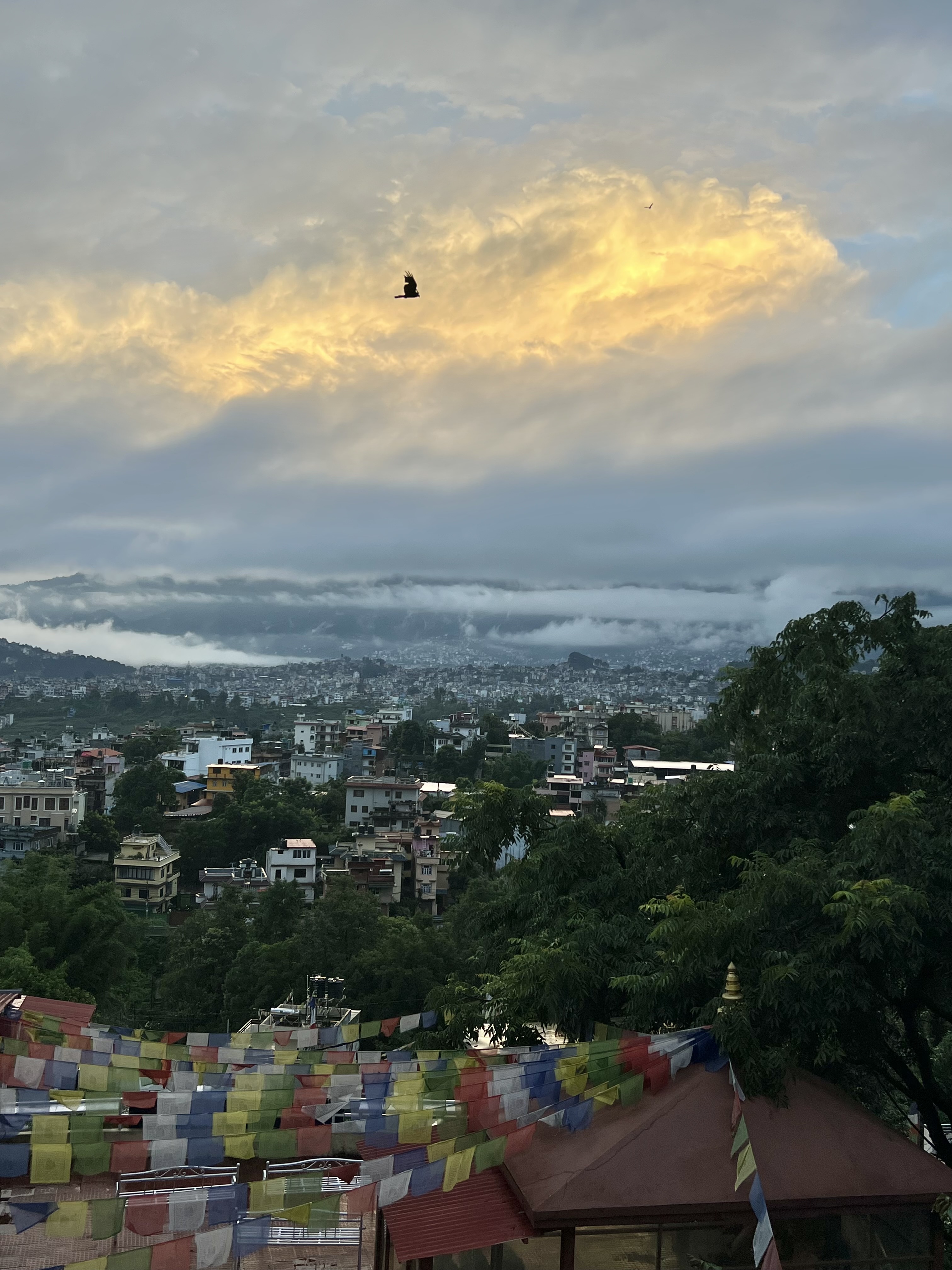
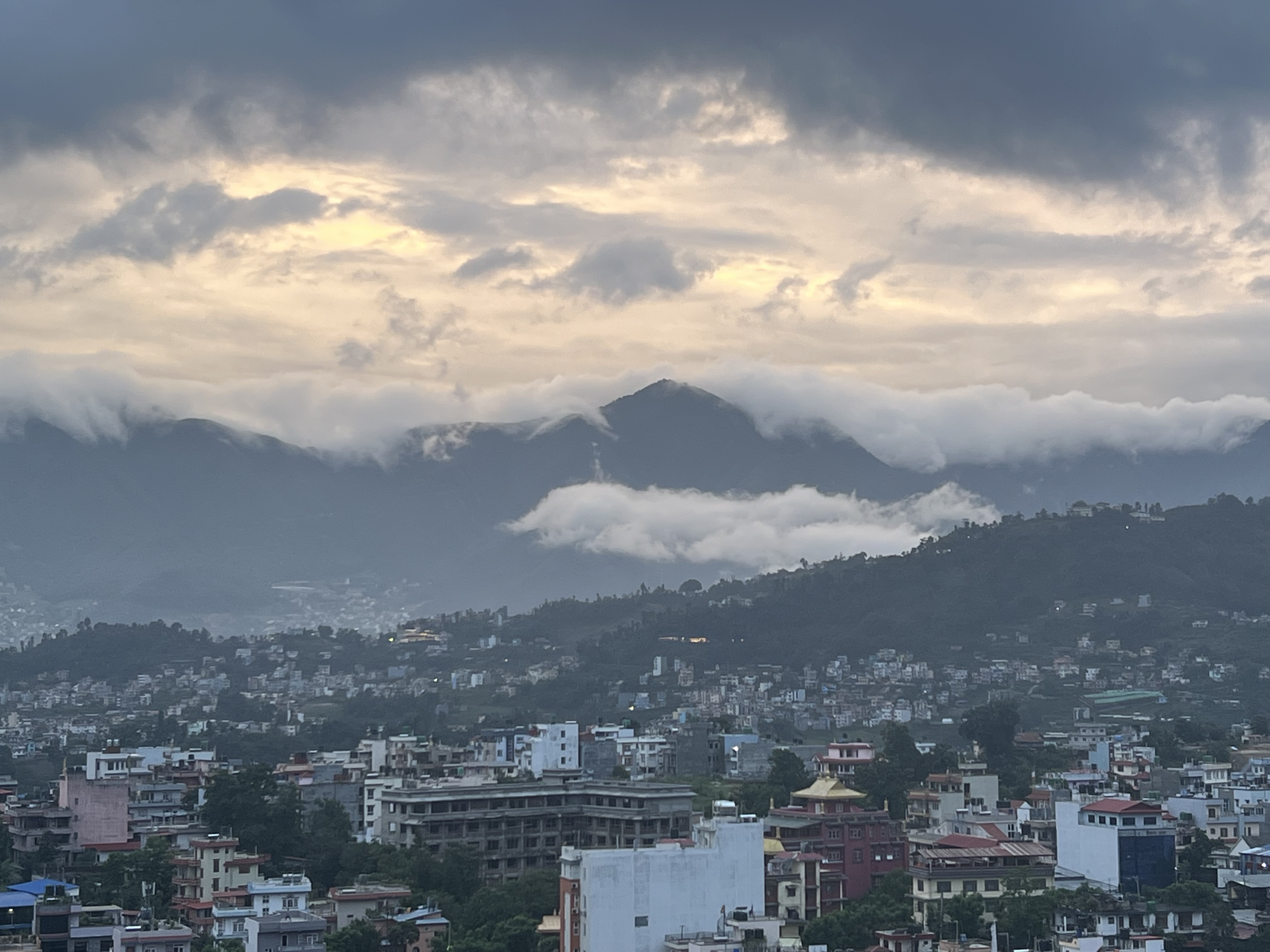
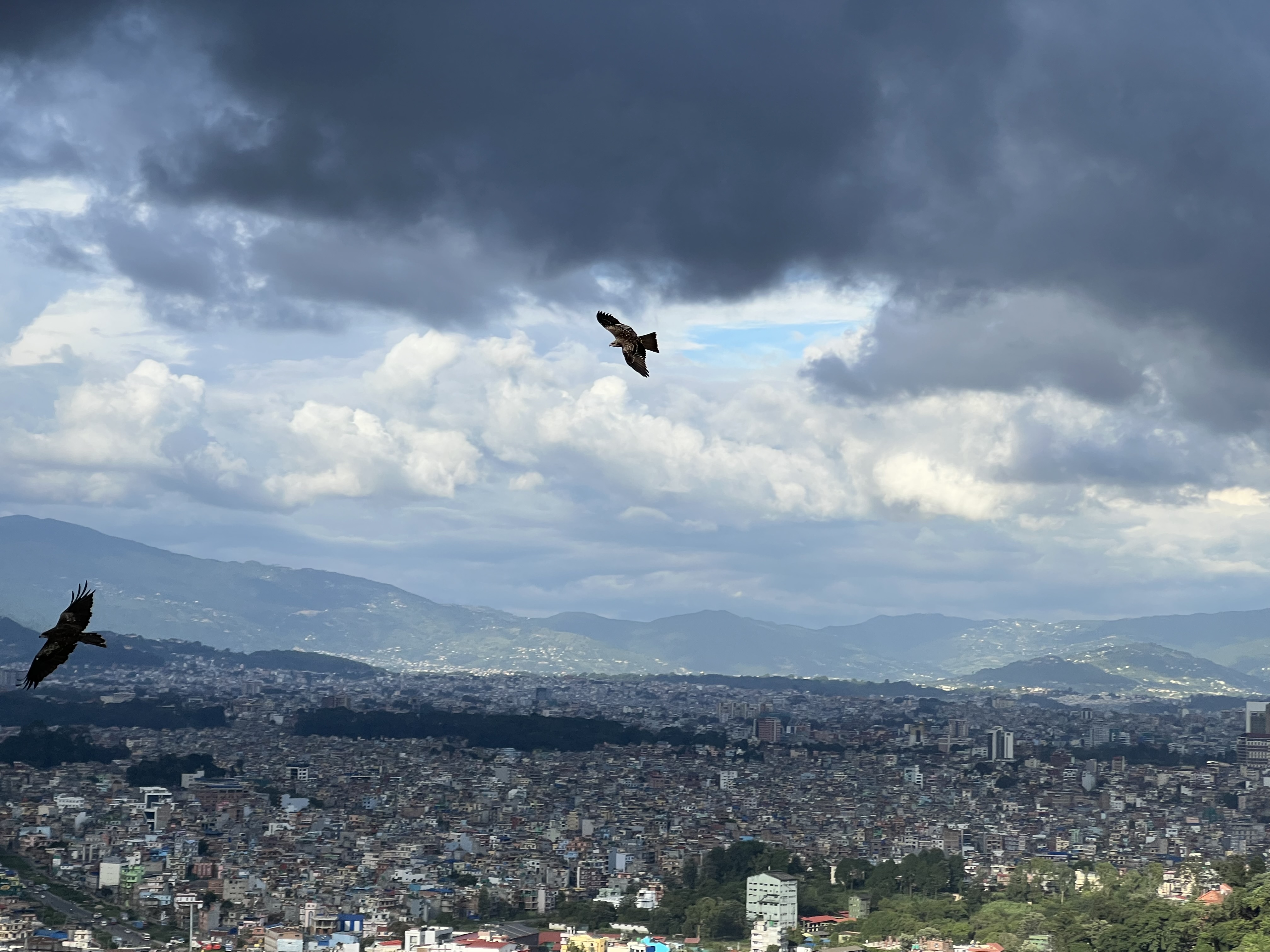
Overlooking Kathmandu on a beautiful morning.
Kathmandu is a part of the Kathmandu Valley, a bowl-shaped area located in the Himalayan mountains of Nepal. It lies at the crossroads of ancient civilizations of the Indian subcontinent and the broader Asian continent, and has at least 130 important monuments, including several pilgrimage sites for Hindus and Buddhists.
The Kathmandu Valley is a World Heritage Site of its own and also comprises seven distinct heritage locations within it. I visited several of them: Swayambhunath Stupa, Bhaktapur Durbar Square, Patan Durbar Square, and Pashupatinath Temple. Each site is remarkably rich in Newari art, architecture, and sacred spaces.
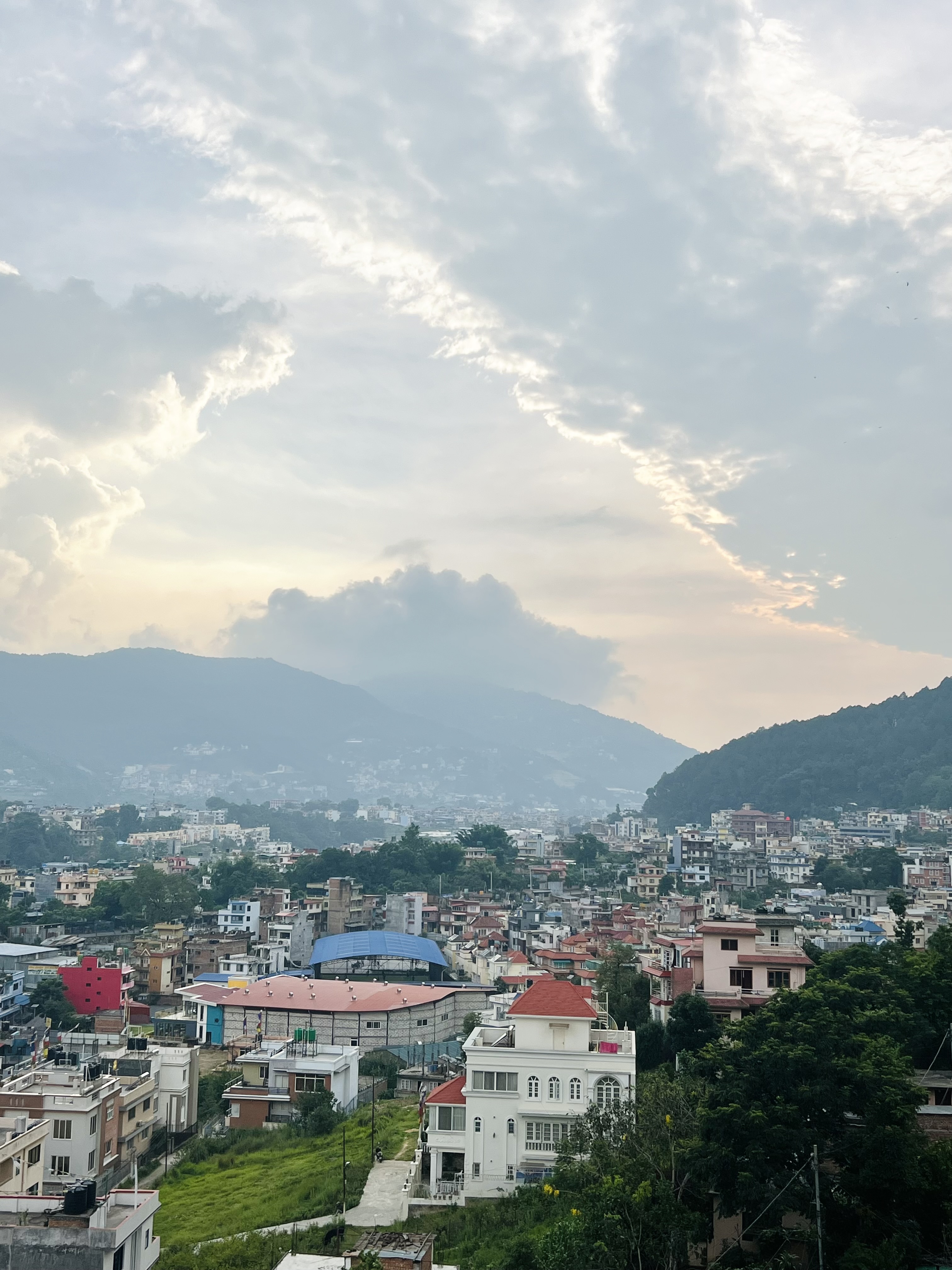
The Kathmandu Valley is known to be home of the Newars- the indigenous people and the creators of the historic civilization of this place. Newars are descendants of the various ethnic and racial groups, primarily Indo-Aryan and Tibeto-Burman ethnicities, who share a common language and predominantly practice Newar Hinduism and Newar Buddhism. Newars have continued their age-old traditions and practices and pride themselves as the true custodians of culture and civilisation of Nepal.
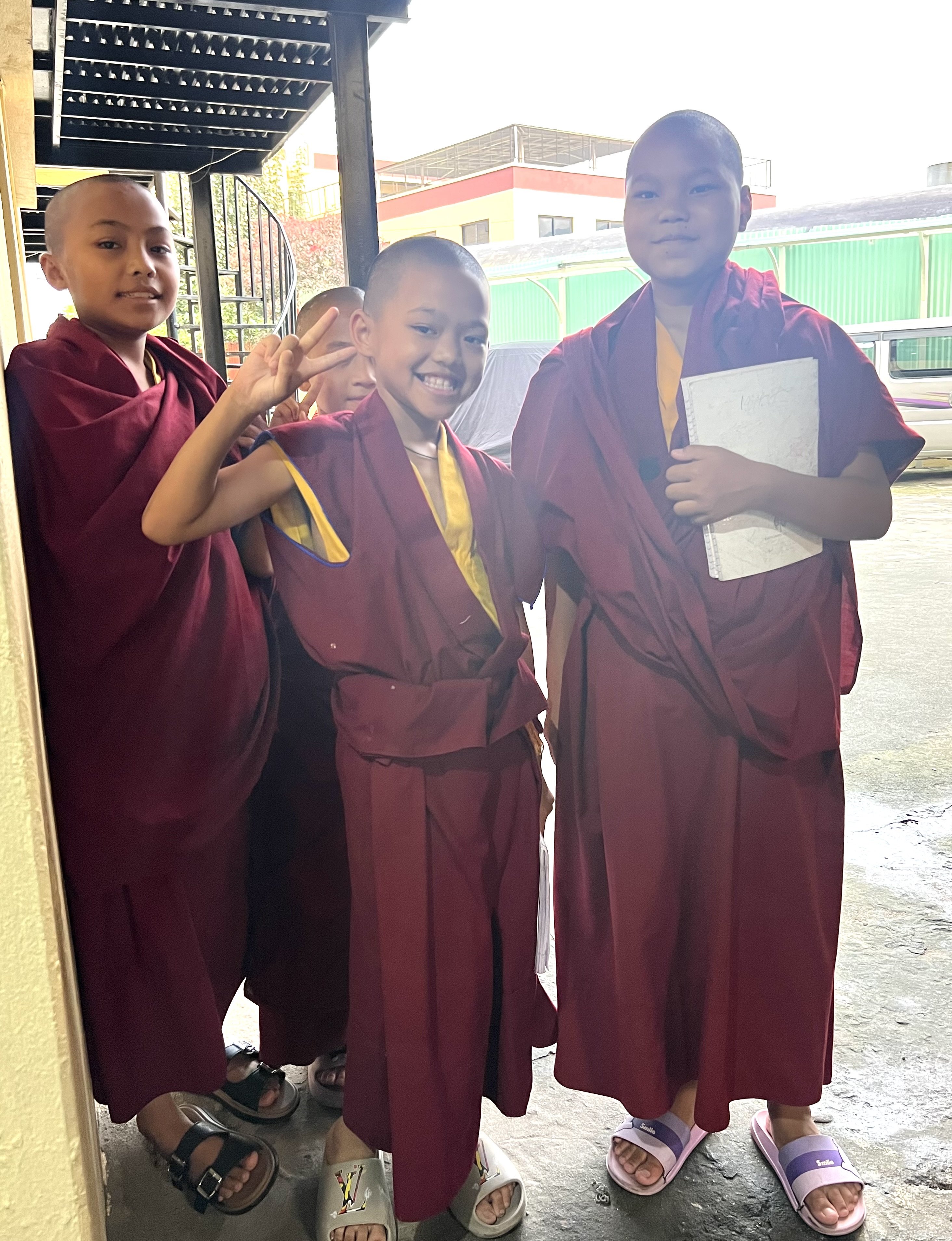
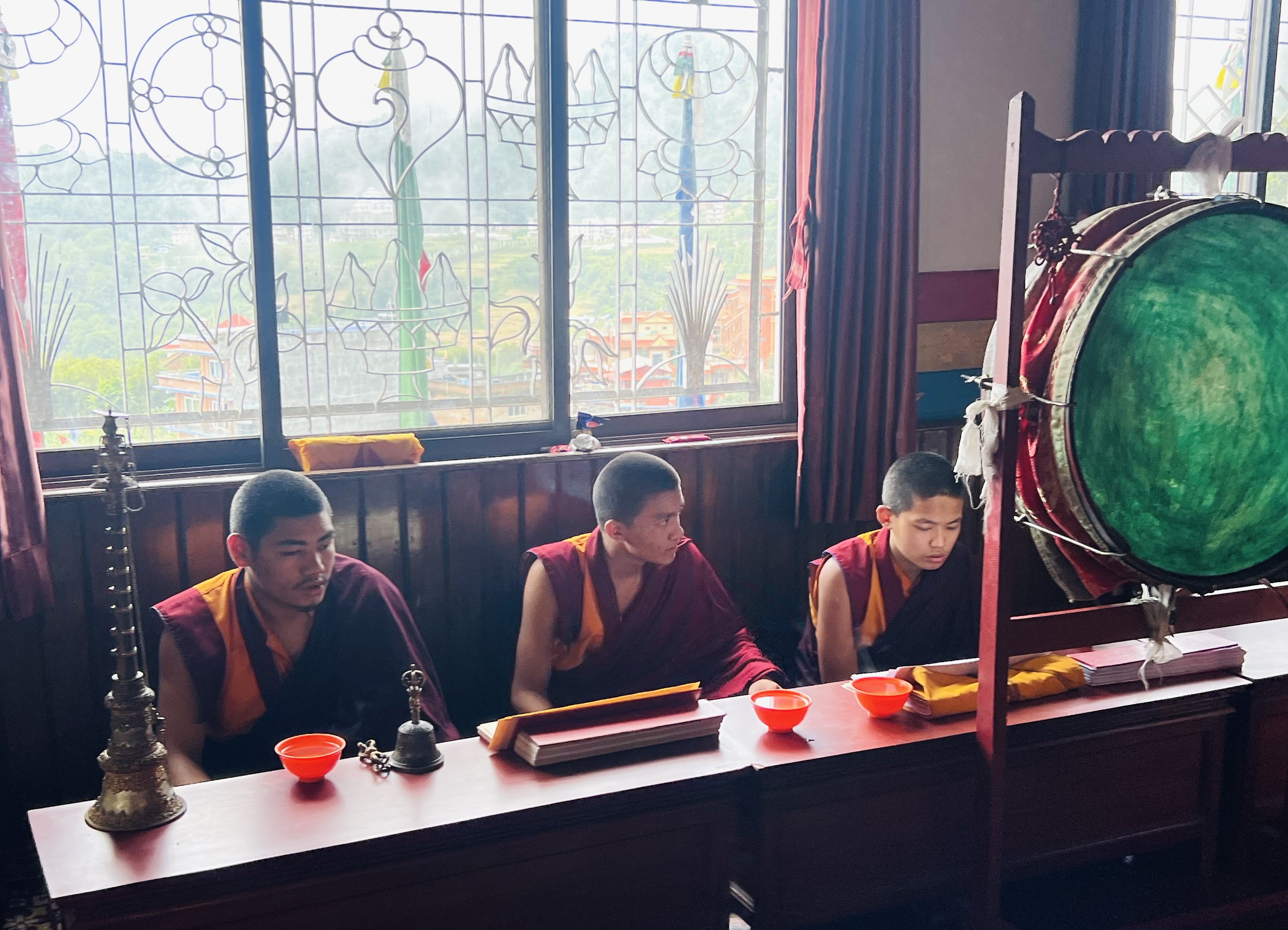
Young students at the Karma Leksheyling school within the Buddhist monastery, near which I stayed throughout my visit
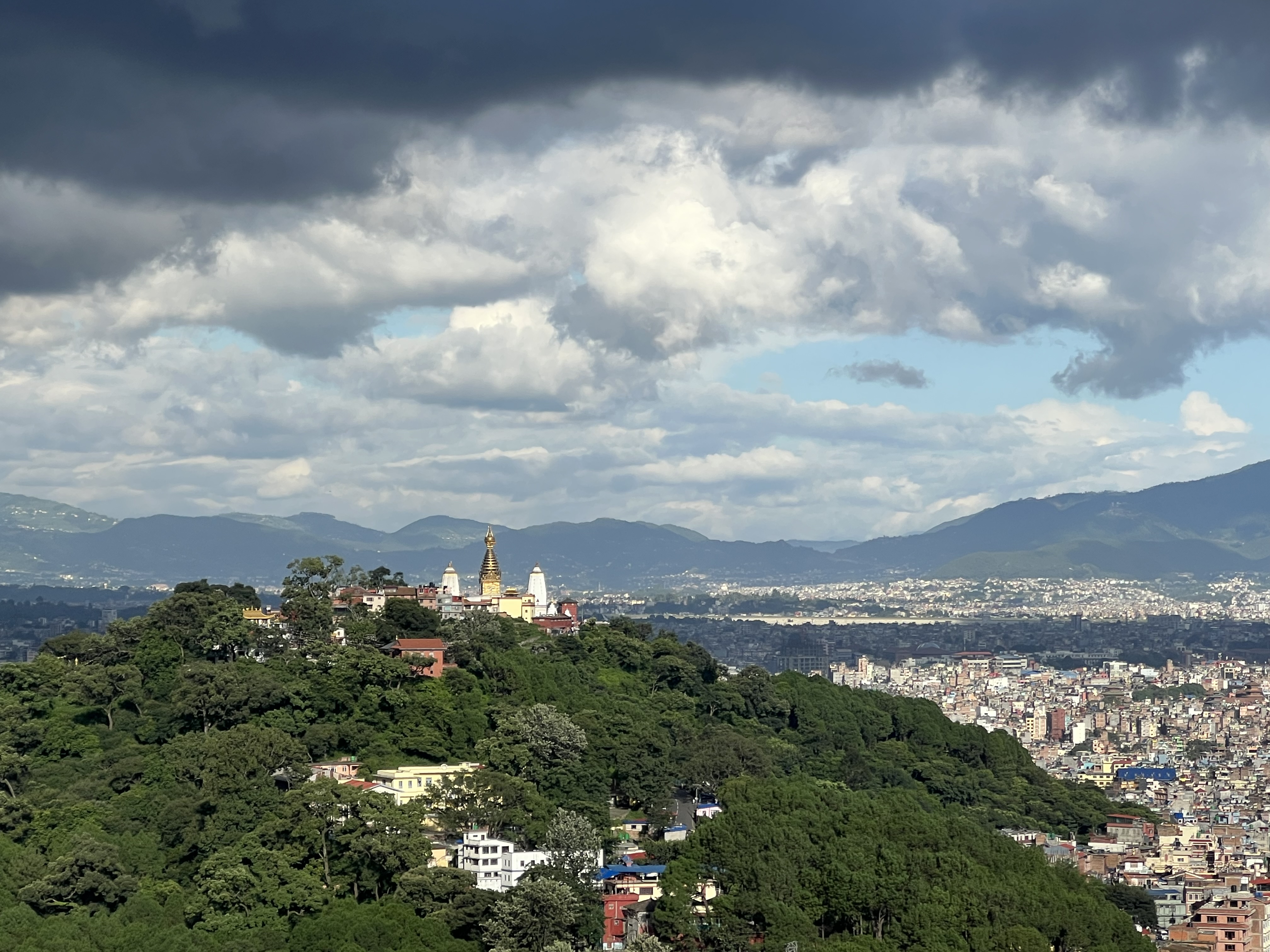
View of Swayambhunath (Swayambhu Great Stupa) – an ancient religious complex atop a hill west of Kathmandu city.
This hill has been an ancient pilgrimage site considered the home of the primordial Buddha known as the Adi-Buddha. For the Buddhists throughout the world, the stupa is venerated as one of the most ancient and important stupas in the world. It is also greatly revered by Hindus. The stupa stands as a symbol of religious harmony with Hindu temples and deities incorporated in this ancient Buddhist site. The temple is over 1,500 to 2,000 years old.
It has been repaired and restored numerous times over the centuries, including a major. restoration following the 2015 earthquake. The site was designated a UNESCO World Heritage Site in 1979.
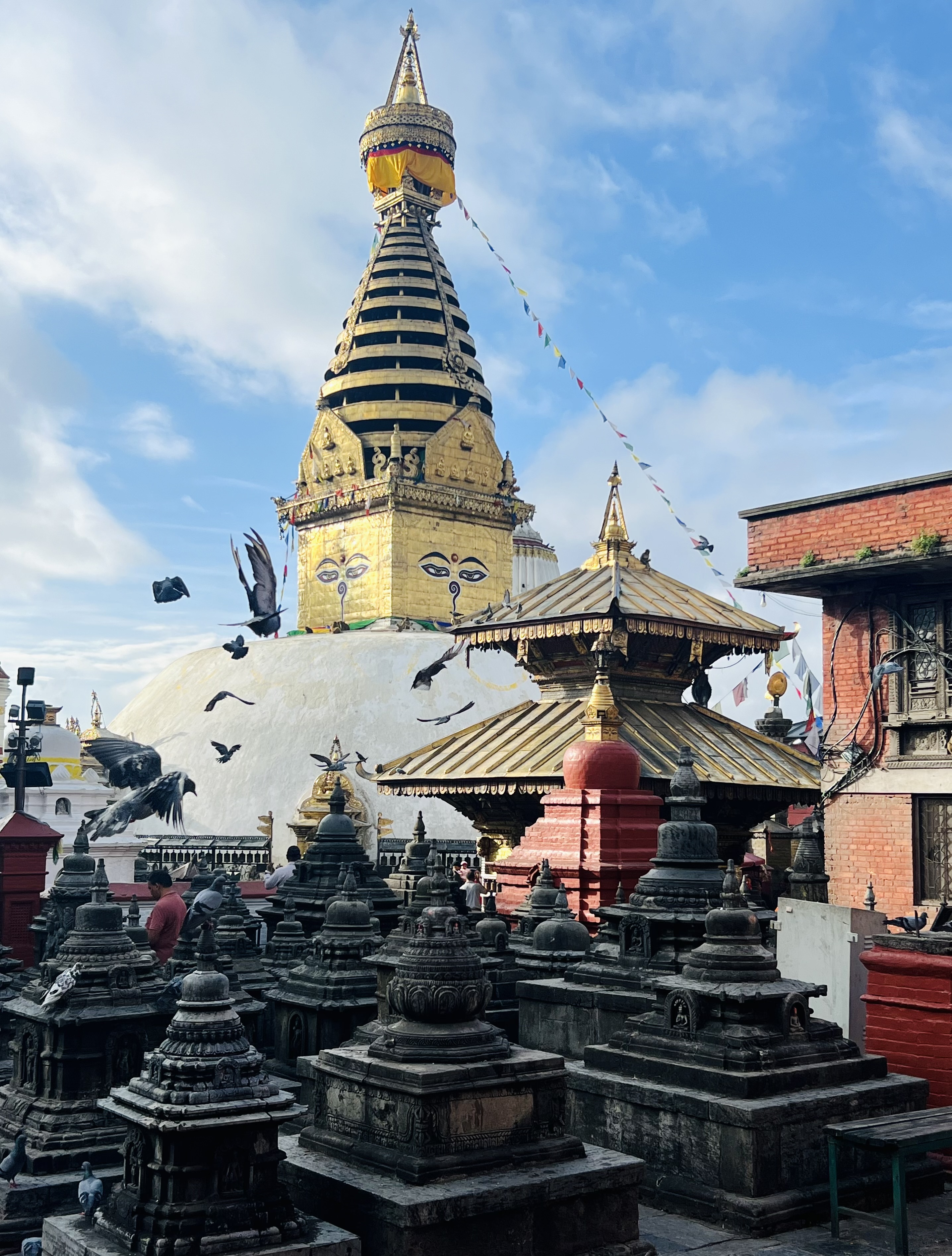
According to Vajrayana Buddhism, Swayambhu represents the void from which the universe is created. The hemispherical dome is erected right from the passage of circumambulation and is surrounded by five meditating Buddhas. The stupa consists of a dome at the base, on top of which is a cube structure, painted with the Eyes of Buddha looking in all four directions. The gold plated bronze rings above the cubical structure are called Trayodashabhuvana (thirteen steps) representing the thirteen stages before reaching Nirvana
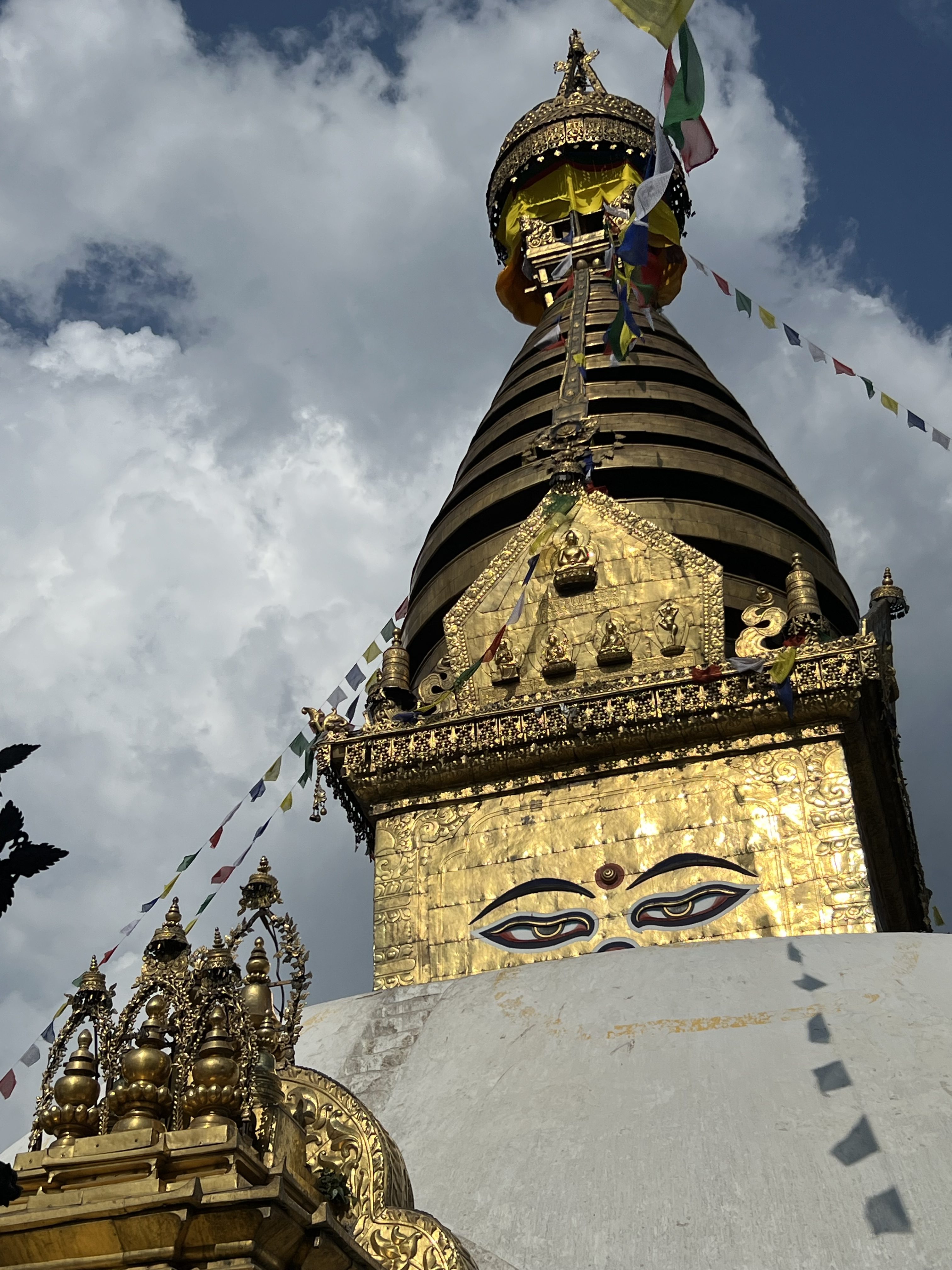
The Eyes of Buddha are a traditional symbol in Buddhist art representing the all-seeing, omniscient nature and compassion of a Buddha
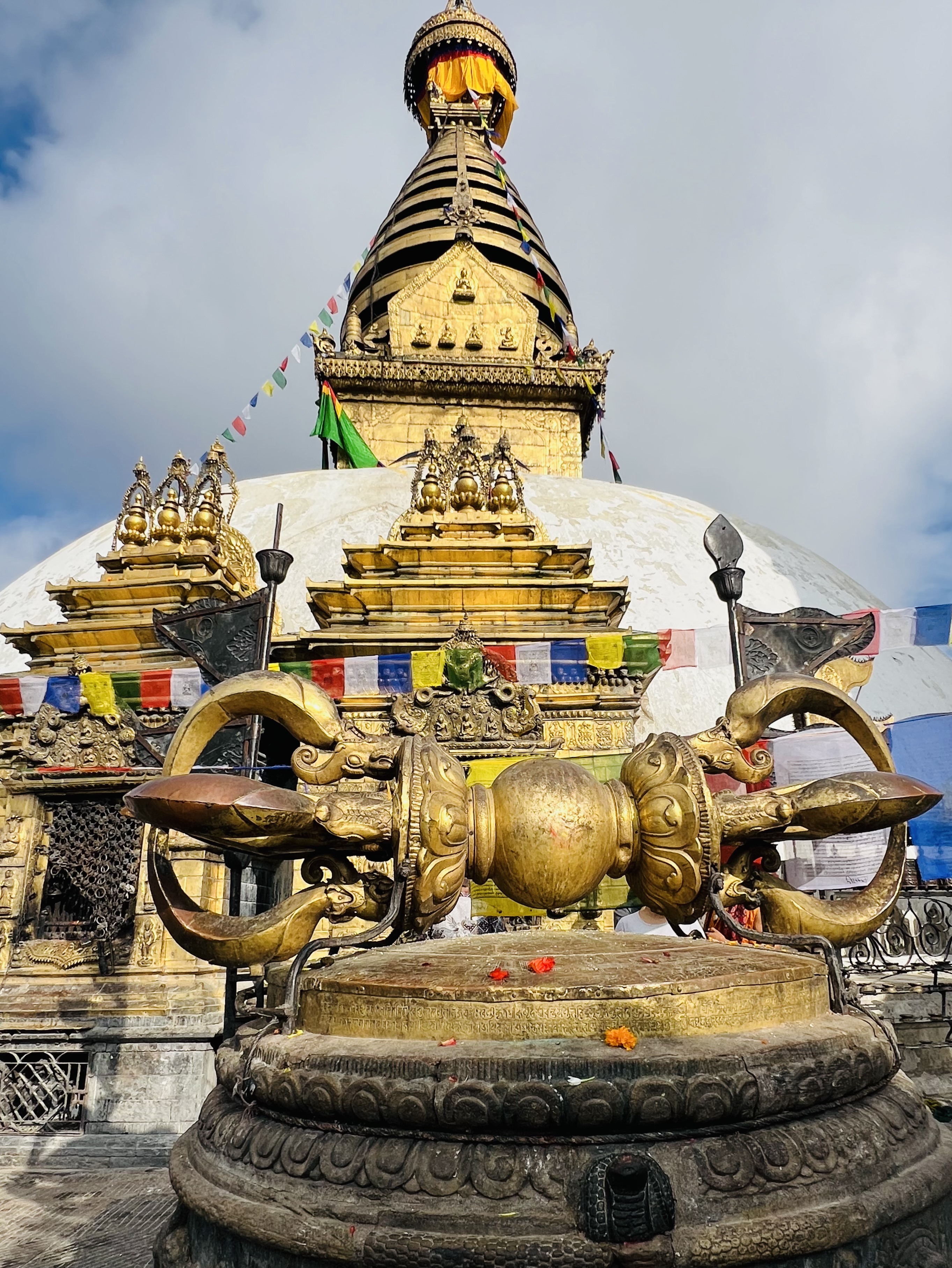
At Swayambhu, the first sight on reaching the top of the long stairway is the Vajra (thunderbolt scepter).
In Vajrayana Buddhism, Vajra represents indestructible spiritual strength, diamond-hard wisdom, and the compassion needed to destroy ignorance.
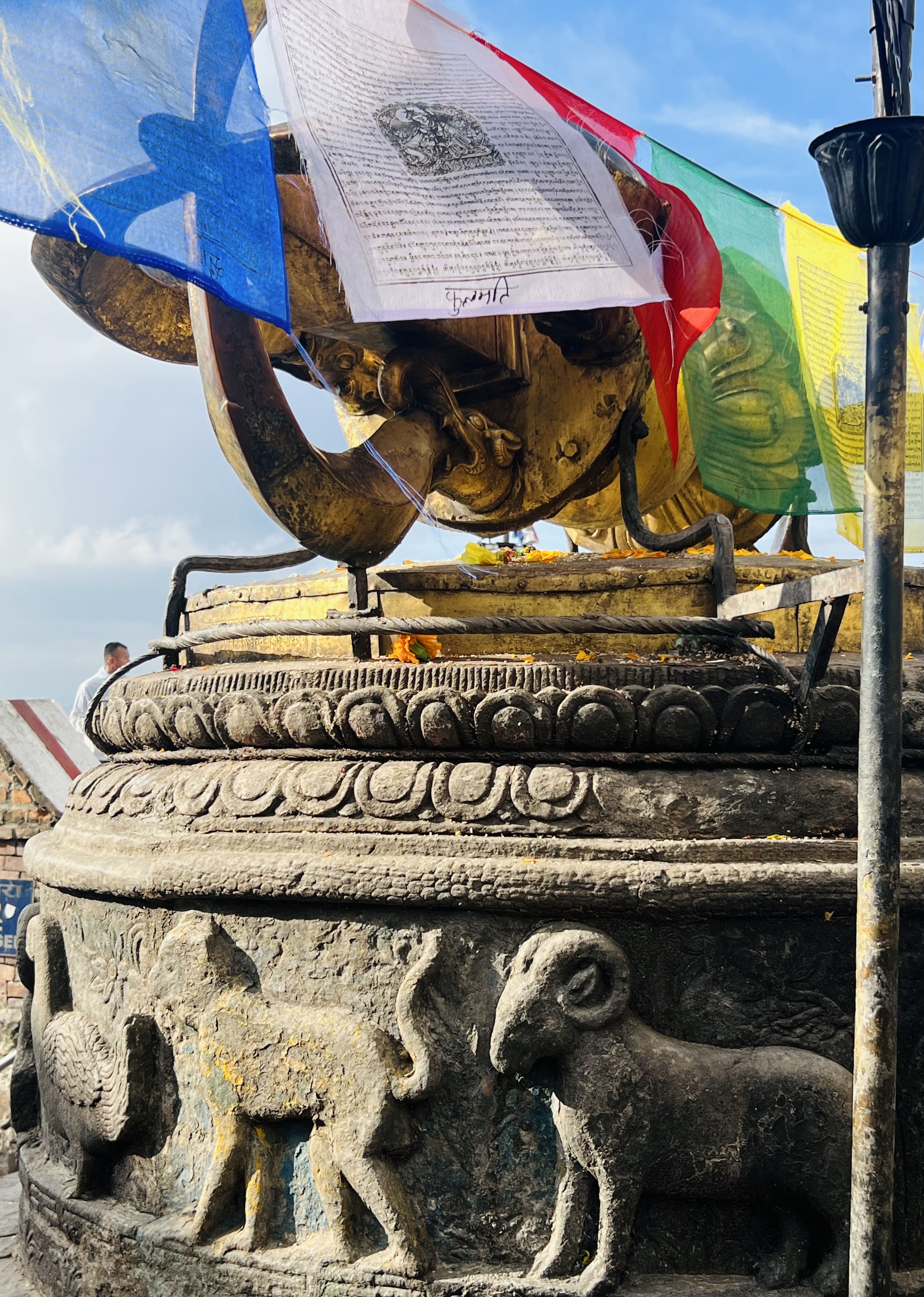
The circular stone drum pedestal features beautiful relief carvings of twelve animals representing the Tibetan/Newar astronomical calendar.
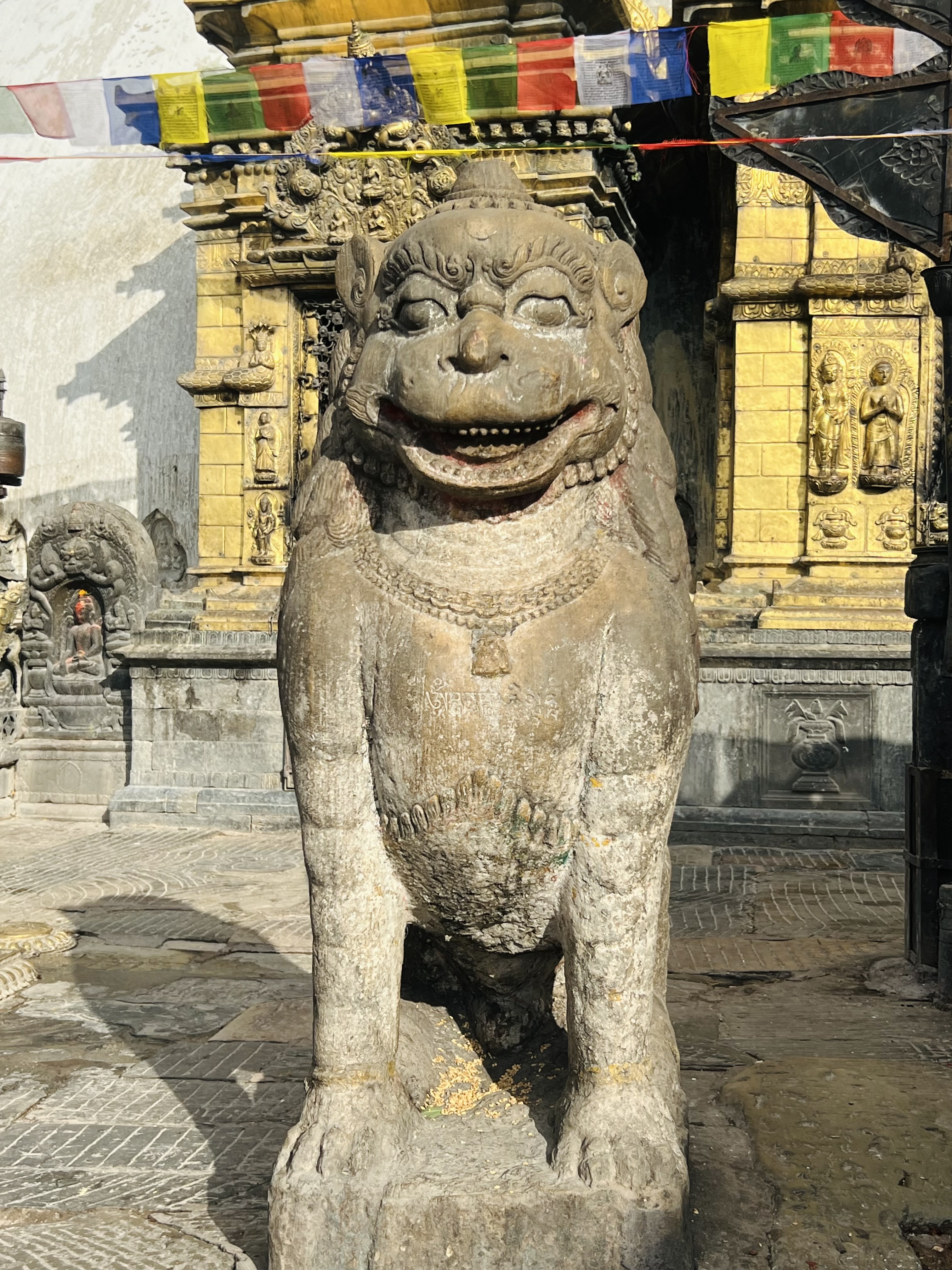
Simha – mythological stone lion guardian, which stands at the entrance of the temple.
In both Hindu and Buddhist traditions of the Kathmandu Valley, such lions are placed in pairs flanking temple doorways, staircases, and shrines to act as spiritual protectors.
The statue showcases classic Newar craftsmanship, recognizable by its stylized • facial features, exposed teeth, and wide eyes.
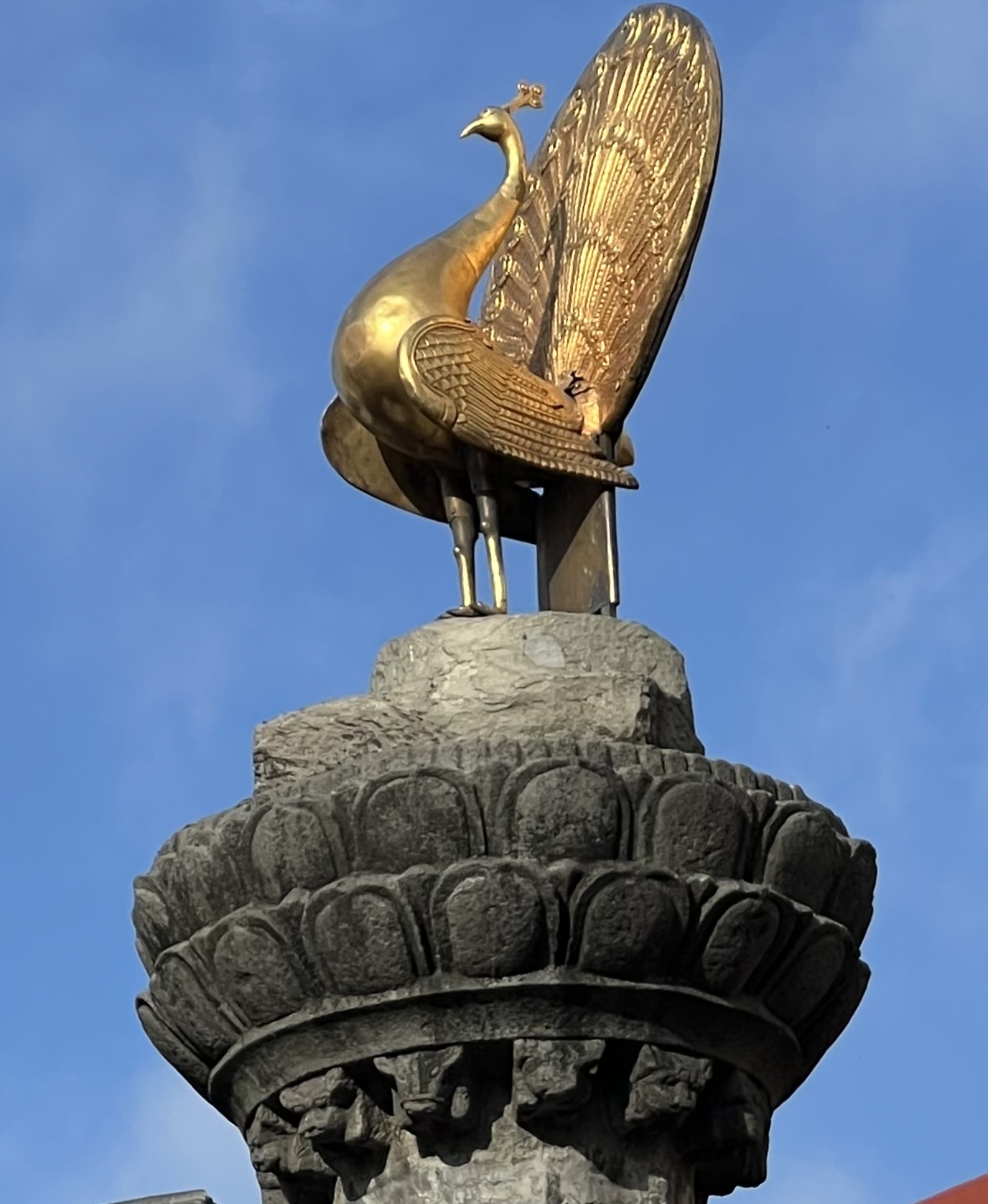
The golden peacock statue atop a stone pillar at Swayambhu.
In Newar Buddhist tradition, the peacock serves as the sacred vehicle of the Buddha of Infinite Light. The statue stands perched on a stone lotus capital facing the stupa as an offering of devotion and protective symbolism.
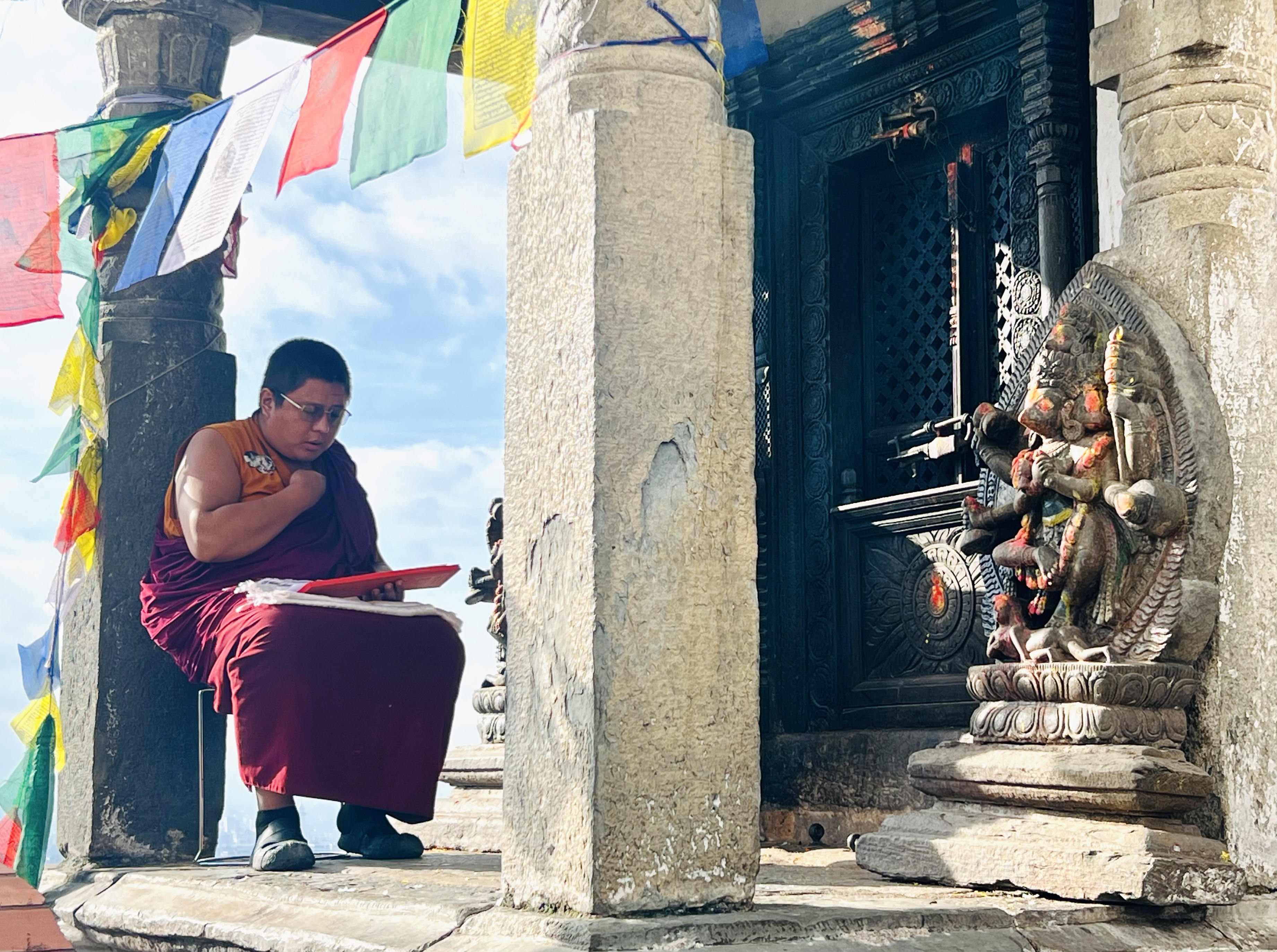
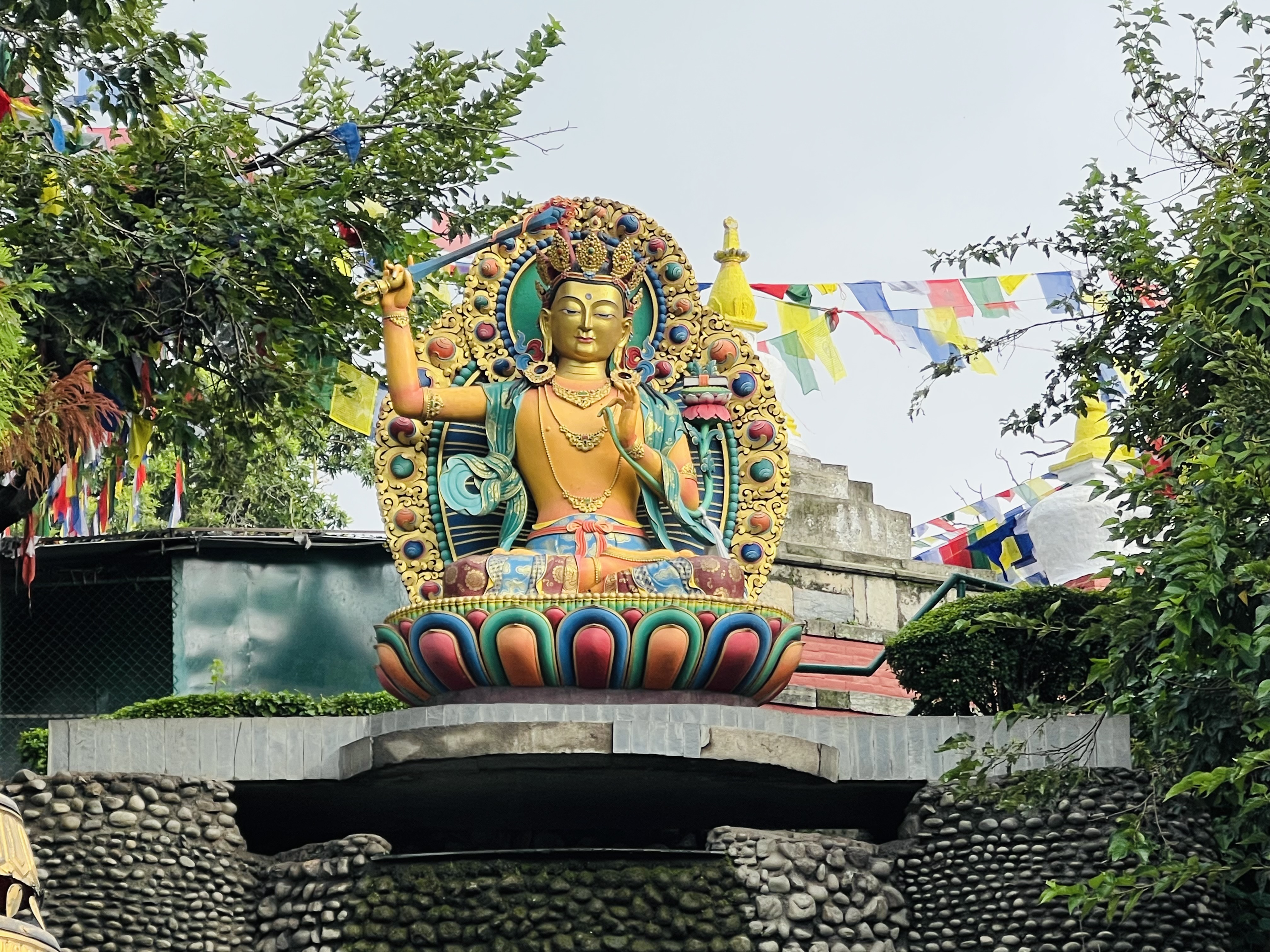
The statue of Manjushri – the Bodhisattva (spiritual being) of Transcendent Wisdom in Mahayana Buddhism. He is seated on a multi-colored double-lotus pedestal near by the Swayambhu temple. He is depicted wielding his signature flaming sword of wisdom in his right hand, which is Symbolically used to cut through the veils of ignorance and delusion. His left hand is raised in a teaching mudra.
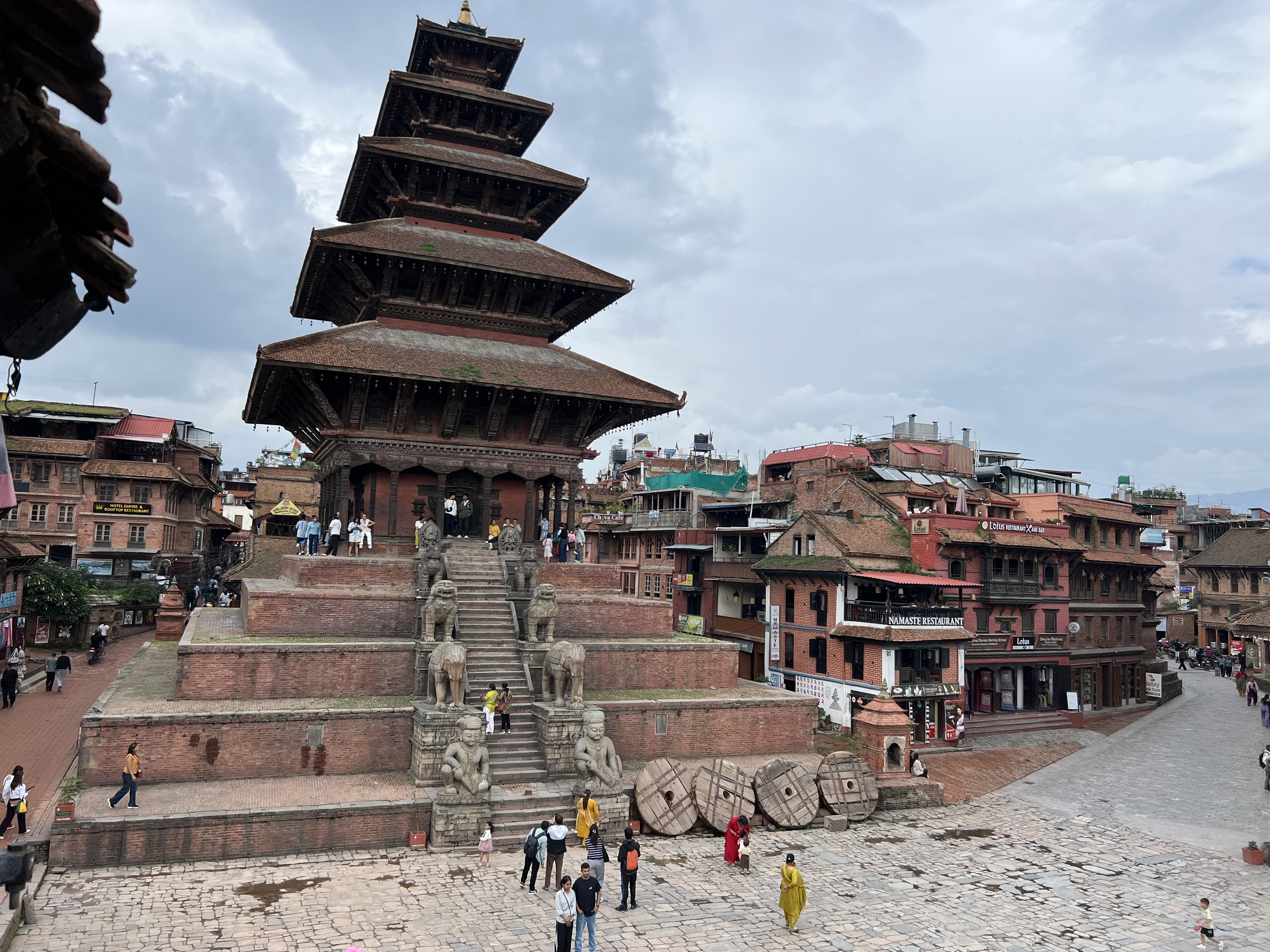
Inside the UNESCO World Heritage Site of Bhaktapur Durbar Square – a historic, former royal palace complex in Bhaktapur city, that served as the home of the Malla kings from the 14th century until 1769. The complex is widely celebrated for its vibrant Newari architecture, intricately carved wooden windows, and open-air medieval layout.
The prominent structure in the photo is the Nyatapola Temple – a beautifully preserved 18th-century pagoda-style temple. The grand brick stairway leading to the main entrance features five pairs of stone guardians. According to local legend, each tier’s guardians are ten times more powerful than the pair directly beneath them. Moving upward, they feature:
1. The legendary local Rajput wrestlers, Jayamal and Phattu
2. Mighty elephants
3. Majestic lions
4. Mythical gryphons/griffins
5. The fierce tantric goddesses, Baghini and Singhini
The temple is dedicated to the tantric goddess Siddhi Lakshmi. Her inner sanctum remains permanently locked and is strictly accessible only to the local temple priests.
Due to its exceptional Newar engineering and seismic template design, the temple famously Survived major earthquakes with remarkably minimal damage.
The multiple-roofed Pagoda temples such as this one are the valley’s architectural trademark, which may have originated in this area and spread to India, China, Indochina and Japan. Due to the valley’s strategic location along the ancient trade route, architectural traditions outside Nepal influenced Newari architecture, which especially flourished during the rule of the Malla dynasty (12th-18th centuries). Newari architecture incorporates spiritual and cosmic symbolism, often attaching to the principles of the mandala, a geometric design representing the universe. The alignment and spatial arrangement of structures reflect traditional cosmological beliefs and are intended to harmonize human habitation with the divine.
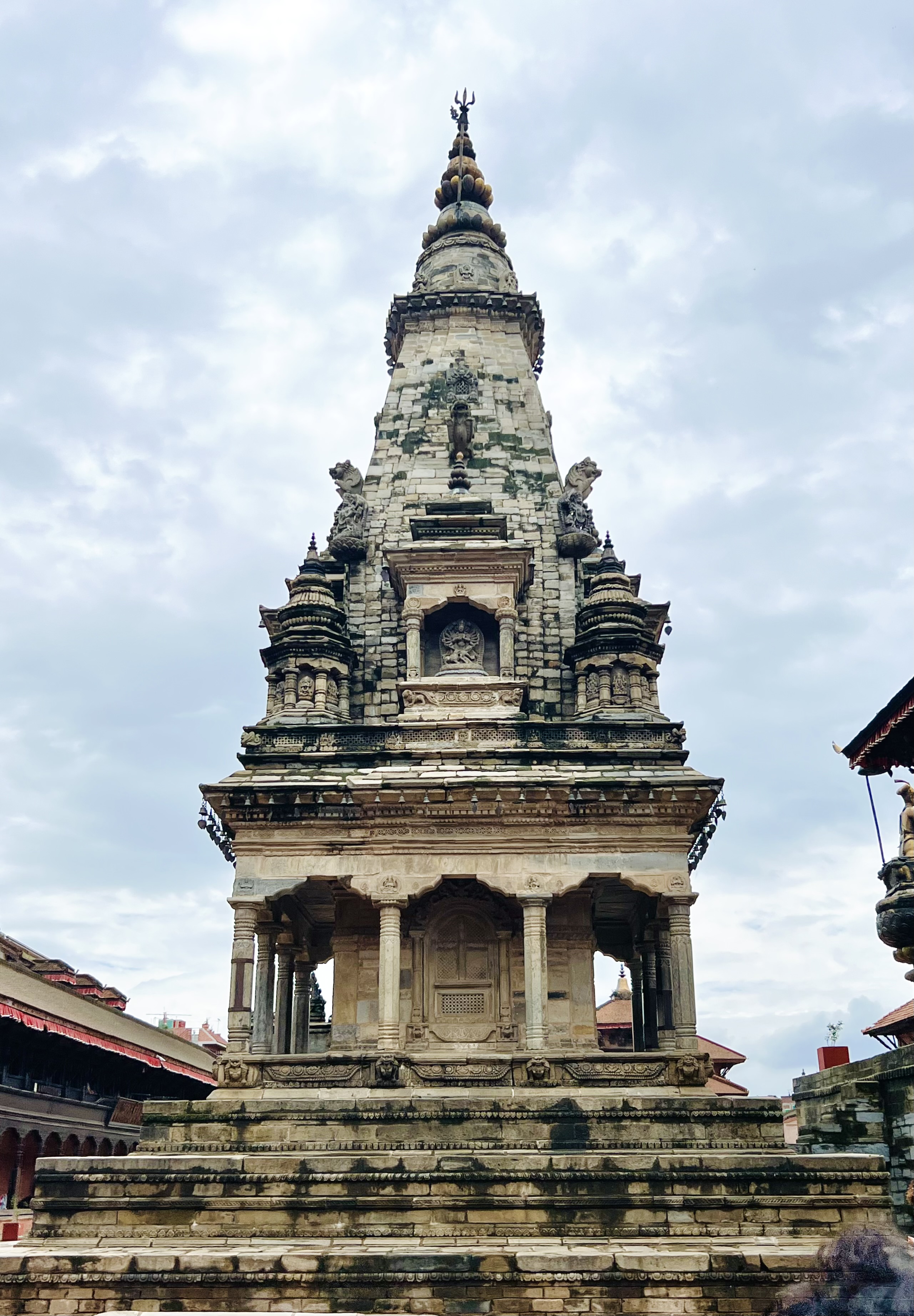
Unlike the classic multi-tiered wood and brick pagodas typical of Newari architecture, this structure is a rare example built entirely of light-colored stone in the North Indian Shikhara style. It is characterized by its tall, curvilinear tower meant to mimic a mountain peak.
Originally it was commissioned by King Jagat Prakash Malla and completed in 1672. The historic structure was completely leveled during the devastating April 2015 earthquake. Following an extensive four-year reconstruction effort using traditional masonry, it was fully restored to its original shape in 2021.
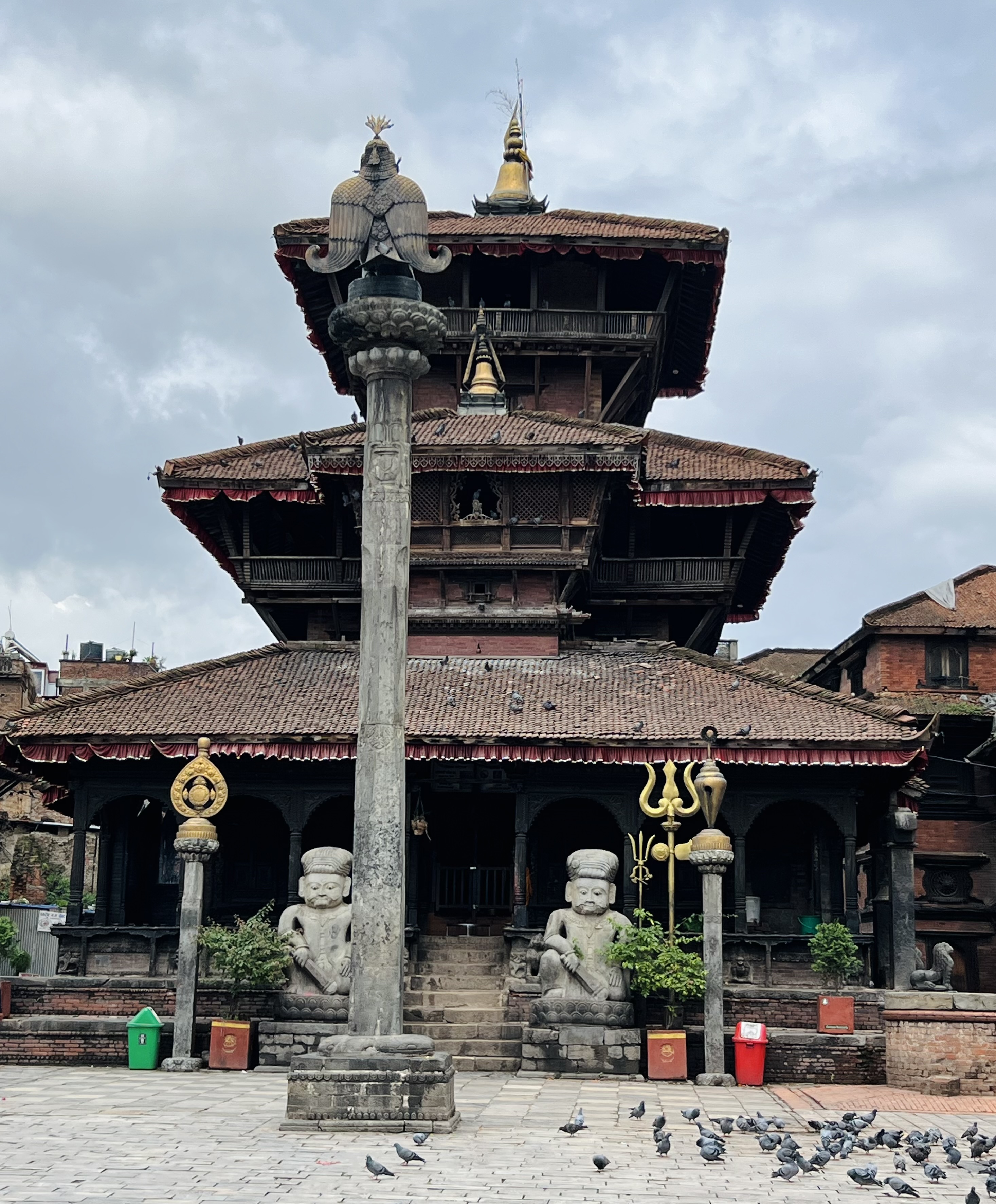
It is the only prominent shrine in Nepal dedicated to Lord Dattatreya, a composite deity who embodies the Hindu holy trinity: Brahma (the Creator), Vishnu (the Preserver), and Shiva (the Destroyer).
Originally constructed around 1427 under the reign of King Yaksha Malla.
In the foreground stands a high stone pillar topped with a statue of Garuda (the mythical bird mount of Lord Vishnu) facing the temple entry. The main steps leading inside are closely guarded by two giant stone statues of the legendary Malla wrestlers, Jayamel and Phattu. Flanking the entrance are symbolic metal standards representing the Sudarshana Chakra (discus) on the left and Shiva’s Trishula (trident) on the right.
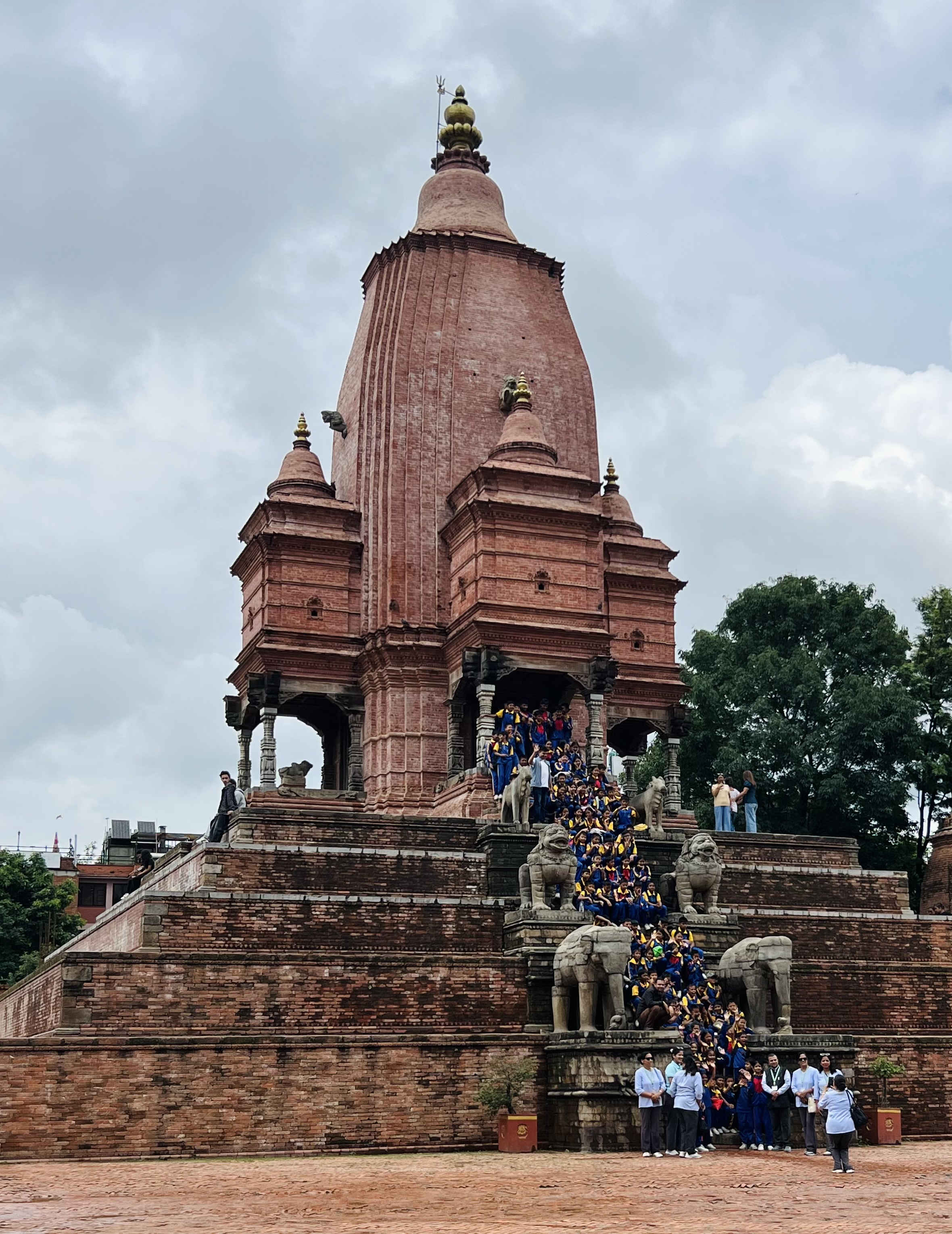
Shilu Mahadev Temple – a majestic terracotta Hindu shrine dedicated to Lord Shiva, located in Bhaktapur Durbar Square. Built in the classic mountain-peak-like Shikhara architectural style, the structure rests on a high, multi-tiered brick plinth guarded by pairs of carved stone elephants, lions, and bulls lining its central staircase.
The original historic structure suffered severe damage during historical earthquakes and has been beautifully reconstructed to preserve its cultural legacy
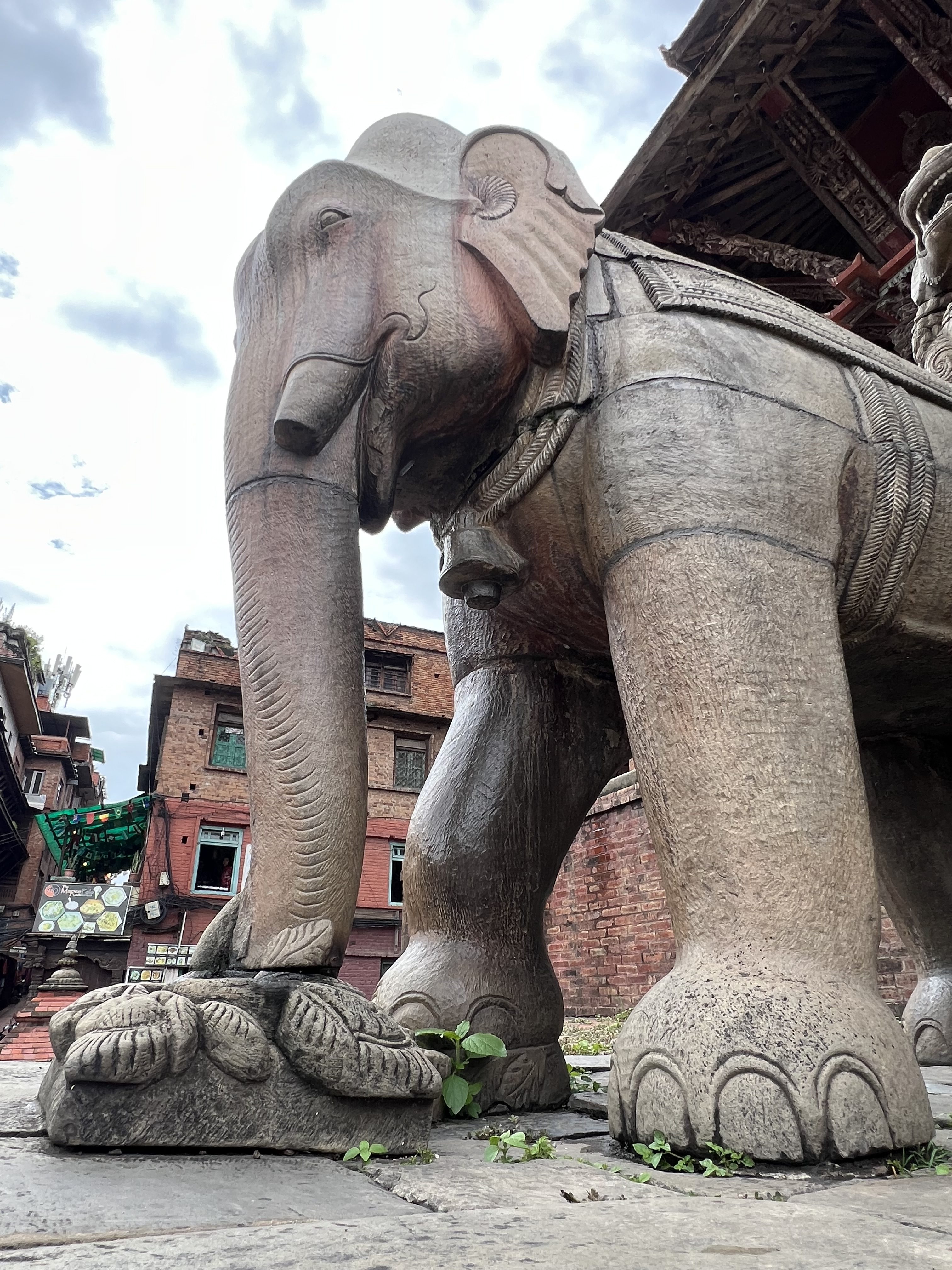
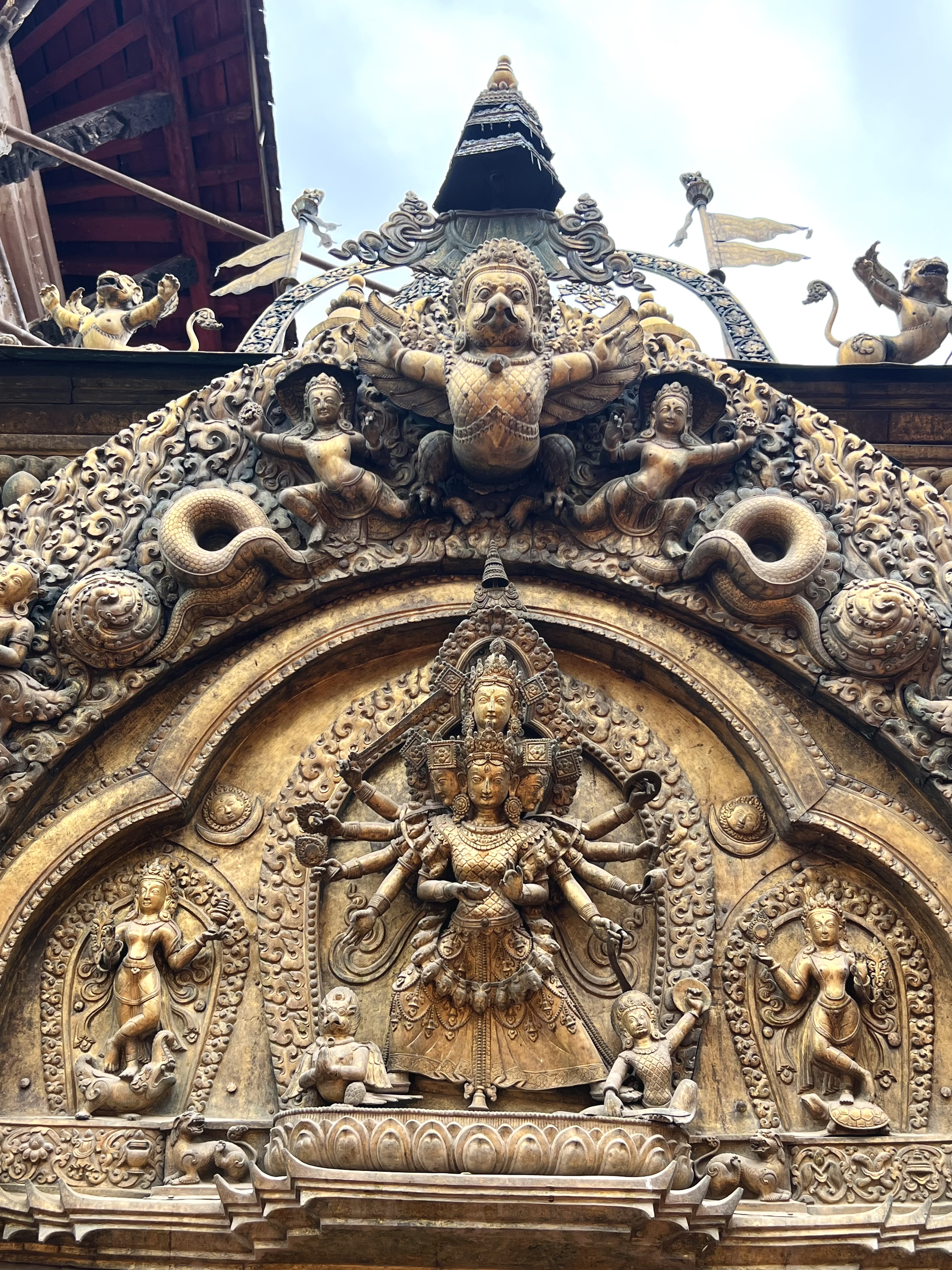
This is a close-up detail of the Golden Gate (Lum dhwäkhā), located in Bhaktapur Durbar Square.
Constructed between 1751 and 1754 under the reign of the Malla King Ranjit Mallag it is universally recognized as one of the finest examples of traditional Newar gilded metal craftsmanship.
Enshrined directly in the center is a four-headed and ten-armed relief of Goddess Taleju, a powerful Tantric manifestation of Durga. She served as the protective guardian of the Malla kings.
Hovering directly above the goddess at the apex of the tympanum (torana) is the mythical bird-man Garuda. He is depicted spread-winged and wrestling with his eternal adversaries, the supernatural serpents (năgas).
Flanking the central goddess are her divine celestial attendants, including depictions of Sri (Lakshmi) standing on a tortoise and other forms of the Ashtamatrikas (mother goddesses)
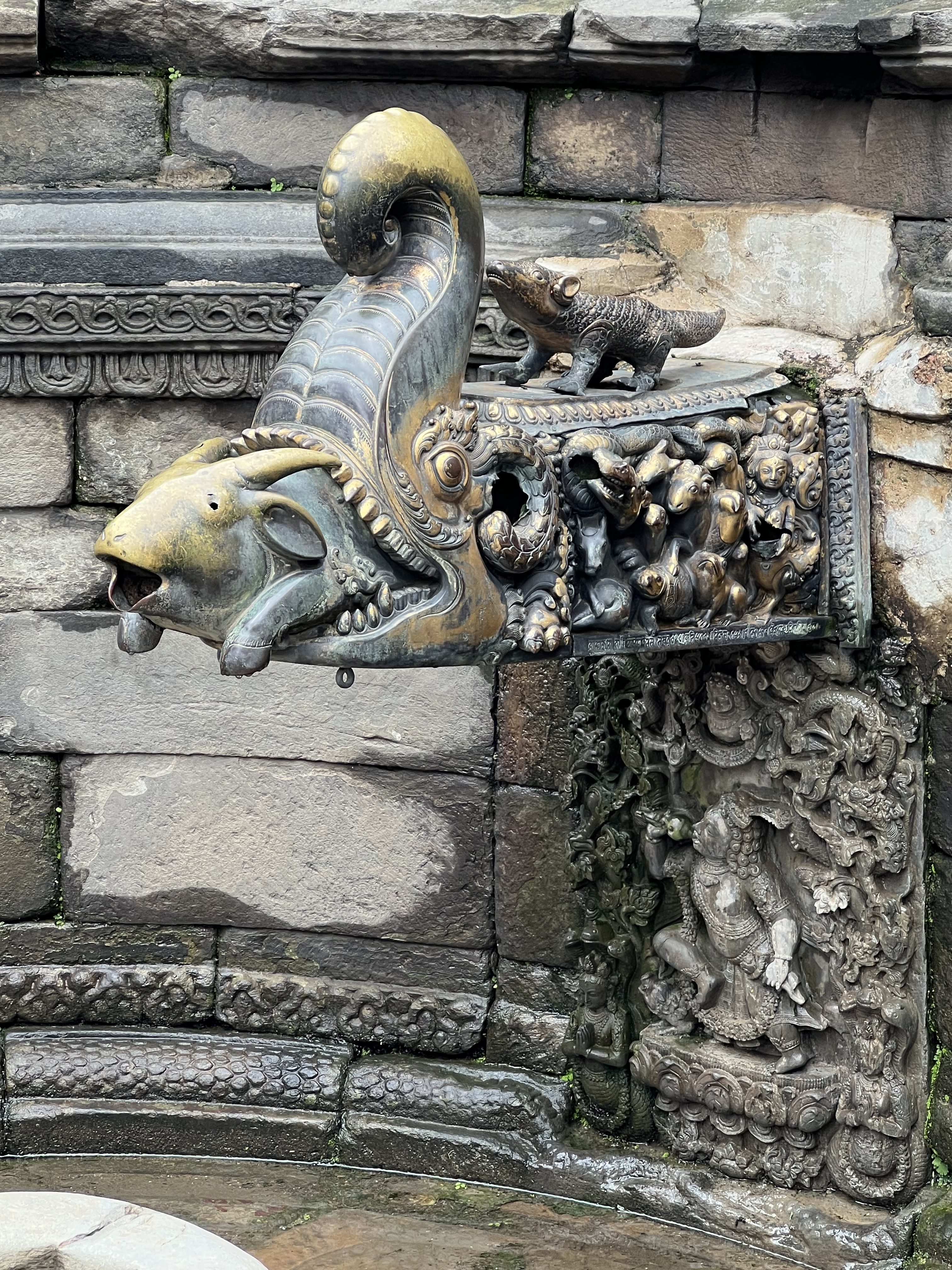
This intricate sculpture is the famous gilt-bronze water spout of the Thanthu Darbar Hiti (Golden Fountain or Dugahiti), located inside the Naga Pokhari (Serpent Pond) courtyard of the royal palace in Bhaktapur Durbar Square.
Commissioned in 1688 during the Malla dynasty, this masterpiece is a premier example of Newar repoussé metalwork and stone carving. It is rich with Symbolic elements tied to water, fertility, and Vedic rain mythologies.
The core design features a mythical sea creature called a Makara (resembling a crocodile or dragon) with a fully formed goat emerging from its gaping mouth, which serves as the physical tap where water pours out.
Standing prominently along the curved spine of the main spout is a miniature bronze crocodile. The panel below is densely decorated with a crowd of smaller aquatic and divine figures, including a snake virgin (Nagakanya), frogs, turtles, and fish.
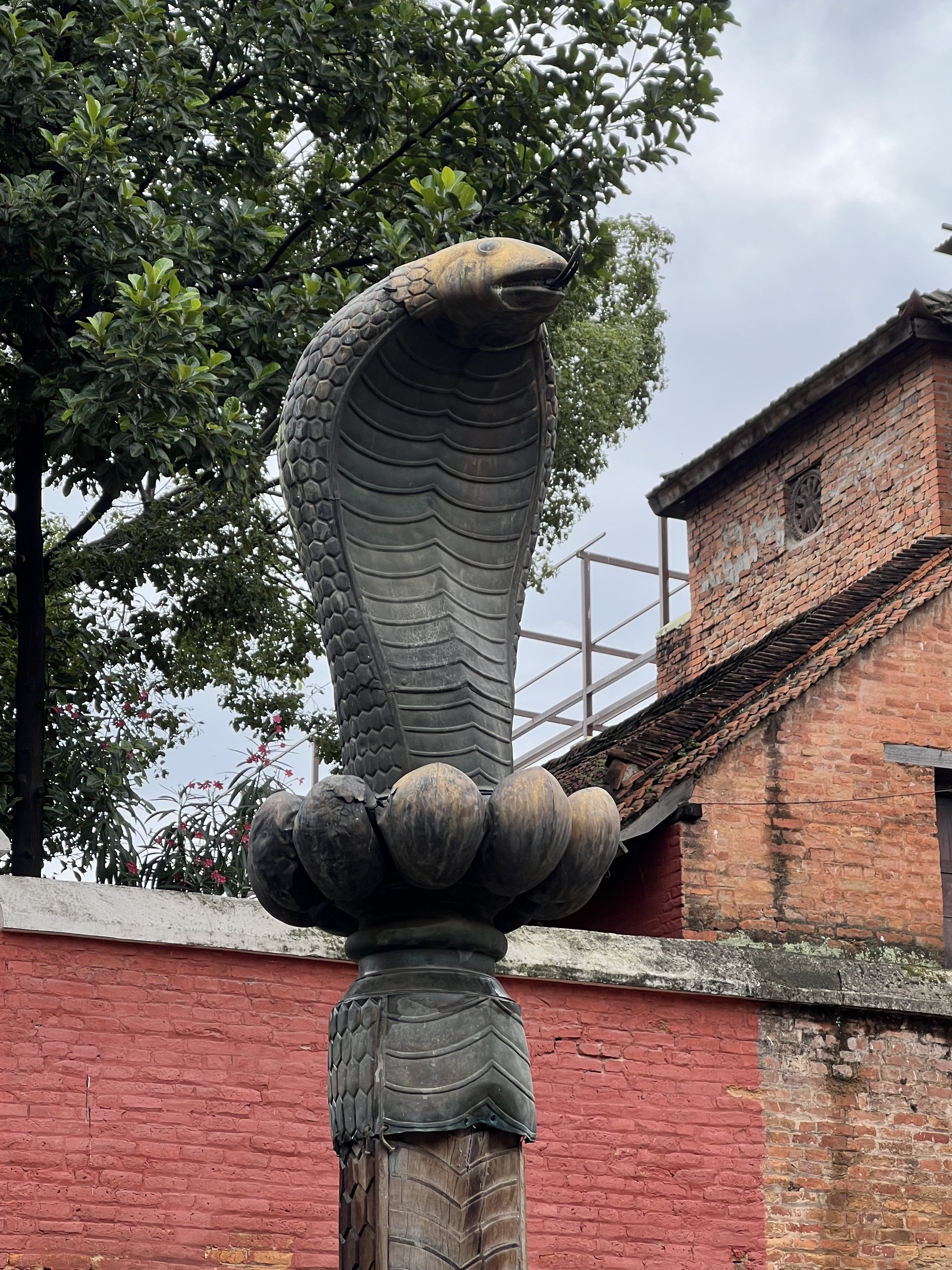
This is a bronze cobra (Naga) statue located at the historic Nag Pokhari (the Snake Pond) in Bhaktapur Durbar Square.
In Hindu and Buddhist mythology, Nagas (serpent deities) are revered as guardians of water sources, rain, and fertility.
Statues like this are traditionally placed at the center or edges of royal baths, stone spouts, and ponds to ensure a continuous Supply of clean water and protection from droughts.
This snake stands erected as a striking central fixture guarding the ancient stone pool area. The artistic style dates back to the Malla Dynasty period, reflecting the intricate metal craftsmanship that the Kathmandu Valley is globally renowned for. The cobra is depicted standing tall with an expanded hood emerging gracefully from a lotus flower base, which symbolizes purity and divine creation.
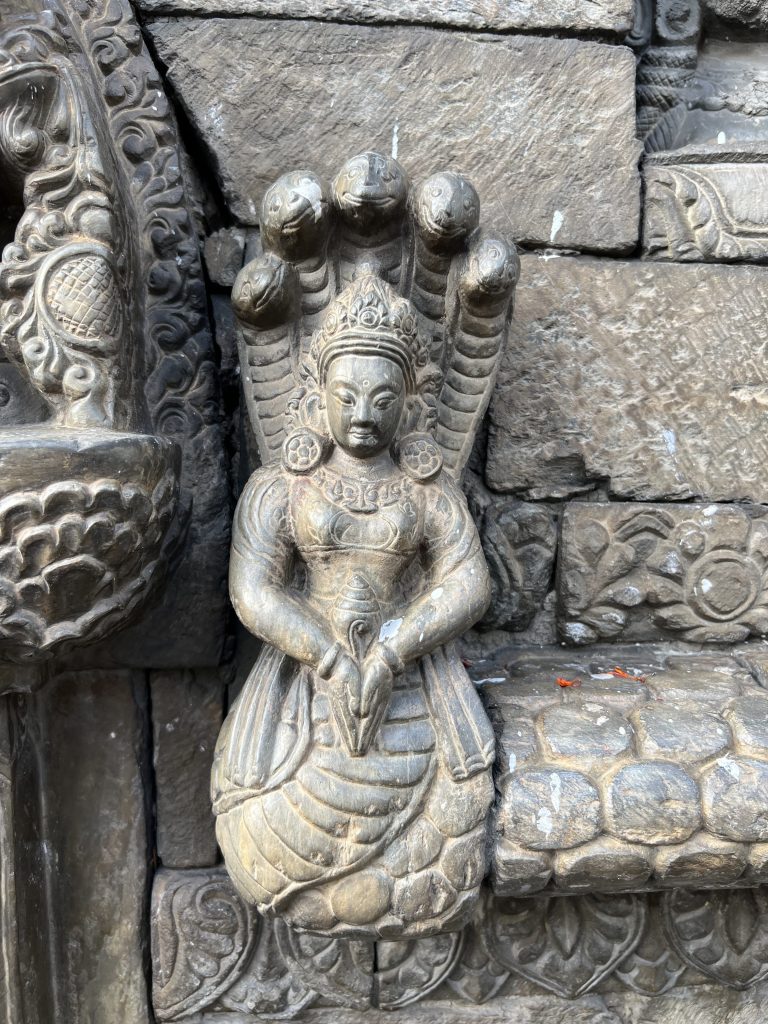
This is a carved stone sculpture of a Naga deity, integrated into an ancient stone wall.
The figure is depicted with a human upper body wearing traditional jewelry and a crown, transitioning into a coiled serpent tail below the waist. A protective canopy composed of five hooded cobras rises behind the deity’s head.
This specific relief decoration is located on the outer walls of the mini-shrines Surrounding the sacred Pashupatinath Temple complex in Kathmandu.
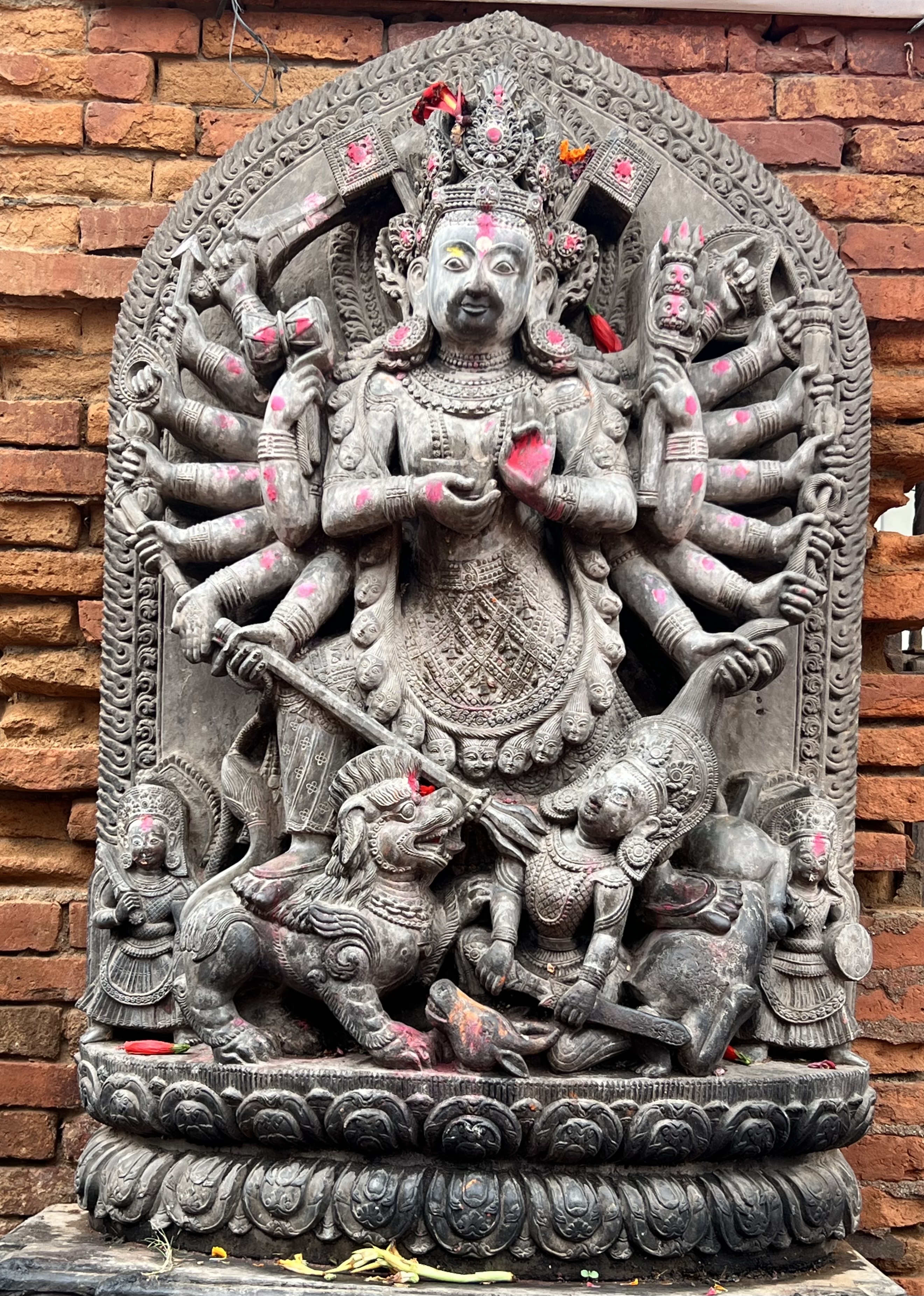
This is the medieval Newari stone masterpiece of the eighteen-armed Goddess Ugrachandi (a fierce, wrathful
manifestation of Goddess Durga or Parvati) located in Bhaktapur Durbar Square. It depicts the multi-armed goddess as Mahishamardini, the slayer of the buffalo demon, Mahishasura. She stands triumphantly with one foot resting on her mount, a lion, while piercing the buffalo demon with her trident and extracting the human form of the demon by his hair.Commissioned in 1707 by the Malla King, King Bhupatindra Malla.
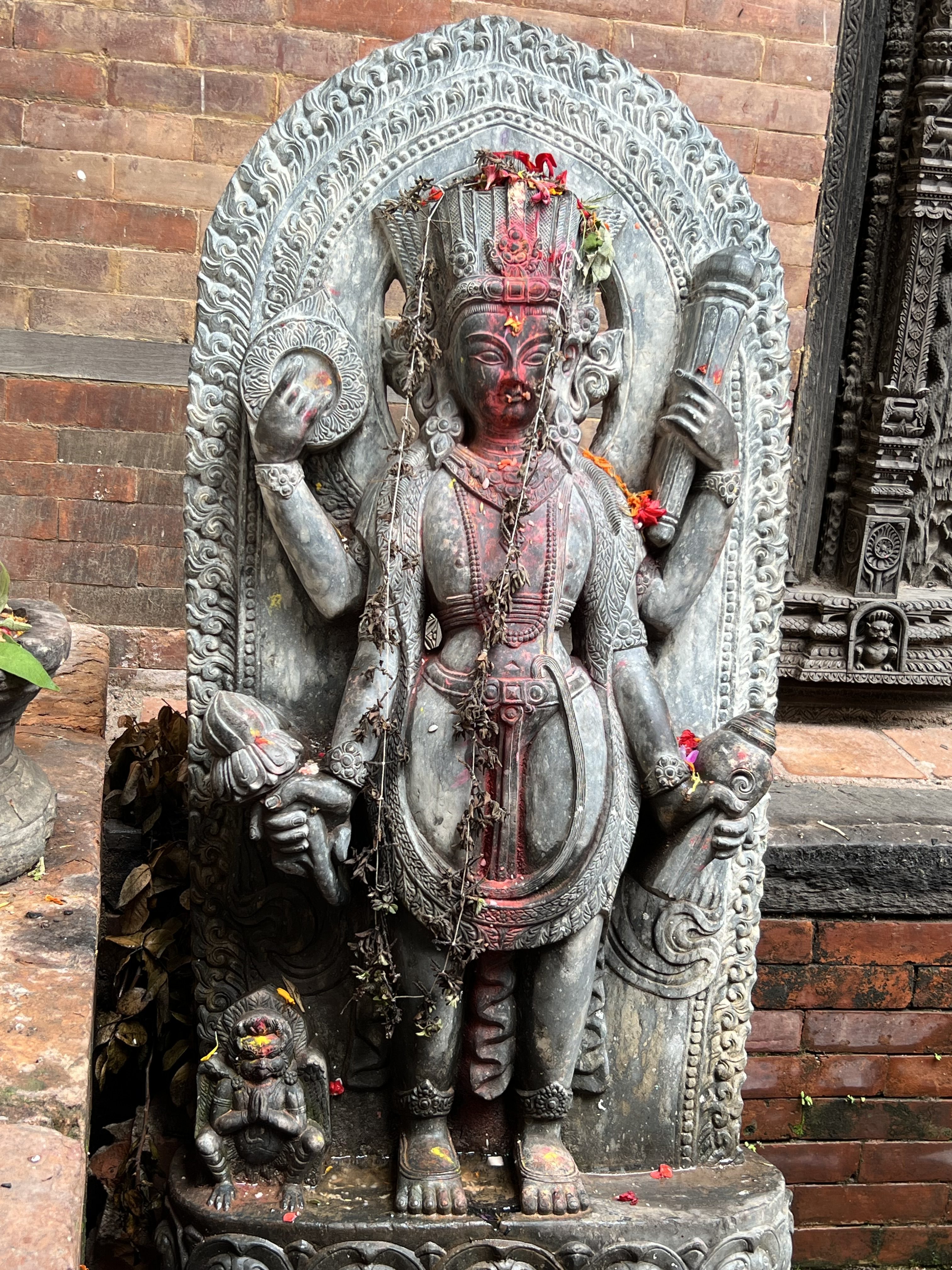
This is a stone sculpture of the Hindu deity Lord Vishnu accompanied by the bird-deity Garuda, located in the royal courtyard of Bhaktapur Durbar Square. The red coloration on the face and torso comes from vermilion powder (tika) and offerings applied during daily devotional worship by local devotees.
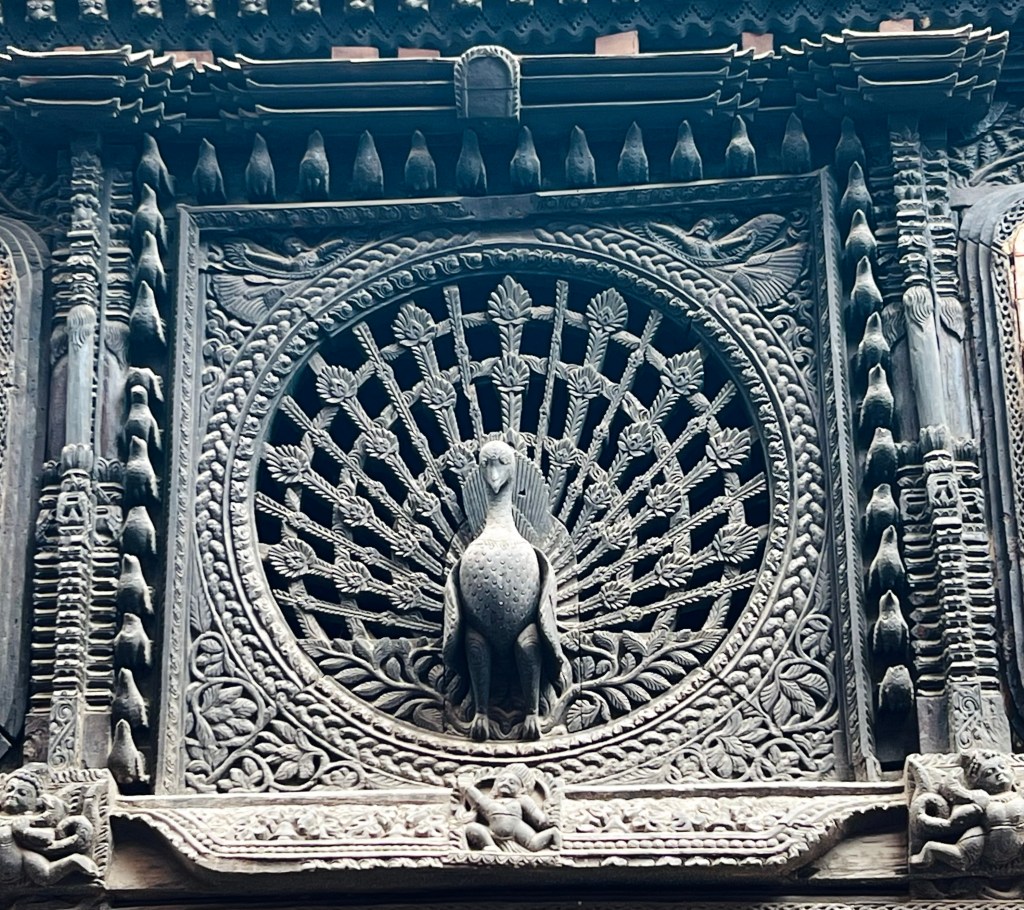
the Peacock Window – one of the most renowned examples of traditional Newar woodcarving in Bhaktapur.
The window blends function, art, and architecture. The window’s lattice is formed by the outstretched feathers of the peacock in the center. The surrounding woodwork displays the remarkable ability of medieval Newar craftsmen with its delicate floral and ornamental designs. It is situated at Pujari Math (a medieval priestly home).
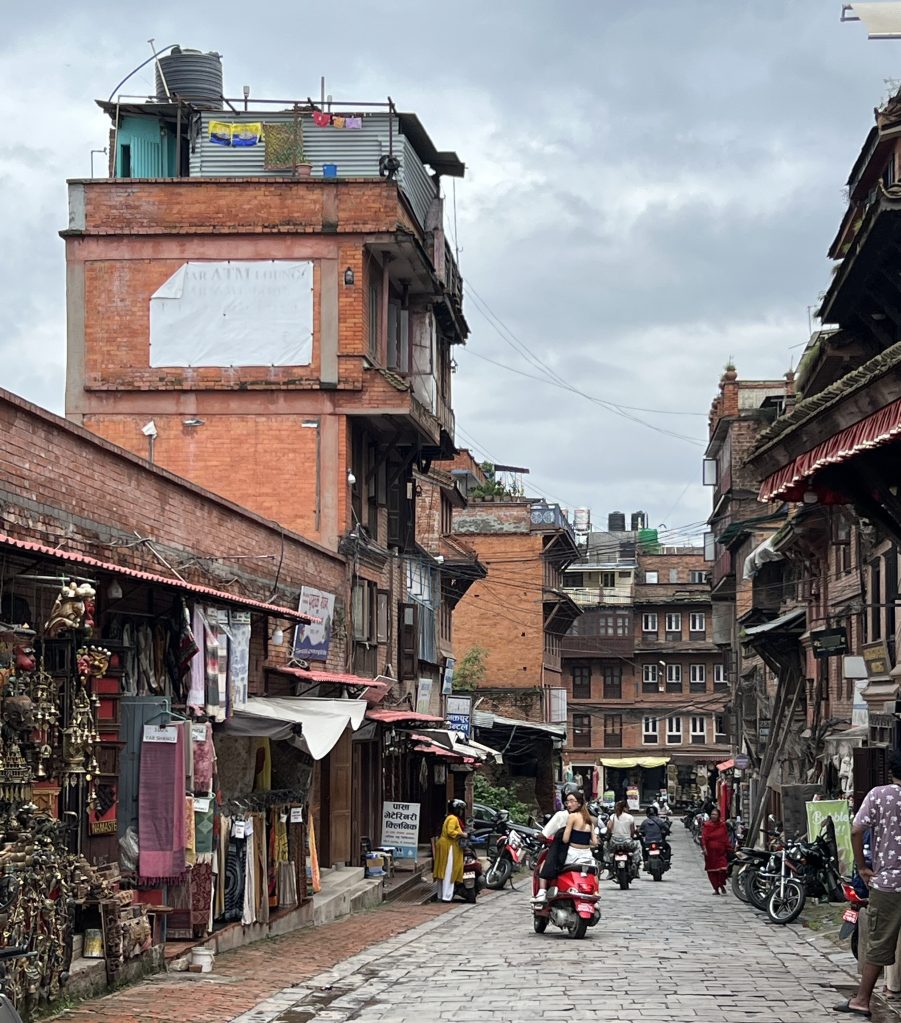
Bhaktapur old city center. Unique city planning and the harmonious integration of art, religion, and daily life is characteristic of the Newari tradition.
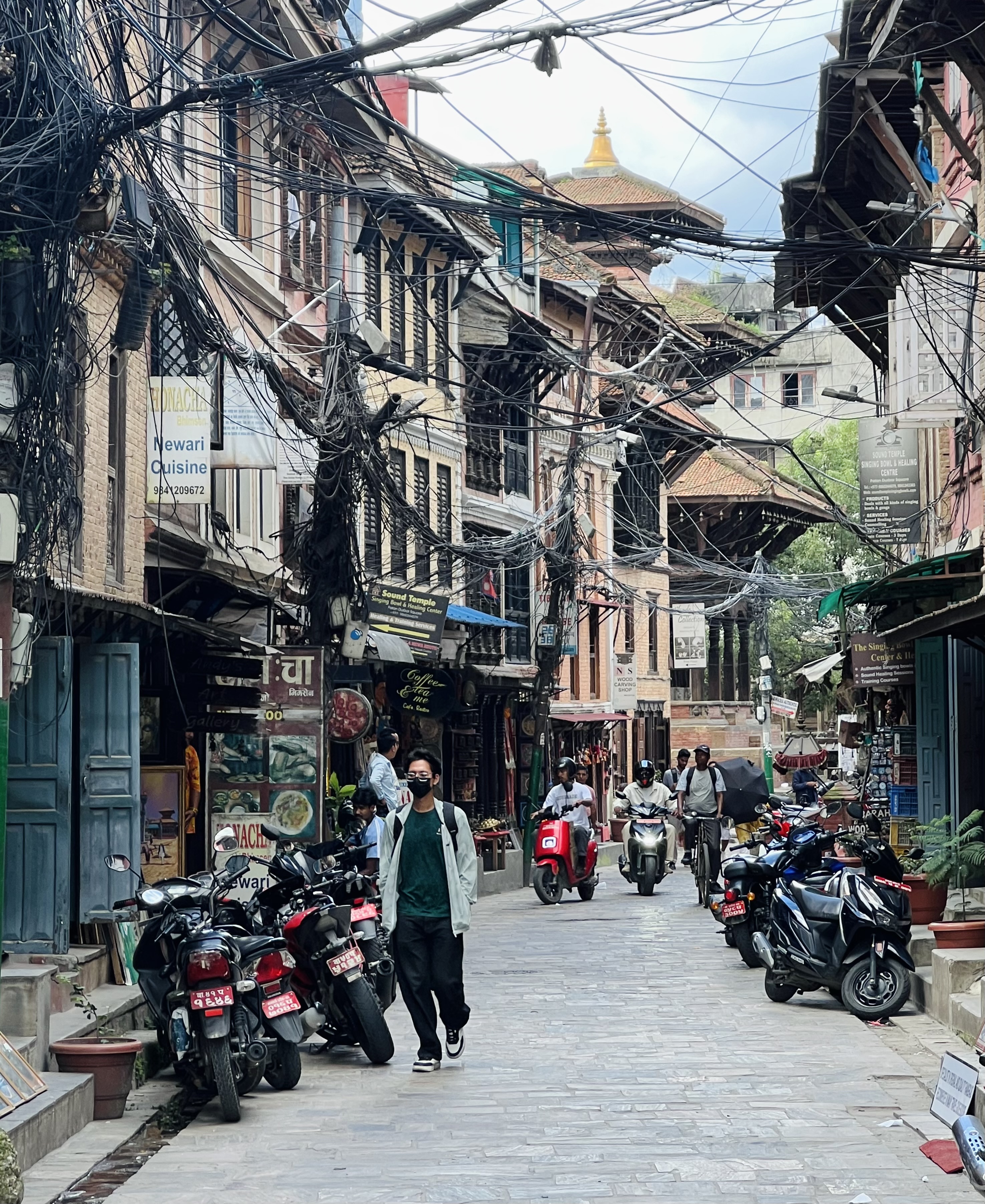
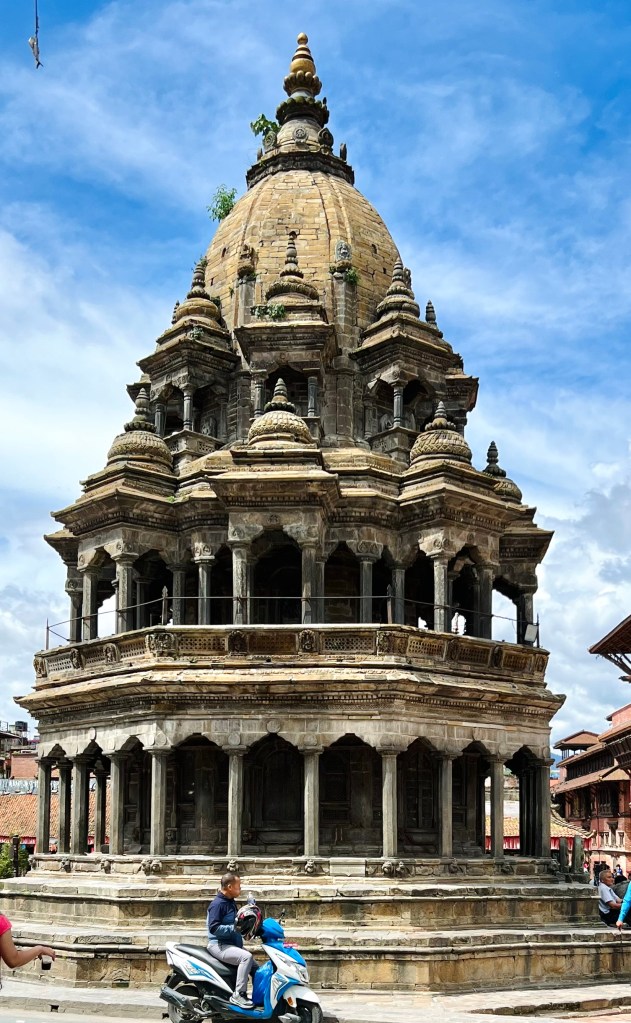
Patan Lalitpur city. The Chyasim Deval Temple.
It is a unique octagonal, stone-built Shikhara-style Hindu temple dedicated to Lord Krishna, located in Patan Durbar Square, Lalitpur. “Chyasim” means “eight-sided” in Newari, referring to the temple’s rare octagonal floor plan. Built around 1723. Unlike the typical wooden pagoda-style temples in the square, it is carved from stone in a northern-Indian-influenced Shikhara style featuring fine pillars, lion sculptures, and Garuda figures.The temple notably survived the major earthquake in 2015.
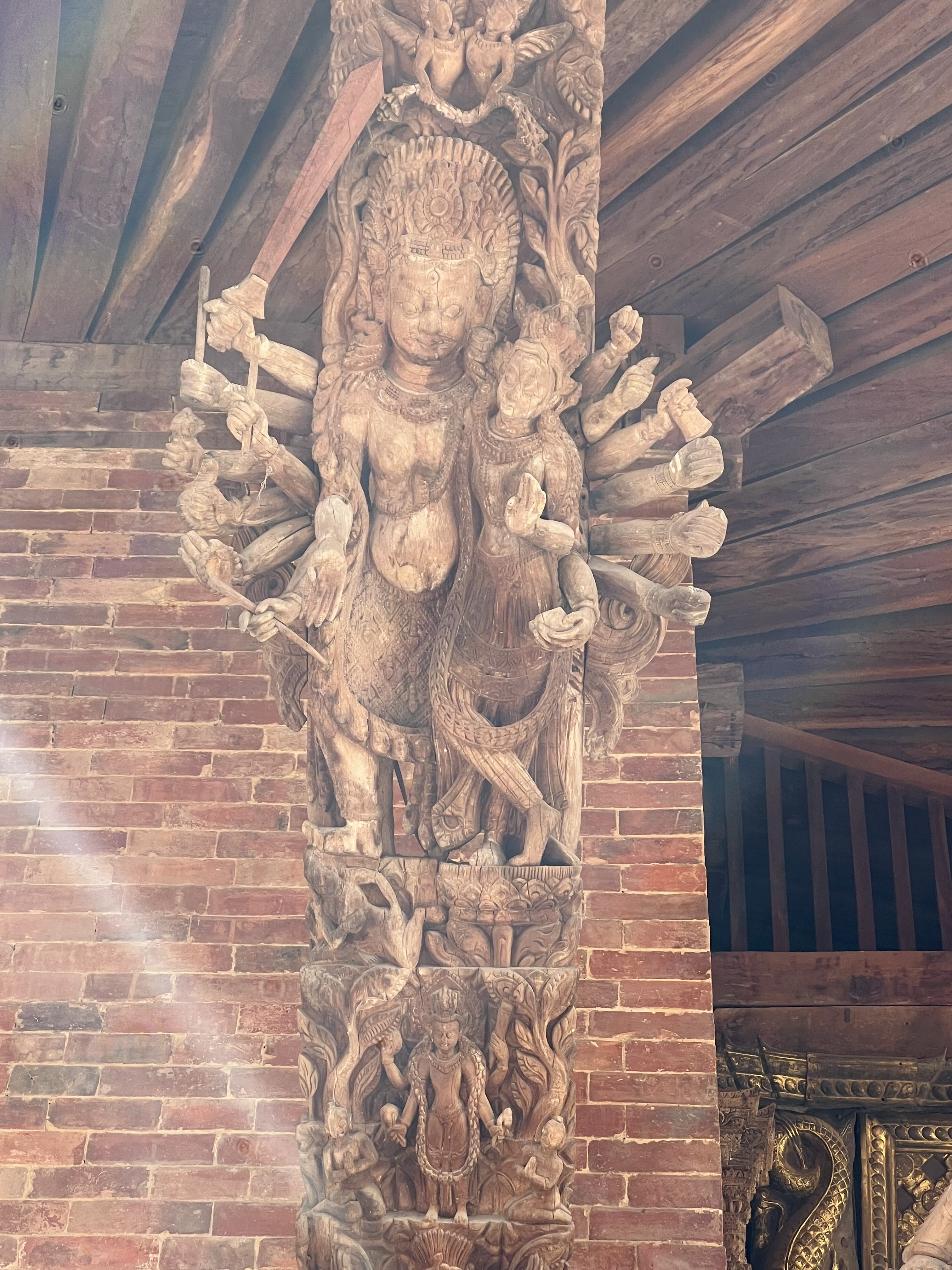
Intricate traditional Newari wood carving on a temple roof at the Durbar Square of Patan.
The carving represents a multi-armed Hindu deity accompanied by a consort. They are shown holding symbolic weapons and attributes in a fan of multiple arms radiating outward.
Such heavy timber beams run diagonally to support the wide, overhanging eaves of traditional multi-tiered pagoda temples, protecting the brick walls below from heavy monsoon rains.
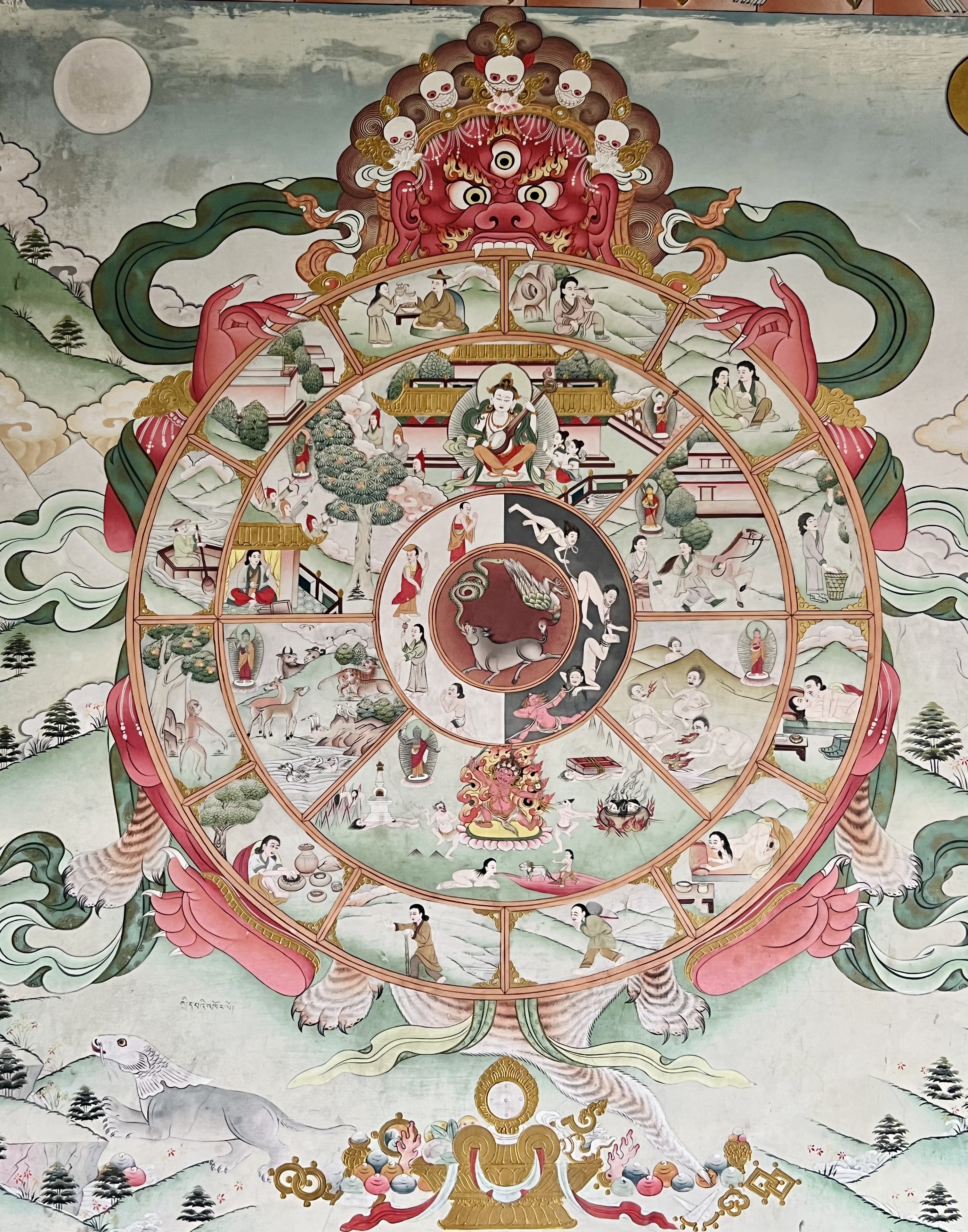
Bhavacakra – the Wheel of Life or Wheel of Cyclic Existence.
This fresco is a traditional wall painting located at the Buddhist monastery in Pharping village.
In Tibetan Buddhism, the Bhavacakra serves as a profound visual map of samsara – the endless cycle of birth, death, and rebirth. Rather than being an object of worship, it functions as an educational mirror designed to illustrate how sentient beings become trapped in suffering and how they can attain liberation.
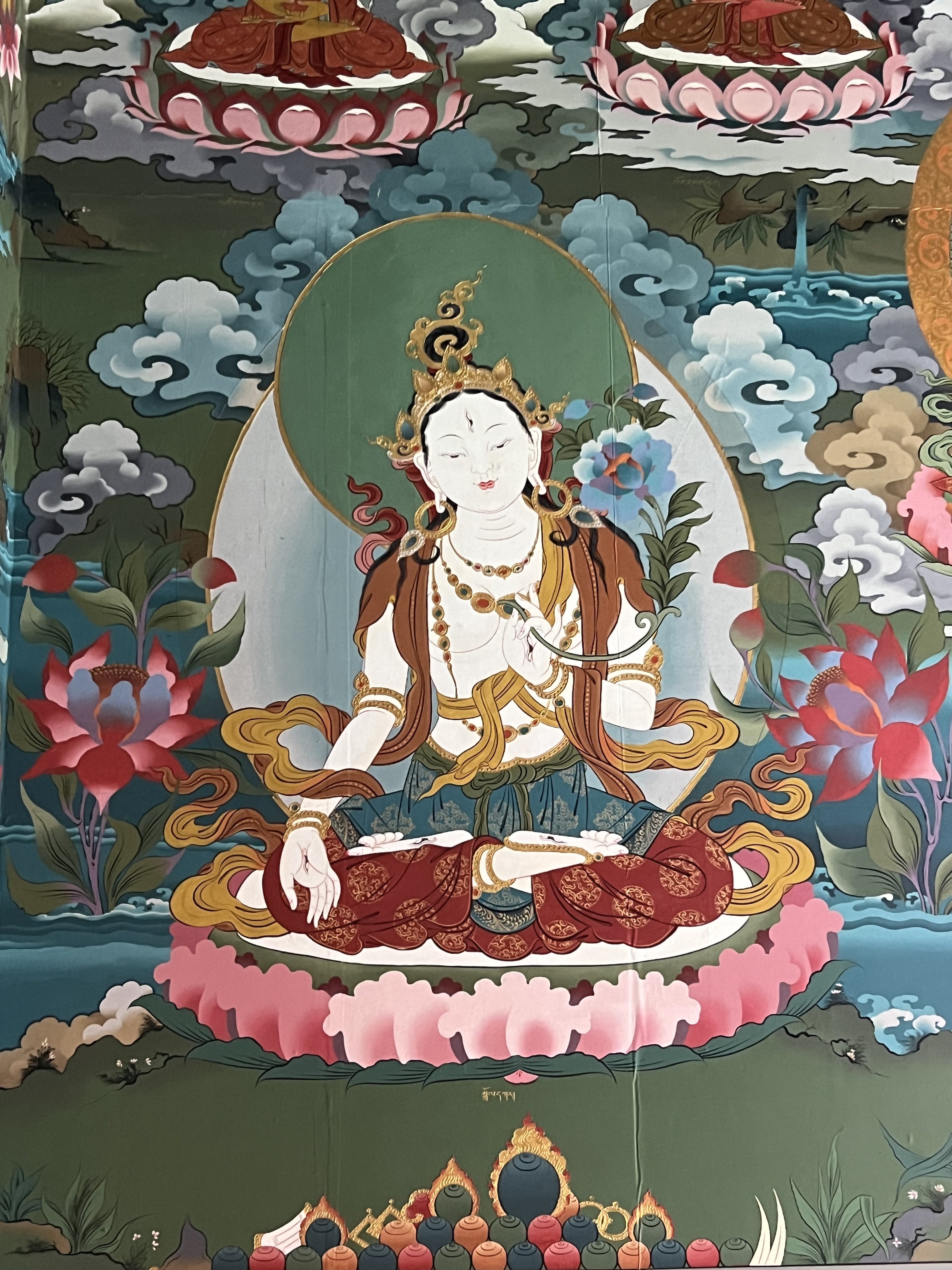
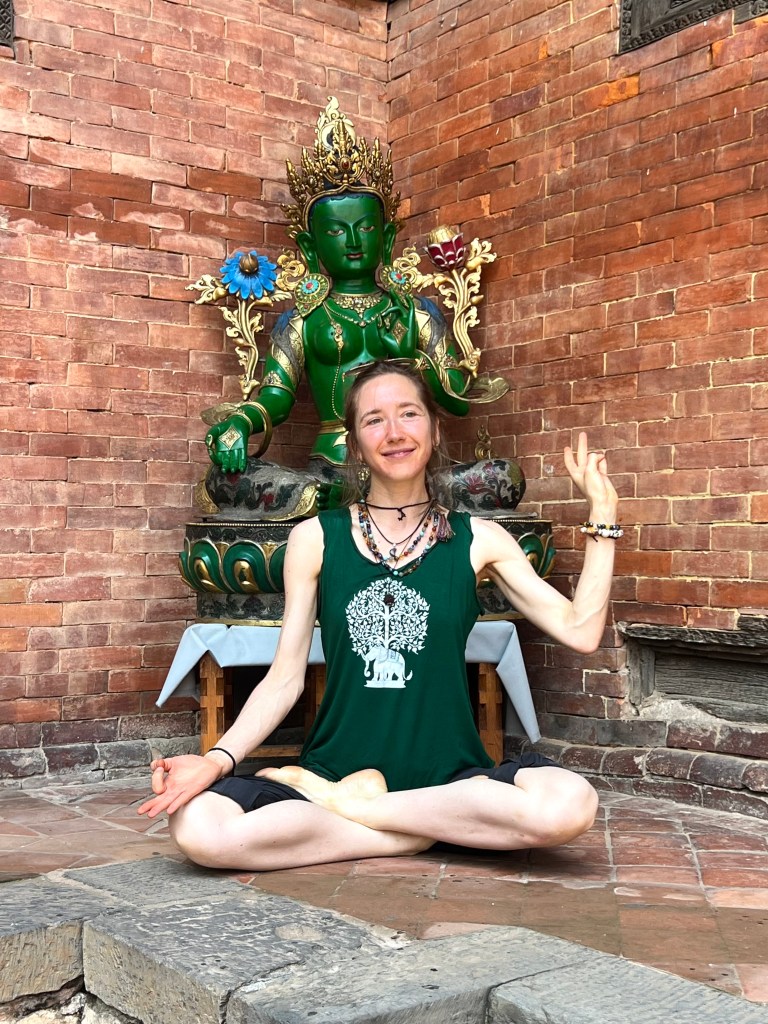
White Tara – a female bodhisattva and buddha in Tibetan Buddhism.
She represents ultimate compassion, healing, long life, and purity.
A defining characteristic of White Tara is her seven eyes, which symbolize her ability to look upon the suffering of all beings with complete awareness. This includes her two regular eyes, a third eye on her forehead, and eyes on the palms of both hands and soles of both feet.
Her left hand is raised to her chest in the Jnana Mudra (mudra of wisdom or teaching), holding the stem of a lotus flower.
She wears an elaborate five-leaf crown, heavy earrings, and traditional necklaces representing her enlightened nature. She is draped in a vibrant blue offering scarf (khata), often given by practitioners as a sign of respect and devotion.
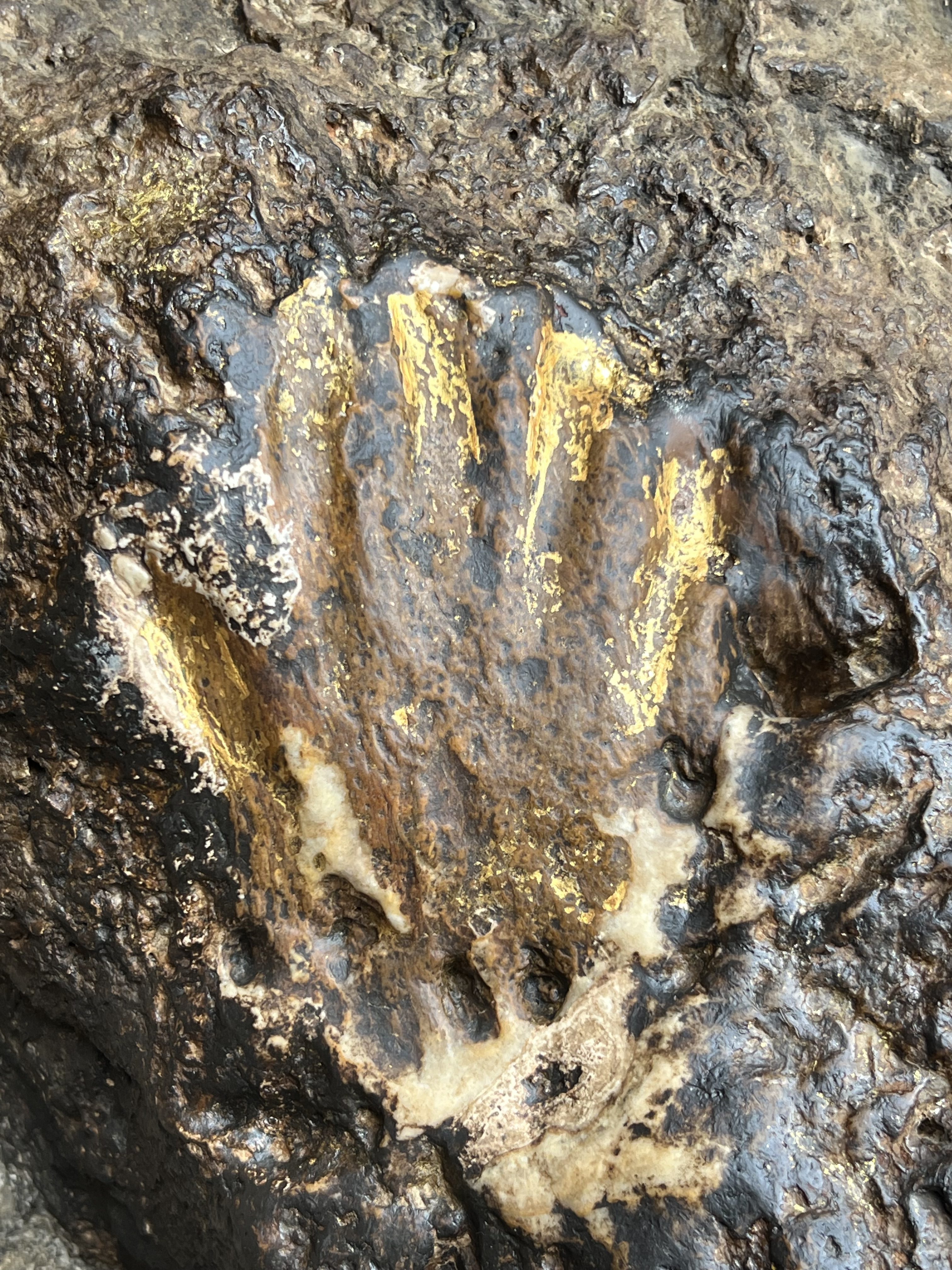
Handprint outside the entrance of the Asura Cave, located in the village of Pharping village.
Padmasambhava (also known as Guru Rinpoche) was the legendary master who introduced Tantric Buddhism to Tibet. He achieved high levels of spiritual realization while meditating inside this very cave.
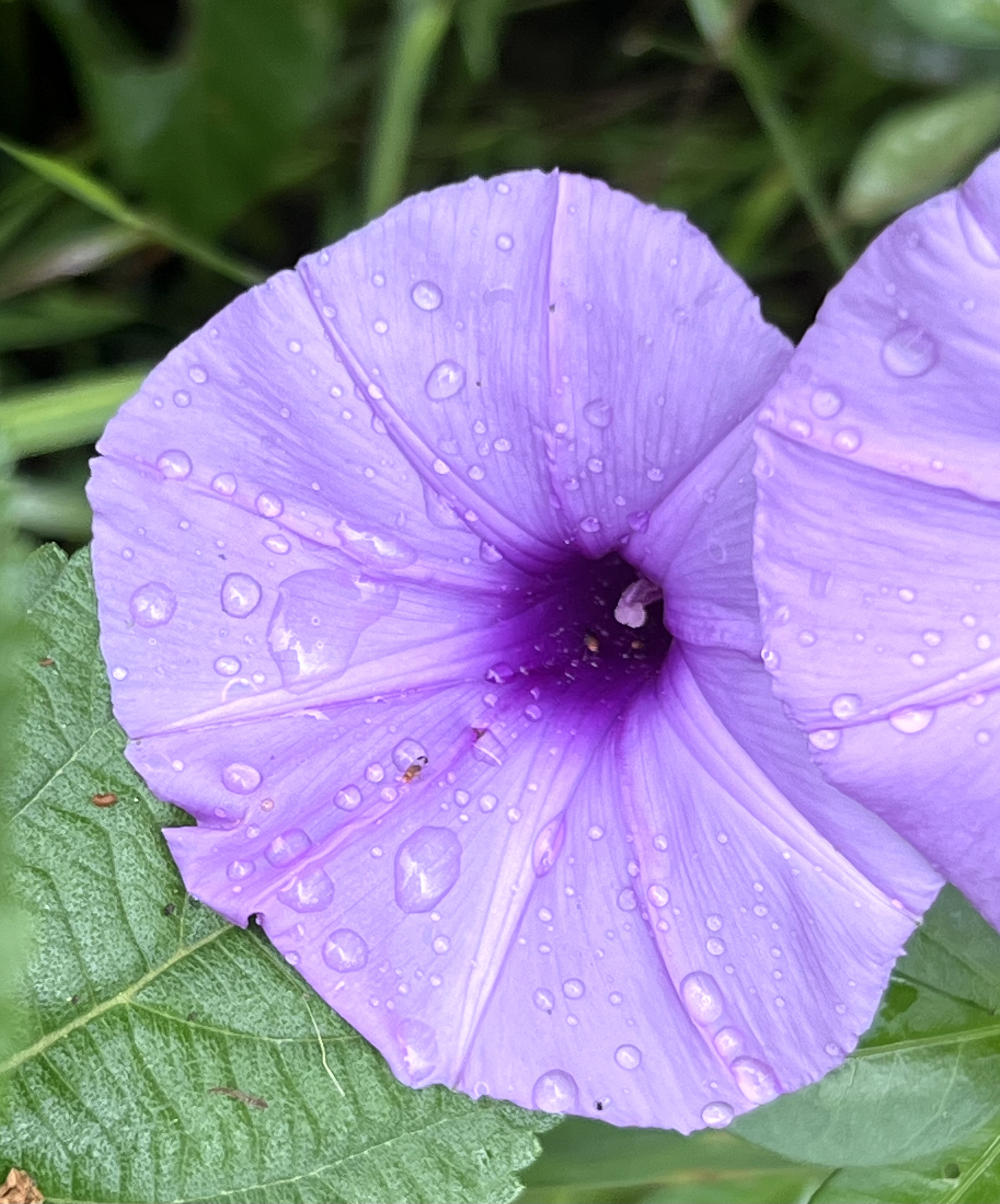
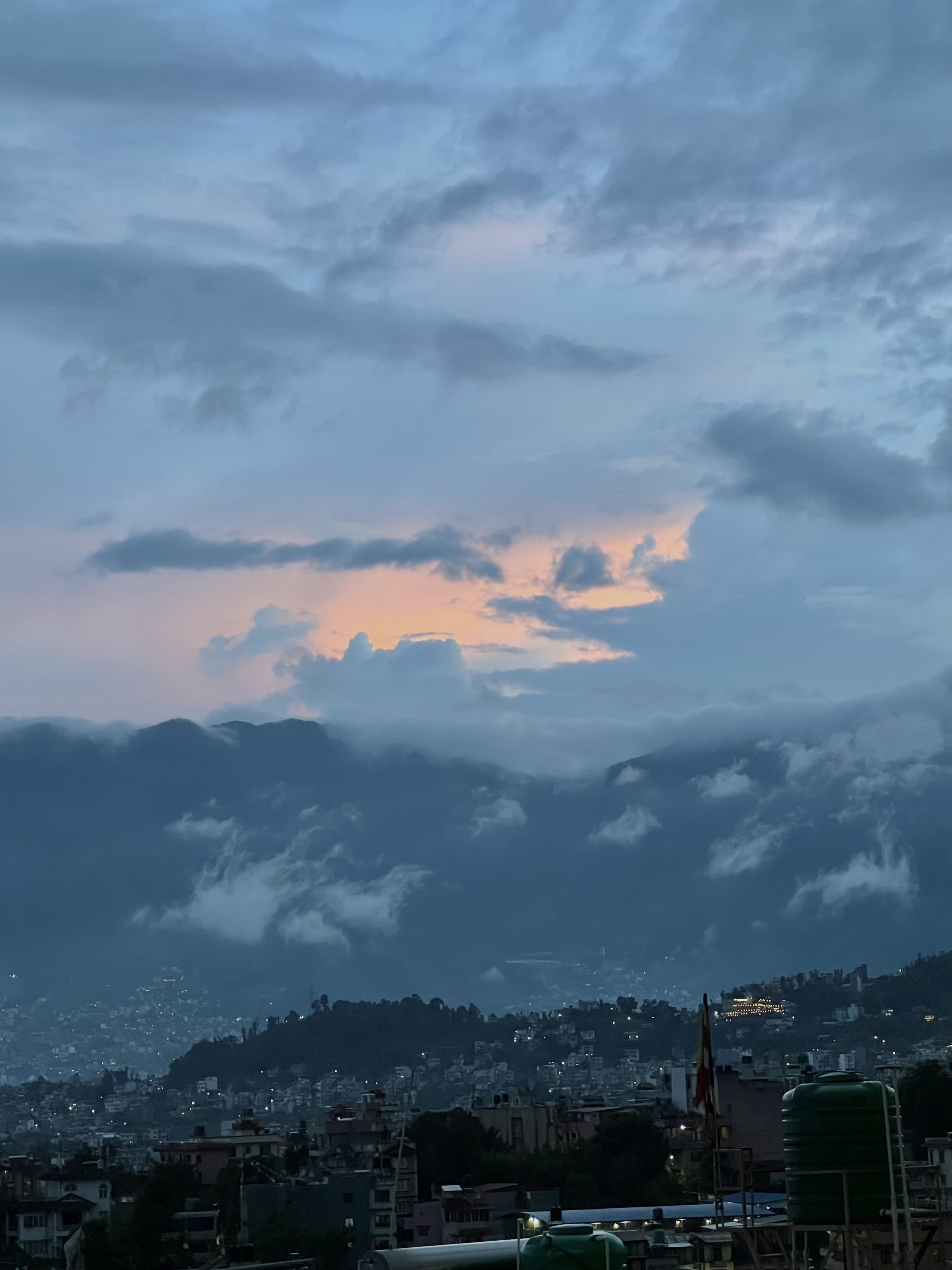
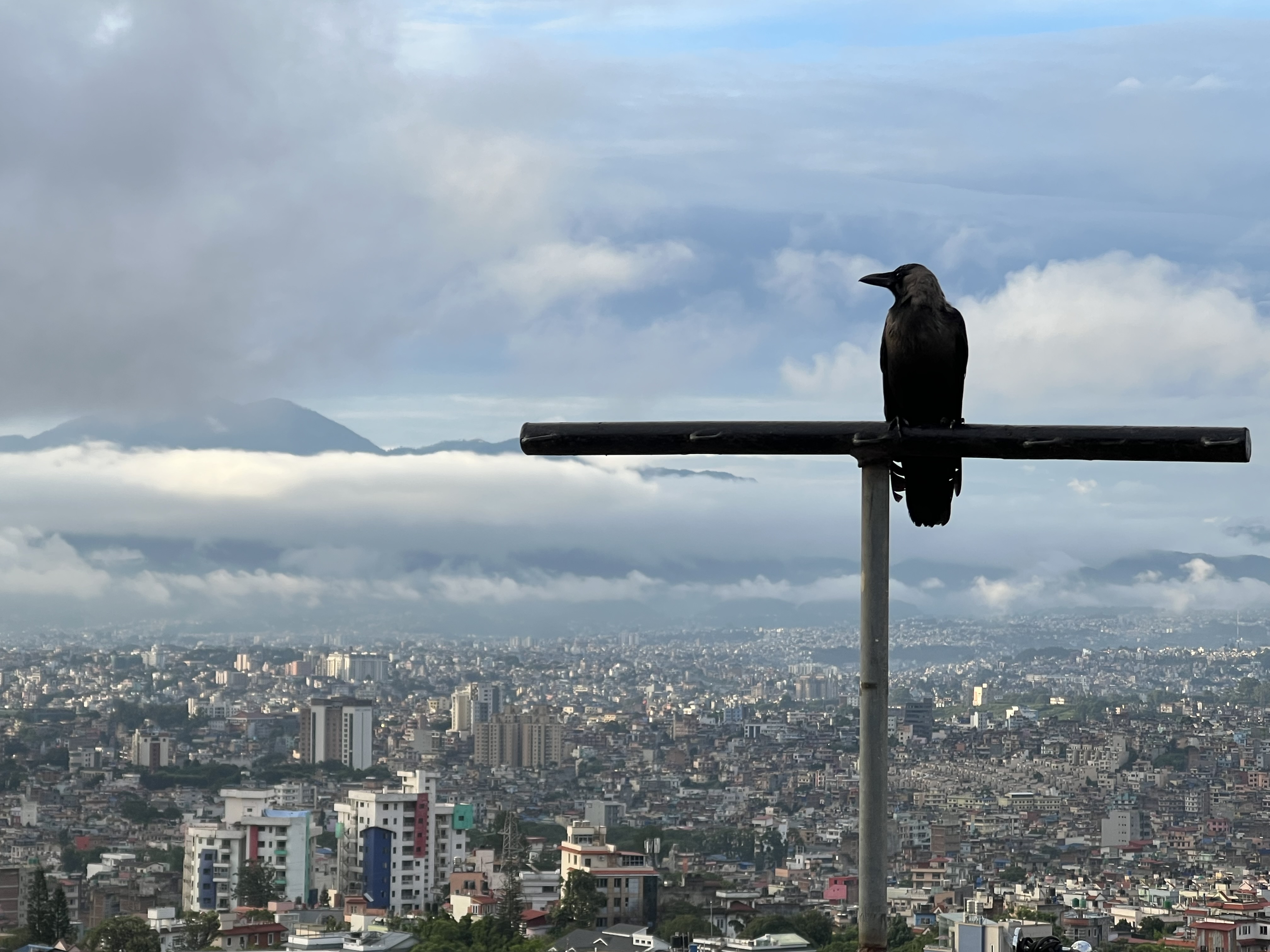
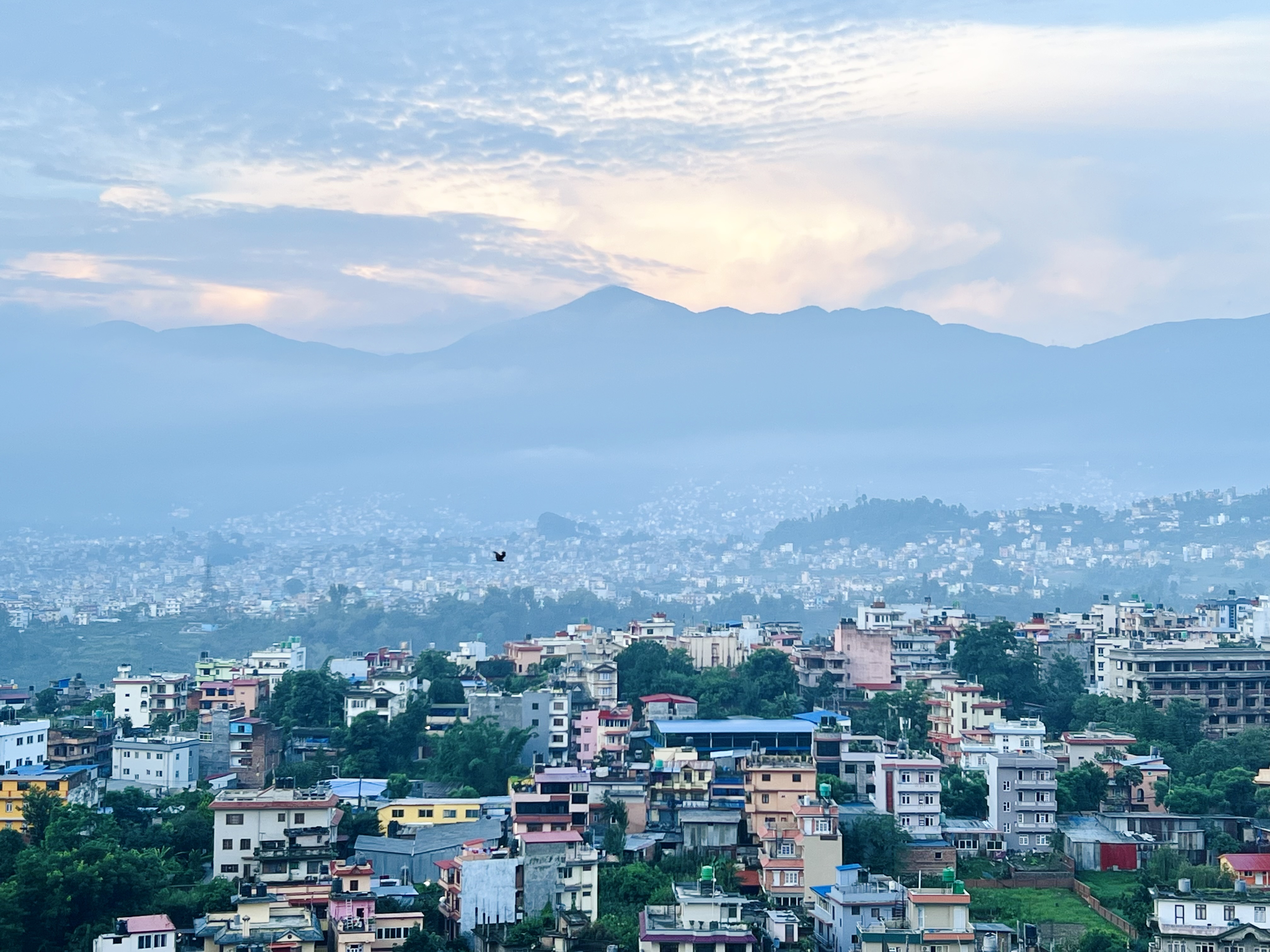


A beautiful country and my spiritual home 🙏☸️
LikeLike
yes🙏 fascinating place, culture, and people 🙏
LikeLike